Last week, Intel raised eyebrows by revealing plans to get out of the desktop motherboard business over the next three years. While companies like Asus, Gigabyte, EVGA, and MSI can pick up the slack, Intel’s position as the dominant PC chipmaker makes the move portentous. After all, if Intel doesn’t think the desktop business is worth its time, who will? Is the era of the desktop computer — and assembling our own systems — heading for the history books?
AT the beginning…
Intel has had a major role in PC motherboards for decades, but wasn’t there at the start. Apple lit up the personal computer market in the late 1970s, but IBM’s PC, XT, and AT designs won out because their only proprietary component was the BIOS software — which other companies promptly reverse-engineered. PC clones were born, and almost everyone copied IBM’s AT motherboards because some parts could be upgraded without buying a whole new computer.
Then came Intel. By the mid-1990s Intel was a major computer maker, building PC clones for dozens of companies. AT-based boards were a de facto standard, but Intel pushed things forward with a new “ATX” design, featuring standard mounting points, connectors, dimensions, and port panels. Intel developed the ATX design for its own benefit, but its importance outlasted Intel’s PC business.
“ATX’s impact was tremendous,” wrote a former Intel engineer now working in the non-profit sector. “ATX was cheaper and removed most of AT’s pain points, but also let anyone upgrade or build computers themselves from stock parts.”
The rockers and the mods
Within a few years, the ATX board (and its descendants like Micro ATX, Mini ATX, and even Extended ATX) brought DIY PCs to the mainstream. For almost 20 years, savvy users have been able to find a motherboard with the features (and BIOS) they want, pop a compatible CPU in a socket, buy a cool case, put in a power supply, then add precisely the drives, graphics, expansion cards, and memory they like. It’s geeky, but requires nothing more than a screwdriver and it’s usually cheaper than a stock PC.
But the desktop computing world has been changing. The first pressures came from notebooks, and now it’s smartphones and tablets. IDC found traditional PC shipments down 6.4 percent worldwide in 2012. In ditching desktop motherboards, Intel doesn’t see desktop computers going away — but it does see them getting smaller.
“[Intel's] internal talent and experience of twenty years in the boards business … is being redistributed to address emerging new form factors — desktop and mobile,” wrote Intel spokesperson Daniel Snyder in a statement to partners.
So far, the only example is the awkwardly-named Next Unit of Computing (NUC) design. NUCs measure just four inches square yet feature modern processors, HD graphics, and even mini expansion slots. NUCs can do HD video, but there’s no way to install better graphics or upgrade the CPU.
You can’t have it your way
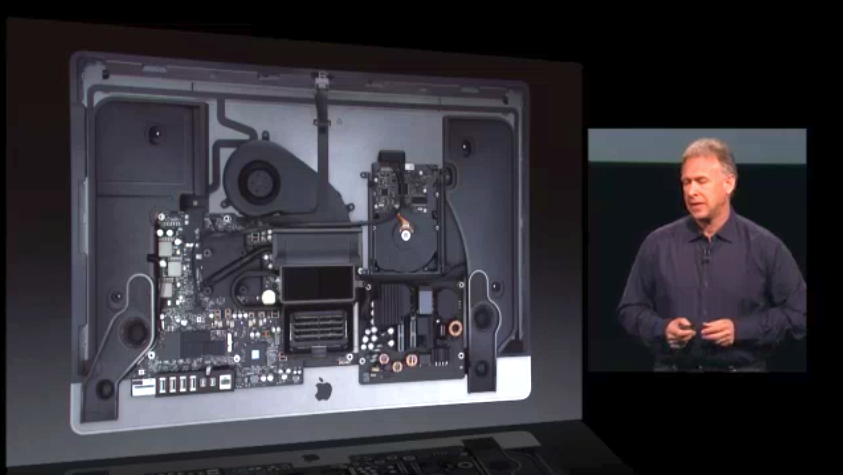
New desktop form factors follow a market that values small, cheap, and quiet over large and customizable — and it’s bad news for DIY PCs. Expansion slots and drive bays were the first to go: heck, they can make computers so big they barely fit under desks. Computer makers then shrank things further by putting features like graphics, networking, USB, and audio directly onto motherboards.
Smaller PCs are physically harder to access: getting inside a small form factor PC can require the dexterity (and even the tools) of a jeweler. More importantly, there’s little users can change about PCs built on tiny, feature-packed motherboards. Most components are soldered in so they can’t be swapped or upgraded. And without expansion slots, there’s no way to (say) install graphics that can handle high frame-rate PC games or add USB 3.0 connectivity for speedy backups.
The result? Mainstream desktops are going the way of notebooks, tablets, and smartphones with nothing that can be accessed, customized, or upgraded. In fact, Apple is already there: RAM in the current 21-inch iMac is soldered onto the motherboard, and even the hard drive can’t be replaced. Where Apple goes other PC makers seem to follow.
Gamers gonna game
What about the high end? Despite some laudable efforts, Intel has never been a big player in the gamer and boutique PC market, and high-end PC makers don’t seem concerned about Intel leaving the motherboard business.
“Asus and Gigabyte make up the majority of high-end motherboard sales,” noted OriginPC marketing specialist Eddy Piedra via email. “We don’t feel that Intel’s departure will really impact the market that much.”
“Intel’s announcement to exit the motherboard market has little to no impact on our business,” noted Harjit Chana, Chief Operations & Marketing Officer at high-end PC maker Digital Storm. “We feel third-party brands offer competitive solutions with features that specifically address the needs of gaming and enthusiast customers.”
Intel will still offer Form Factor Reference Designs as working blueprints for desktop motherboards, but the storied ATX-based motherboards risk becoming an afterthought once Intel stops selling boards of its own.
“Without feedback coming in from their own product and from companies like ours who use their products, the innovations side may slow down,” noted OriginPC’s Piedra. “It’s one thing to give a motherboard manufacturer some feedback, and another to give the chip designer the feedback. But we are confident the other board partners will continue to make quality products as they always have.”
Bottom line
Gamers and pros who spend big bucks on their rigs should be able to mix-and-match gear for the foreseeable future, but things aren’t so clear for everyday users.
Today, knowledgable folks can build inexpensive systems using ATX-derived motherboards and off-the-shelf parts. Those motherboards — and the parts they require — will become increasingly specialized, unusual products as mainstream computing shifts further towards compact desktops and mobile devices. That will mean fewer motherboard makers, higher prices…and the days of the cheap, DIY PC slowly coming to an end.



As long as there are computers, there will always be a market for the DIY systems. We are the ones who drive the innovations. Even laptops are becoming upgrade-able and modular. There will always be a market for people to build their own machines, and allow for future customization.
But how big will that market be? Not as big as it is now.
Are you sure about that? I have seen some studies that have shown console gaming dropping, but PC gaming staying strong. Or in some studies, increasing. I can’t site sources, as I have read it quite a while ago…
Looks bad across the board it looks like: http://www.usatoday.com/story/tech/gaming/2013/02/05/video-game-content-spending-down-2012/1894551/
Keep in mind that the NPD report should be taken with a grain of salt, as it is based on extremely limited data. This is especially true for PC game sales, since they only track US retail sales. They have no data on Steam, app stores, or any other digital distribution services, giving them an incredibly skewed look at game sales stats. An increasingly large portion of games are sold digitally, so their report is becoming less relevant than ever. All you can really take from their report is that retail sales of games have decreased, but this says nothing about digital sales, which by all signs have been growing to take their place.
http://penny-arcade.com/report/editorial-article/its-time-for-the-gaming-press-to-grow-up-and-ignore-the-npd-group
I can definitely see that. There is no doubt though that PC gaming is taking a hit when you see the number of released games dropping though right? Obviously game makers are going to develop where there is a under installed base, and right now that is consoles.
I wish it was the other way around. I’m a big gamer and love my Falcon-NW system. I just wish I had more game options.
Even if there is a “New Era” for PC’s they have to take in mind many things no just the size factor . . more speed means more heat, more heat new cooler, new cooler . . more room??? not necessarily but what about a new case?? . . upgrades?? . . what about a new video card?? hello Nvidia, AMD?? . . a solid state version?? . .I know every day is something new in the market but sincerely I don’t think that in 3 years a “Custom PC” is going to dissapear . . yes I’m a modder, yes I’m a gamer . . . and yes I’m a geek !!.
my point exactly… For as long as there have been consumer products, there have been people who want to mod them and make them better. Computers already have a great market for that, and manufacturers would surely loose hordes of money by changing that.
I suspect the form-factor will change in the future, though there will still likely continue to be upgradeable computers. Even something along the lines of that little 4×4″ computer pictured could be made upgradeable. There could be a standardized plug on top, where you could snap on similarly-shaped expansion units that would link to the main unit via a high-speed interface. Want a new graphics card? Snap on a graphics card unit, with its own self-contained cooling system. Want more storage? Stack a storage unit on top. RAM might take the form of flash drive-shaped modules plugged into the back of the main unit. Each piece could be self-contained in its own case, allowing for easy installation and replacement, while still enabling a fair degree of customization.
That standard plug could come in the form of Thunderbolt… It’s the fastest thing out right now, faster than esata and usb3. Also, your idea is intriguing… it would allow for the warranty to remain intact.
1.not everyone with a ‘screwdriver’ can build a pc.2.i use amd anyway…intel is bunk.
ahh, you like cloneware ;)
That would indeed be sad. Computers have become to people like me what muscle cars were to an earlier generation.
Intel is great. their motherboards for business machines are great.. their motherboards for gaming rigs SUCK. Most businesses aren’t building their own PCs anyway, so I don’t think anything will happen in that respect.
Intel PROCESSORS however are a different story. If motherboard manufs aren’t going to be able to put Intel chips into their boards, then there will actually be a detriment to intel’s sales imo. But there is still an increasing demand for cost savings as well as customizability. The problem is for the computer industry that most people police what they buy and pick components that are less prone to fail. The manufacturers go with pricepoint options and don’t necessarily pay attention to the quality aspects as much as a personal builder would. Thus, the gamer/computer aficionado is still coming out on top. Until that changes, there’s no threat to custom builds.
Even before Intel announced its withdrawal from the desktop motherboard market, cheap DIY PC’s were already dying due to the proliferation of cheap prefab pc’s from HP, Dell, etc… It was getting increasingly difficult to justify the cost of the individual PC components when you could get a decently powerful machine for $500 or less.
sure, you can get a machine for under $500 that you can browse the web on, ans use to skype. but can you gameon a $500 dell? no. it will almost certainly be running integrated graphics and a low-end i7. for gaming, this is a terrible combo.
There are plenty of games that would work on a $500 Dell, and as long as the GPU is upgradeable, you should be fine.