The international team of activists, technologists, and body-hackers known as Cyborg Nest want to give you a sixth sense — and, with apologies to M. Night Shyamalan, it’s got nothing to do with seeing dead people.
Instead, Cyborg Nest’s upcoming first product is a device called the North Sense: a miniature, Bluetooth-enabled wearable chip-like device users attach by way of body piercings. Its purpose? Firstly, to vibrate each and every time you face in a magnetic northward direction. Secondly, to aid your transition in becoming a real-life cyborg.
“The main aim of Cyborg Nest is to help as many people as possible to become cyborgs by extending their senses,” Liviu Babitz, Cyborg Nest’s CEO and founder, told Digital Trends. “North Sense is our first sense, with many more coming in the future. We think it’s something that should appeal to everyone on earth.”
“If it’s not permanently part of you, it will remain a tool — and will never get to that place where it’s an intuitive sense.”
Babitz said that North Sense is the logical place to start the transition into a more cyborgic existence. “When we started thinking of ideas about a year ago, we had a list of possible things we could do,” he continued. “We then started to do some research and realized that this was something that should be top of our list. In everything from Feng Shui to religion, north is a very important direction in terms of shaping our reality.”
If that all sounds a little “touchy-feely” for you, it’s worth remembering that the term “cyborg” was very much an invention of the hippy 1960s. The term was first coined in 1960 by two researchers named Manfred Clynes and Nathan Kline, both working at the Dynamic Simulation Laboratory at Rockland State Hospital, New York. A portmanteau of the words “cybernetic” and “organism,” it represented a brave new world in which man and machine could live together in harmony.
Coming the year before President Kennedy promised man would land on the moon before the decade was out, Clynes and Kline’s initial 1960 idea was to come up with technology that would allow mankind to flourish away from the confines of Earth. Their concept was to create augmented smart devices for astronauts that would take care of problems autonomously: “an organizational system in which … robot-like problems were taken care of automatically, leaving man free to explore, to create, to think and to feel.”
This ideal of “feeling” is crucial to North Sense. If Clynes and Kline thought the cyborg would give humans more time to use their existing senses by removing tasks which would otherwise require attention, Babitz told Digital Trends that North Sense (and other cyborgic gadgets) will provide entirely new ways to experience sensation.
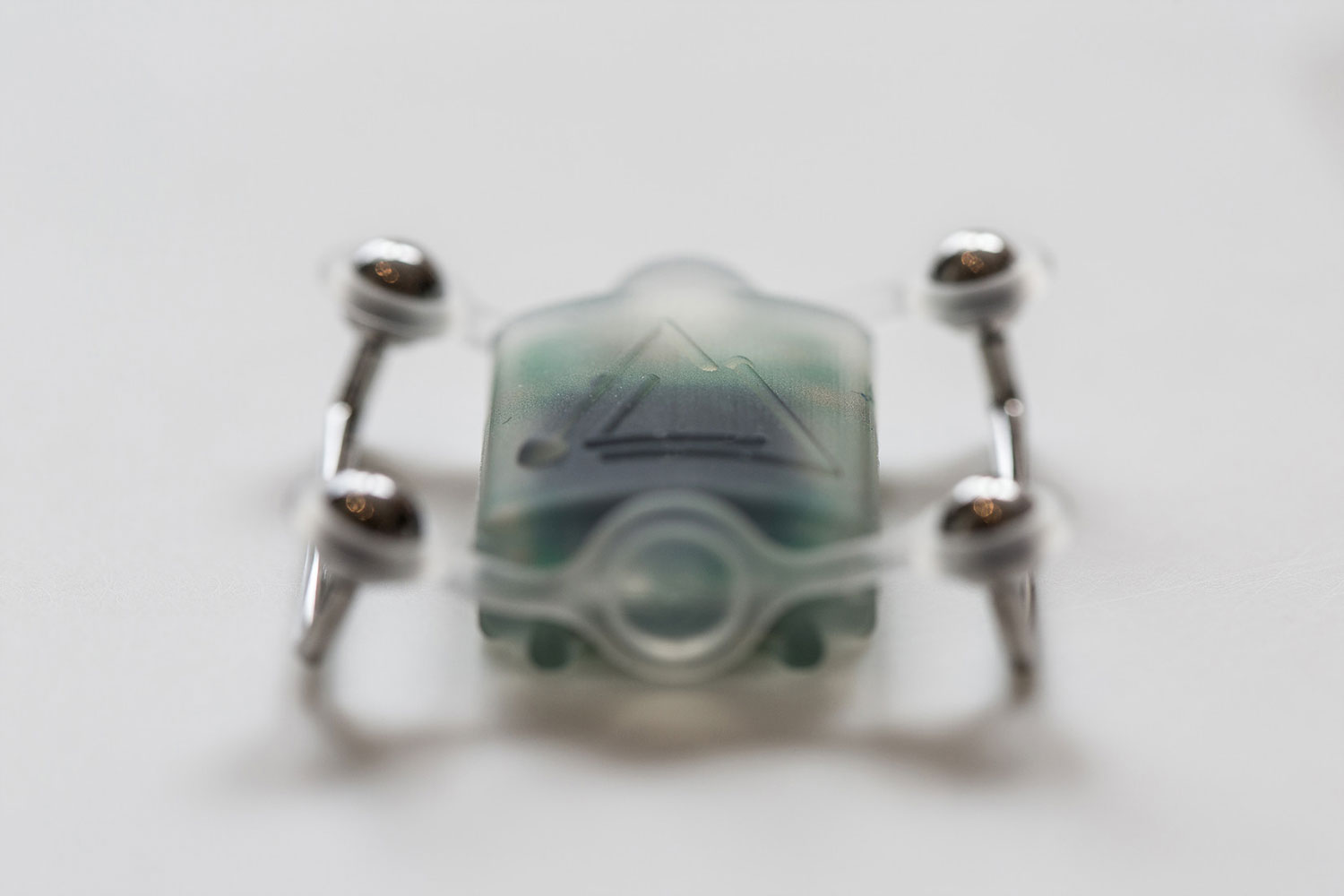
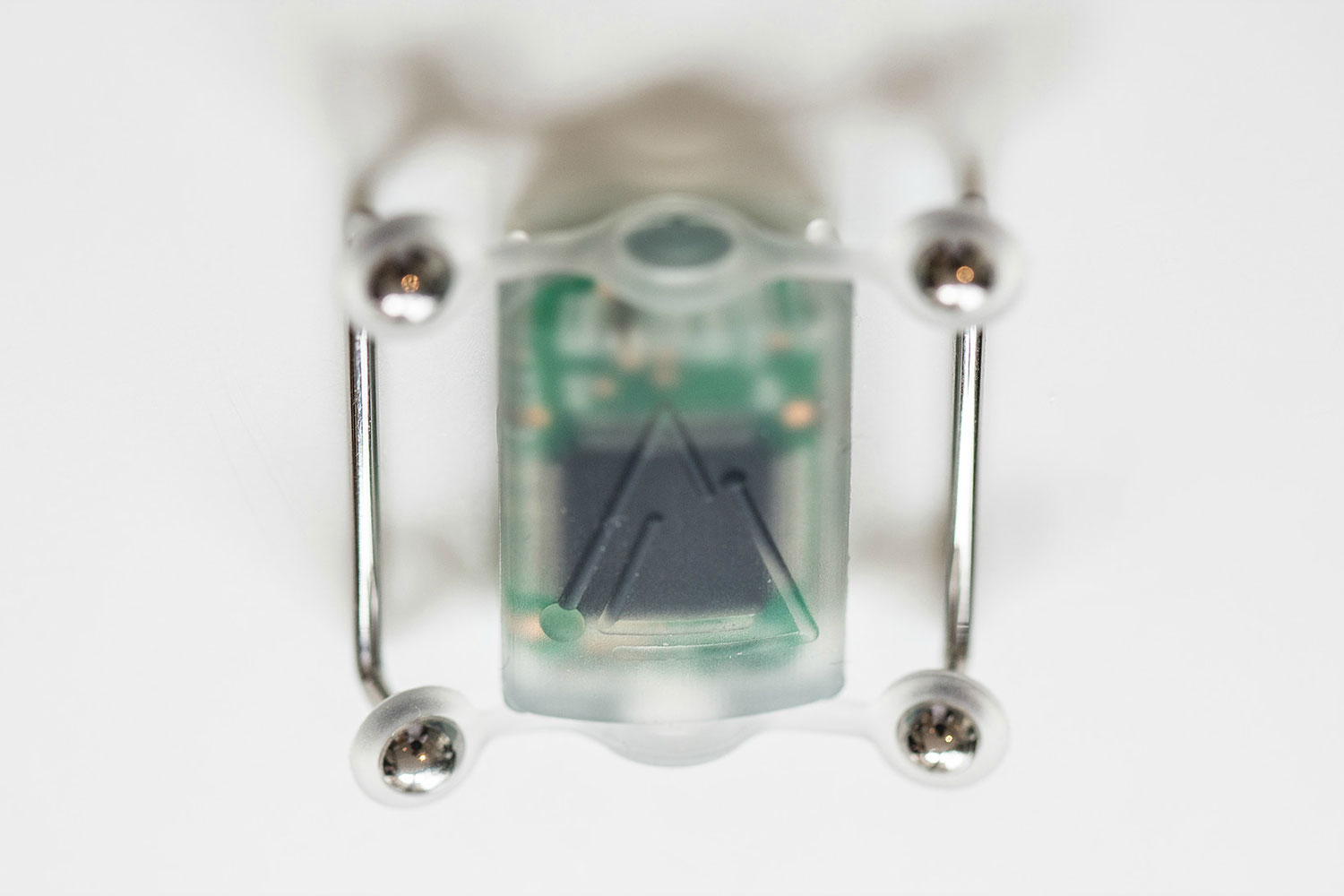
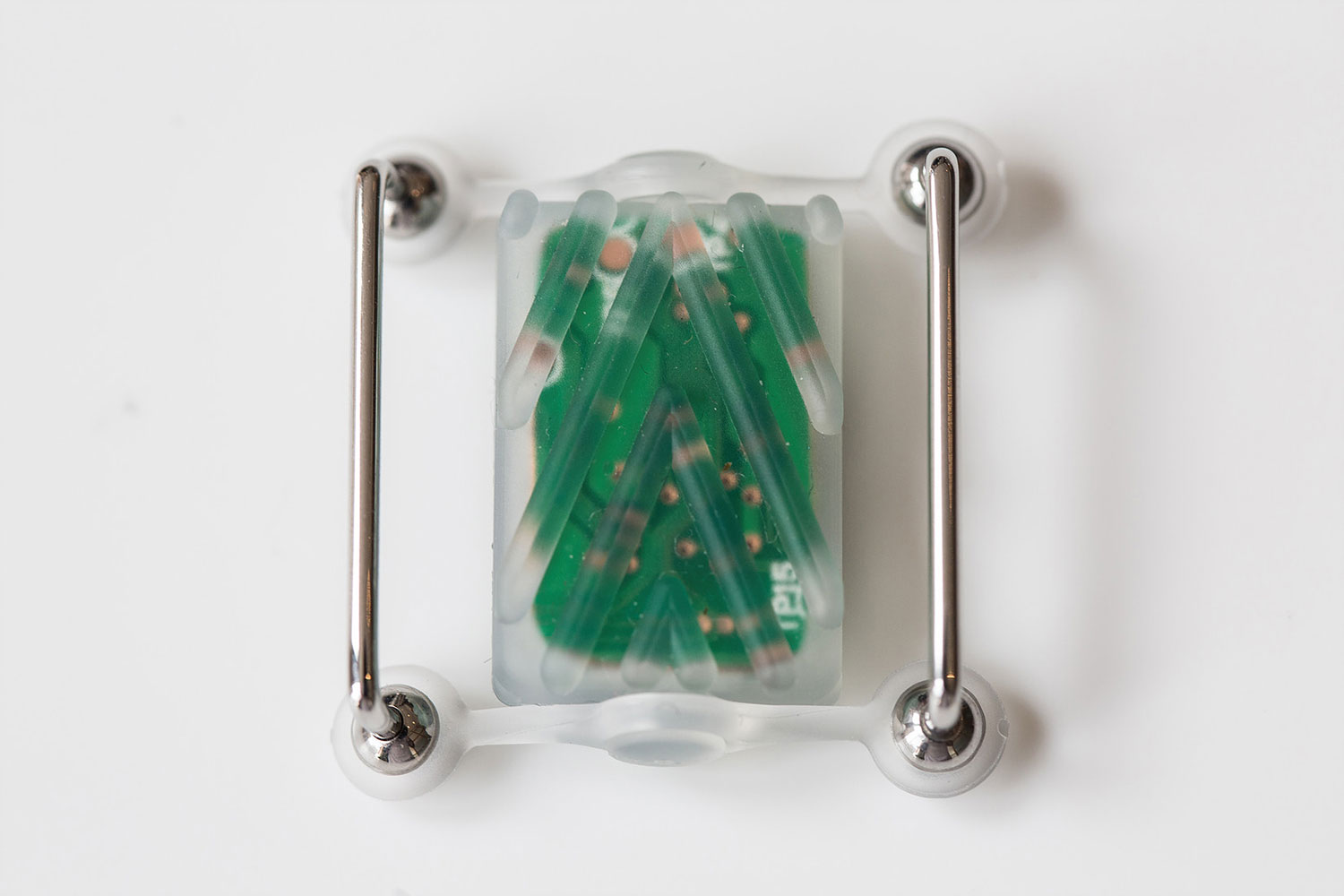
“Technologically, North Sense is a very straightforward device,” he said. “There are no buttons or lights. Its complexity doesn’t come from the device itself, but rather what it does to your brain. Today our memories are built from the sum total of all our other senses: what you see, smell, hear or whatever else. Suddenly you’ll have a new layer to add to that reality and you’ll start remembering things based on your orientation with Earth. The really exciting part of this is going to come down to how people use this.”
There is, of course, also the question of why it needs to be embedded by way of body piercings. After all, couldn’t similar functionality just be built into our smartphones or smartwatches? To Babitz, however, this is missing the point. “The important part of North Sense is that it will be a part of your body all the time,” he said. “When people first hear about what we’re doing, some say, ‘Why wouldn’t I just use the compass on my iPhone?’ The difference between a sense and a tool is that a tool is something you only use when you need it; a sense is something that is part of you all the time and helps you build your reality. For that reason, North Sense needs to be completely attached to you all the time. Our future senses will go even further, by being implanted. The permanency of it plays a very important part. If it’s not permanently part of you, it will remain a tool — and will never get to that place where it’s an intuitive sense.”
Right now, North Sense can be preordered for $350, with the first 2,000 units set to ship around September. “The exciting part of preordering now is that you get to be first and being there when things are happening,” he said. “When you see a revolution happening, you want to be there at the time. Years in the future, it’s good to say you were at Woodstock in 1969, in Germany in 1989 when the Berlin wall fell. Maybe people will say the same about having a cyborg sense in 2016. That’s something that excites me personally. Judging from the reaction, it’s something others feel the same way about, too.”
As for the other “nature powers” Cyborg Nest is also developing, Babitz noted that this will likely include extensions to human hearing and vision, pollution sensing, the even the ability to read what is happening behind you. (“Because half of your world is happening there, and right now we’ve got no idea what is going on,” he said.)
It seems the revolution has just begun!
Editors' Recommendations
- Neural implant turns regular grasshoppers into cyborg bomb-sniffers
- Researchers use brain-machine interface to create a sixth sense in rats