“It’s weird and wonderful, but the V1bes ring's creator doesn't know exactly what to do with it -- yet.”
- Made by a mad scientist
- Helps demystify stress
- Potential to treat diseases
- Ugly design
- Temperamental app
- Unclear goals for the future
“Why you can trust Digital Trends – We have a 20-year history of testing, reviewing, and rating products, services and apps to help you make a sound buying decision. Find out more about how we test and score products.“
It’s weird and wonderful, but the V1bes ring’s creator doesn’t know exactly what to do with it — yet.
I’ve met a mad scientist, and he wants to hack my vagus nerve. No, I didn’t like the sound of it much either, but apparently it’s for my own good, and could eventually (should the worst happen) help doctors cure me of some hideous illness.
The wonderfully named Gustav Kranck demonstrated a device to me called the V1bes, which is a highly sophisticated stress-o-meter, designed to help us understand how to de-stress, and bring our bodies and minds into balance.
Analyze your patterns and de-stress
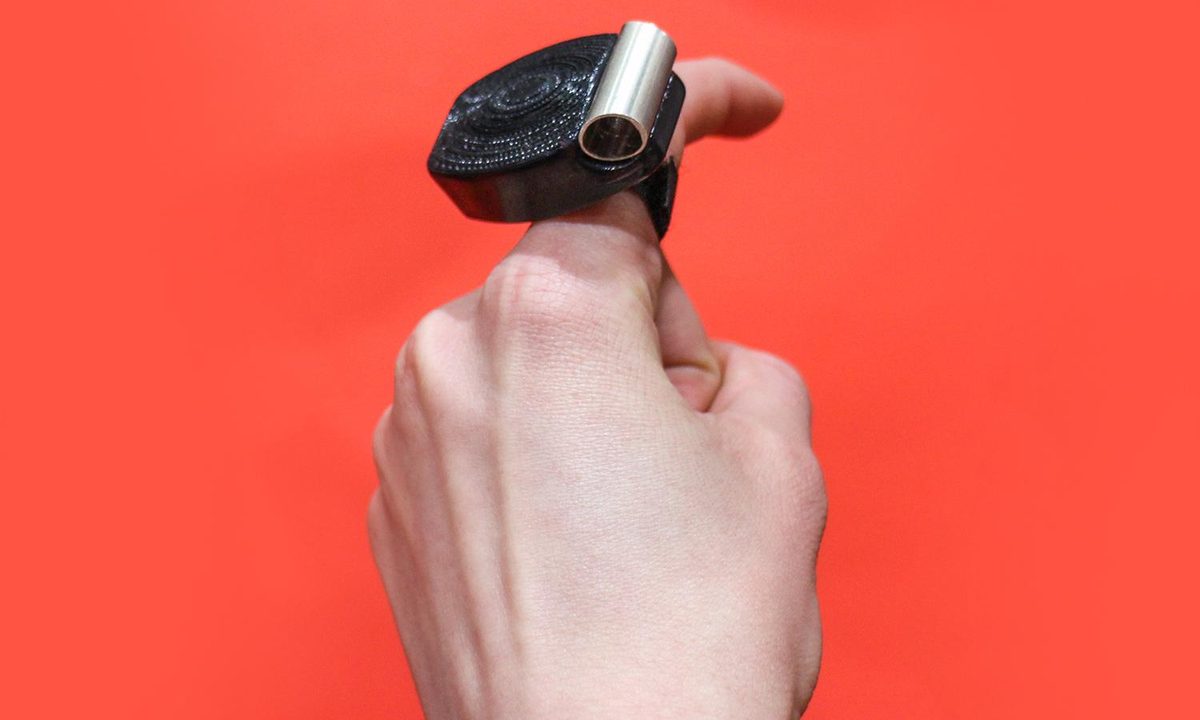
The V1bes is a big ring, worn on the right-hand index finger that performs three different tests — an EEG, an ECG, and an electromagnetic field test. You relax, clasp your hands together, and rest your thumb on top of it to take your pulse. Then, you put it against your forehead, in the classic “thinker” position, and finally, just hold it out in thin air to measure the electromagnetic fields.
I’ve met a mad scientist, and he wants to hack my vagus nerve.
Once the data has been collated, you get an image of how your body is performing, and the level of stress you’re placing on it. Kranck wants to help people relax more, and will use the V1bes and its app to promote yoga and healthy eating. The V1bes ring is only the start though, and ultimately, he wants the data for something much bigger.
Apparently, the vagus nerve connects the brain to most major organs, and it’s believed that electrically stimulating it can help people cope with chronic conditions from epilepsy and arthritis, to IBS. Beyond this, medication may even help improve the nerve, if it’s damaged.

Franck told me that by hacking the nerve, and using the big data collected from V1bes users, doctors will be able to better treat serious conditions. “Doctors will benefit from having a snapshot of what you looked like when you were healthy,” he said. Built on an open platform, the data collected by V1bes can be accessed and even deleted by its owner, so there are minimal security concerns.
Big ideas, but the execution needs work
Like all the best mad scientists, Kranck’s ultimate plan was a little unclear, and may end up relying on a small community of hardcore V1bes users. He’s not worried, though he doesn’t imagine the ring will end up selling in the tens of millions. However, I got the impression he truly believes the data could end up helping doctors and scientists make important medical breakthroughs in the future.
It all circles back to stress and relaxation. The more we look after our bodies, the better they will perform, and the longer they will last. It’s hard to argue with that.
The ring is a tool to help us make that step in the right direction. It promotes a healthier lifestyle, which could help us avoid preventable diseases and problems from happening in the first place.
I gave it a try, in the least relaxing environment imaginable, sadly, and it showed I was very stressed. No surprise there. To get any benefit, one would have to use it over an extended period of time, and examine the results more closely.

The V1bes ring itself isn’t the prettiest piece of hardware, either. It’s a big, black, plastic lump that sits on top of your finger, and there isn’t a big design plan in place to change its look in the future. The app was also confusing, and it’s way too temperamental for regular people to use.
Obviously, it’s not quite ready for sale yet, and will hopefully be refined by its end-of-year release. Originally launched through Indiegogo, the price is $200, and it’ll be sold through the company’s website in the near future.