Sony’s PlayStation 4 is officially a real thing now, and while we might not know what it looks like yet – expect a shiny, black box – we know enough to have a general sense of the direction that the next-gen is headed in. As important as improved technical bells and whistles are, the big next-gen push highlighted in Sony’s presentation is on ease of use and accessibility. The PS4 will significantly enhance its social presence, with community-oriented features designed to foster increased brand loyalty. Sony’s Gaikai acquisition also adds value to the new platform, by way of remote play capabilities and promised future support for legacy titles on the non-backwards compatible consoles all through streaming capabilities.
While technically Nintendo was the first to enter the next-gen fray, Sony was first out of the gate for next-gen hardware announcements in 2013. This leaves Microsoft in a position of having to announce an Xbox 360 successor that acknowledges, however indirectly, the competition on some level. The NextBox will carry its own personality, of course, but the expectation is that many of the new features will compete with what’s out there. With April 2013 looking more and more likely as the announcement window for Microsoft’s next game console, we’re taking a moment today to consider what we can expect to hear once all is revealed.
Community Building
Whatever your console of choice is, it’s difficult to support any argument that doesn’t put the Xbox 360 at the top of the current-gen pile when it comes to social features. Cross-game party chat alone has created a social dynamic on Xbox Live that is absent on Sony’s and Nintendo’s competing platforms. While there’s no doubt that Microsoft will hang onto already-successful features in its next-gen hardware, that doesn’t mean the Xbox brand doesn’t have room to grow on the community side.

Between Kinect and Xbox SmartGlass, there’s plenty of space for Microsoft to expand its focus on social gaming. Console-supported live-streaming, similar to what the PS4 will bring, is a distinct possibility. You can also likely expect to see more of a direct link established between your Xbox Live profile and your social identity on the Internet (we’re looking at you, Facebook and Twitter).
These are easy to single out, both because Sony is already looking in that direction and because there’s precedent on Microsoft’s current-gen console that lays the groundwork for future expansion. What of the Windows 8 ecosystem though? Microsoft hasn’t had the easiest time pushing the dramatically changed version of its Operating System on early adopters. The NextBox will undoubtedly slot right into that ecosystem as another Windows 8-ish platform, with all (or many) of the cross-platform functionality that is already offered in the link between Windows 8 PCs, Surface tablets, and Windows 8 phones.

Will the next-gen Xbox rally non-Mac users around the latest OS? It’s hard to say. Many critics seem to agree that the drawbacks in Windows 8 are low-impact enough that Service Pack updates could address them, though numerous reports indicate that Microsoft is embracing a yearly update approach with its OS improvements, in a move that mirrors Apple’s own OS X efforts. It seems likely that the new Xbox OS will connect in some way to Windows 8, but the extent of that cross-platform connectivity remains one of the big question marks.
Xbox Live And Microsoft’s Economy
One topic that never came up at the PS4 announcement was PlayStation Plus and Sony’s plans for the subscription service on the new console. The current gen has seen an unusual competitive field develop between Sony and Microsoft. On one side, you have a platform in the PS3 that offers features like online gaming, Netflix (and other digital content) streaming, and basic social features free of charge. On the Xbox 360 side, online gaming and streaming content can only be accessed if you are a paying Xbox Live Gold subscriber. Silver-level members can purchase content in the Xbox Live Marketplace and chat with friends, but they are effectively hobbled in a way that the Sony platform users have never known.
Now, it’s entirely possible that Sony could turn around in the coming months and say that online play on the PS4 will require a paid subscription, though the risk of alienating loyal fans is high. Assuming that the status quo established by the PS3 remains, Microsoft faces a tough choice. Xbox 360 users are invested in this generation, and they continue to pay their yearly fee for the ability to game online. New hardware makes switching sides an easier proposition, and an Xbox 360 community that has balked for years at Microsoft charging for content that is free on any other gaming platform could quickly shrink if that situation doesn’t change. Xbox Live Gold subscriptions need to offer a better value than they currently do.

Let’s also not forget the importance that Microsoft places on establishing the Xbox 360 (and presumably its successor) as a focal point of your living room. Sony’s PS4 reveal specifically targeted gamers and play, which diverges sharply from Microsoft’s existing strategy. It’s probably unreasonable to think that you’ll be able to, say, subscribe to cable networks through your next-gen Xbox, but expect an increased focus on multimedia content, and a birthing of sorts of original, Microsoft-produced programming.
The changing hardware also gives Microsoft an opportunity to finally ditch the Microsoft Points currency system that is exclusive to Xbox Live Marketplace. Post-release XBLM features such as Games On Demand have already done so in favor of a content-for-cash setup, and it seems likely that the almost universally hated MS Points system will be phased out with the new hardware.
Legacy Support
Sony has a unique advantage with its Gaikai acquisition, as the streaming game service’s pre-existing infrastructure gives the console maker a readymade platform to work from as it develops a cloud gaming presence. This is, however, offset by the fact that the PlayStation 4 is already confirmed to ditch backwards compatibility. Much of the blame for the lack of support belongs to the internal hardware switch from the PS3’s Cell processor to the PS4’s x86-based architecture. Legacy content would require some fiddling before it could run on a PS4, so streaming that content instead becomes an attractive alternative to software emulators.

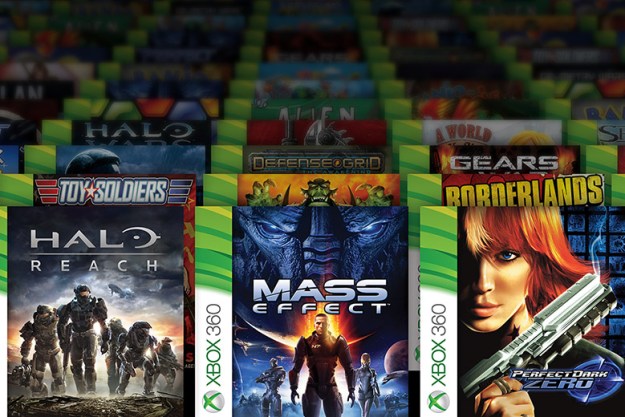
Microsoft is in a very different situation. There’s no cloud gaming infrastructure on the level that Sony’s Gaikai acquisition offers, but there’s also (likely) no fundamental change to the internal make-up of the NextBox that would discount the possibility of backwards compatibility. Given Microsoft’s attitude already toward cross-platform functionality in the Windows 8 ecosystem, it seems very likely that some amount of legacy support will be standard in the new console.
With digital content available in Xbox Live Arcade especially, it seems like a no-brainer for Microsoft to allow previously purchased content to be carried over. Especially if offering said support is the low-cost proposition that it would seem to be, since it’s – as already mentioned – it’s unlikely that the NextBox will switch up its hardware in any dramatic way, beyond the expected performance upgrades. If there’s a way for Microsoft to add another bullet-point to its next console’s features list that fully one-ups Sony’s offering, expect it to be there.
Harnessing A Second Screen
Will the NextBox follow the example set by the Wii U GamePad and the DualShock 4 – and to a greater extent the Vita – in offering some sort of touch-based interface? If there’s anything that Microsoft nailed perfectly in the current gen, it’s the overall shape and design of the Xbox 360 controller. It seems reasonable to expect that it will change somewhat for the new console, but it’s hard to say exactly what we might expect on that front. There’s definitely something to be said for applying an “if it ain’t broke, don’t fix it” philosophy to the existing controller.
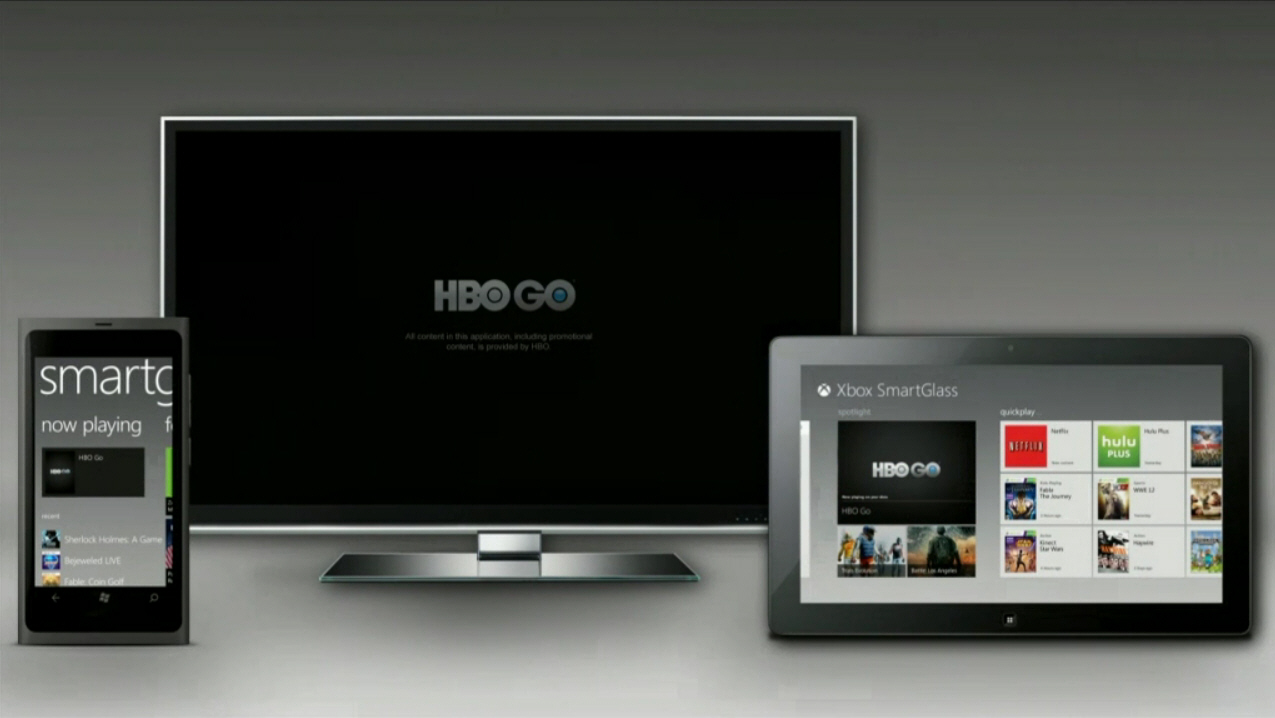 All that said, Xbox SmartGlass and the growth of Microsoft’s related mobile app is clearly something that will carry over into the next-gen. The company has always shied away from portable gaming outside of its Windows Phone initiatives, but rumors continue to swirl about an Xbox-centric Surface tablet. There’s a certain amount of fan expectation moving into the next generation that Microsoft will at last acknowledge the value of a portable gaming alternative. It’s hard to say what form that might take, but initiatives such as SmartGlass strongly suggest that there’s some big news to come on the Xbox-goes-portable front.
Kinect 2.0
There is no doubt that the NextBox announcement will also include info about Microsoft’s revamped Kinect. Multiple unconfirmed reports suggest that the motion-sensing camera will be a necessary pack-in peripheral, and possibly even integrated into the console itself. The Kinect so far has proven itself to be an ambitious-yet-undercooked piece of tech; when it works, it is absolutely brilliant. Controller-free motion support pulled straight out of Minority Report. The problem, of course, is that the Kinect is horribly inconsistent. Even the games that harness its capabilities well have a tendency to stumble over inaccurate motion detection now and again.

This is pretty simple, really: Kinect has to work in the next-gen. Microsoft has poured a considerable amount of resources into supporting the peripheral, and it’s not likely to abandon that just because of the (deservedly) lukewarm reception in the current-gen. You can almost look at Kinect 1.0 as a testbed for what is to come in the next hardware generation. It doesn’t come nearly close enough to hitting Microsoft’s ideal, but multiple years of real-world testing has left the company’s engineers with plenty of data to work with as the next-gen approaches.
Editors' Recommendations
- All cross-platform games (PS5, Xbox Series X, PS4, Xbox One, Switch, PC)
- How to factory reset a PS4 to fix issues or for resale
- Sims 4 cheats: all cheat codes for PC, Xbox, PS4, PS5, and more
- Xbox Series X vs. PS5: Which should you buy in 2024?
- How to import a Last of Us Part 2 save from PS4 to PS5