

There are two kinds of people in this world: Those who use whatever is built into their TV to access all their streaming services, and those who know there's almost certainly something better out there.
There's nothing inherently wrong with the former group of people. Smart TVs come with built-in operating systems like Roku, Amazon Fire TV, or Google TV running the show, in which case you're well-covered. And bespoke TV operating systems — like LG's webOS, Samsung's Tizen, or even Vizio's Home Screen/Smartcast — have gotten better in recent years.
But there's still a reason to consider an external streaming device, be it a stick or a box or a puck. (The form factor doesn't really matter all that much; we just need something to call it.) Maybe you have an older TV but want more up-to-date features and apps. And current security, which perhaps is even more important. Or maybe you're just unhappy with what's built in to your TV. Maybe you want all the extra bells and whistles that come with it, like Apple's native AirPlay feature. Or Google's Chromecast. Or the fact that both of those operating systems almost certainly have a better on-screen keyboard.
Or maybe you just want to have "the best" option. That's subjective, of course, but we get paid to make tough choices. So here's what we think are the best external streaming devices going into 2024. Some are newer than others. Some will be replaced in the months to come. All will serve you well.
But, yes, we do have a favorite.

Apple TV 4K (Late 2022)
The best overall streaming device
- Lightning quick navigation
- Gorgeous Audio and Video output
- Feature-packed
- Extremely Powerful
- Intuitive, uncluttered interface
- Several features exclusive to Apple users
It's still the simplest, most consistent experience you can get, with a relatively open-ended shelf life, and the late 2022 model has gotten that much better. And those in the Apple ecosystem can make use of some of the extra features, it's not just for those with iPhones and iPads. In the world of $50 streaming sticks that absolutely can get the job done and get it done well, it's perhaps a little hard to recommend something that costs three or four or five times as much. And to be clear, Apple TV 4K doesn't do three or four or five times as much as its competitors. In fact, you can make the argument that it does a little less. More on that in a second. But what it does do, it tends to do better — and with fewer headaches.
What you get for that extra money is hardware that should darn near last forever. (Just ask anyone who's still happily using the original Apple TV 4K, released in 2017.)
It's tempting to say that the third-generation model is nearly identical to what was released with Gen 2 in 2021. And that's mostly true, insofar as what the end user sees. The box itself is a little smaller, having gotten rid of the fan that you probably never heard anyway. And the internals have been spruced up, too. It's now powered by the A15 Bionic processor, which provides plenty of headroom. And there's now support for HDR 10+, which is important if you own a Samsung TV. (Samsung doesn't support Dolby Vision.)
There also now are two models from which to choose. One has 32GB of storage and only uses Wi-Fi for connectivity. You do not want this model. Probably.
What you should really look at is the one that costs $20 more and includes Ethernet (of the super-fast Gigabit variety), as well as support for Thread and Matter. Those latter bits are new standards for smart-home connectivity, which allow devices to talk to each other directly. You might not care about that now, but it's the future of smart home tech. Between that it having double the on-board storage capacity (and to be fair, 64GB is almost certainly too much, but nobody ever regretted having too much storage), this is the model you should consider.
And that's all followed up by software updates that will span years in the future. The fourth-generation Apple TV — the last to top out at HD resolution and which is now referred to only as "Apple TV HD" — released in 2015 is still supported on tvOS. So there's plenty of reason to believe that an Apple TV 4K purchased today should last at least five years, insofar as the software is concerned.
Apple's tvOS is even more simple than its current phone and tablet software. The home screen is app icons, and that's it. No real recommendations of shows or movies or live channels. No advertising. Nothing that overwhelms. That simplicity in and of itself may well be worth the extra money.
Those who are all-in with Apple's ecosystem also will get the added bonus of things like AirPlay 2 and HomeKit — as well as ridiculously slick integration of using your iPhone or iPad for the on-screen keyboard. But even if you're not, you'll still be able to snag all the apps you could possibly need for your home viewing experience. And they're all done in accordance with Apple's developer standards, which are decidedly higher than other platforms on this list.
Apple TV 4K isn't inexpensive. But it's still the best.
Is an update coming soon? This model is more than a year old going into 2024, and it wouldn't surprise us to see a new one in the coming year. But the late-2022 model will remain supported for years. If you want one now, buy one now.
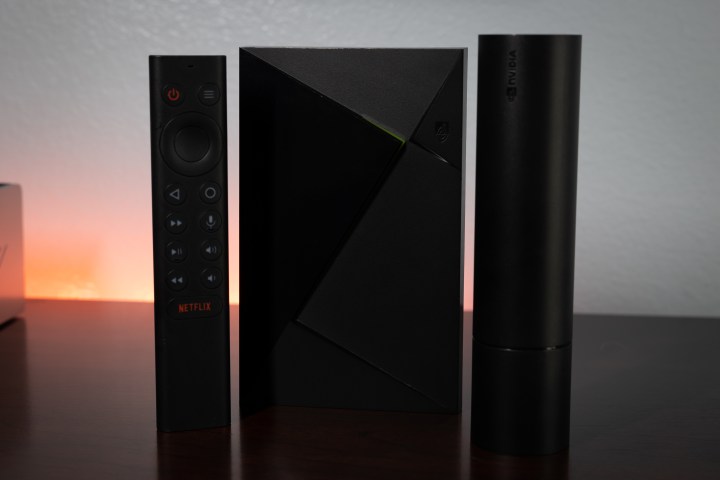
Nvidia Shield (2019)
The next-best streaming device
- Great for game streaming
- Good variety of apps
- Excellent AI upscaling
- Doesn't come with a game controller
- No included HDMI cable
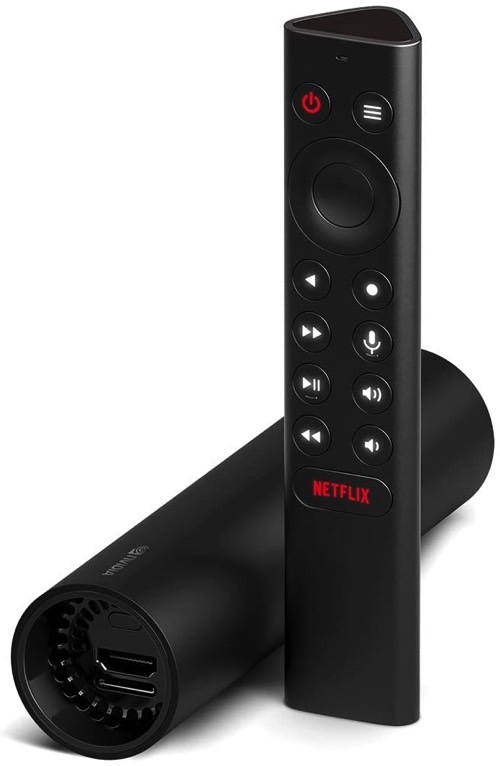
The best hardware that's not Apple, plus a great option for gamers, the Shield (also often referred to as "Shield TV") has a history dating back to 2015. That ancient hardware, running Nvidia's Tegra X1 processor, was overpowered for the time and keeps that original box running just fine today.
The most recent Shield, released in 2019, comes in two flavors. Both add Dolby Vision into the mix, in addition to Dolby Atmos decoding. The non-Pro model comes in a cylindrical body for some reason. The Pro has more RAM and doubles the onboard storage to 16GB (both models still allow for external storage) and is meant for gaming via Nvidia's G-Force Now system. And the Tegra X1+ processor is as good now as it was at release. Additionally, Nvidia does a great job at ensuring even more longevity to its devices with frequent updates that bring additional features and capabilities to the box.
Is a new one coming in 2024? Frankly, we have no idea. It's amazing that Shield is still available, and even more amazing that it's still as good as it is. That's a testament to the hardware.
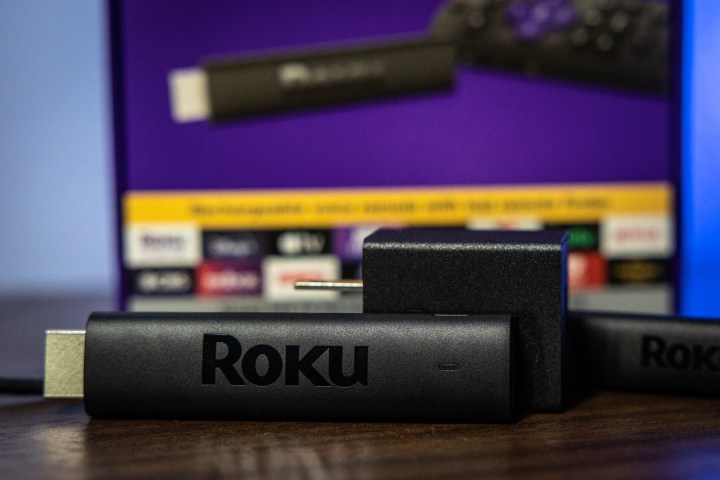
Roku Streaming Stick 4K and 4K+
The best of the inexpensive streaming devices
- Affordable
- Easy to use
- All the features you want
- Roku's advertising scheme means tracking
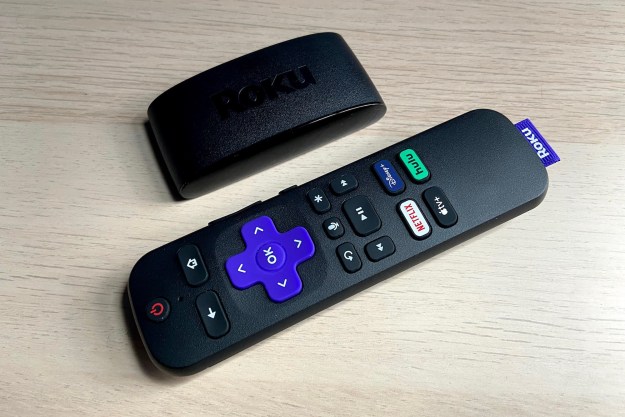
Roku is the grandfather of streaming, back before it really became a thing. It remains as easy to use as ever, with "Channels" taking the place of apps. They're really the same thing, and one Roku device works exactly the same as the next. It's just a matter of what specs and features you get at what price.
The Streaming Stick 4K and Streaming Stick 4K+ are identical, insofar as the sticks themselves go. You get 4K UHD resolution, support for Dolby Vision and Dolby Atmos, and improved Wi-Fi over previous models. The "Plus" side of the equation comes with the inclusion of the Roku Voice Remote Pro, which gives you hands-free voice control. Just say "Hey, Roku," and the remote will hear you and execute your commands. It does so at a $20 premium ($50 and $70, respectively), which is worth it if that hands-free stuff and private listening via a headphone jack are important to you.
Rokus's operating system gets pretty regular updates, too, which usually brings some new features, interface updates, and access to new content. Here's out explainer on how to update your Roku, just in case.
Roku has really started to stand out in the past couple of years with its inclusion of free shows and movies on its own distribution source, the aptly named The Roku Channel. The series and movies are all supported by advertising. There's a lot of old content that you'll recognize, as well as new original content. It also has dipped its toes into the realm of more standard original content with its own series, and presumably more is on the way.
Advertising-based content means more tracking, however, and that's just something you have to keep in mind when it comes to Roku. But it's hard to argue against the value proposition of the Streaming Stick 4K.
Is a new one coming in 2024? Given that the current model was released in September 2021, it wouldn't surprise us in the slightest to see a new model in 2024. The only question is when.
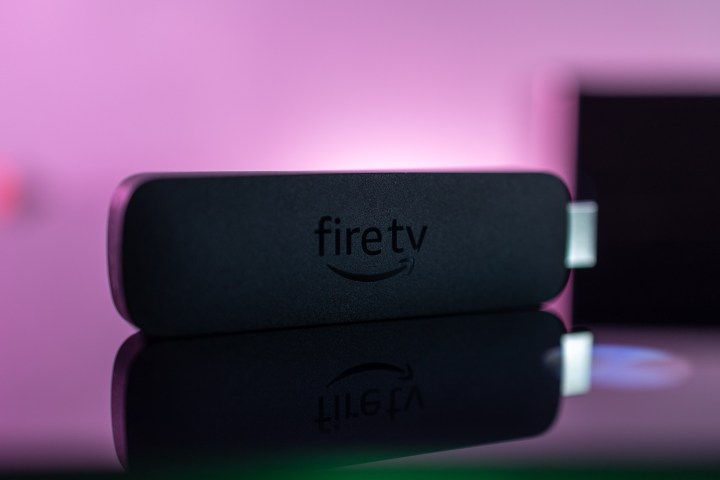
Amazon Fire TV Stick 4K Max
Also great, but for those who don't want Roku
- Same great Fire TV experience
- Double the storage
- Improved processor
- Faster Wi-Fi
- Price is right
- Doesn't include the best Alexa remote
- Waiting on some new AI features
- Laggy interactions
If Roku just isn't your thing or you prefer the native Amazon and Alexa experience, a Fire TV stick might be the one for you. The original Amazon Fire TV Stick 4K has been a great buy for a couple of years now. Making it more "Max" just made it that much better, and it's been updated as of September 2023. The Amazon Fire TV Stick 4K Max now has newer internals with a faster processor, Wi-Fi 6E, and continued support for Dolby Vision and Dolby Atmos. It ships with the latest Alexa Voice Remote, which doesn't include hands-free voice access, but does have proper television controls.
What it doesn't change is the same great experience you'll get with Amazon Fire TV OS. While the home screen may still be a bit busy for some, that's just a testament to how much great content is available in the Amazon ecosystem. Start with Amazon Prime Video, of course, which has all the movies and series you could possibly want, as well as more than its share of great original content.
And that's all before you get to all the third-party streaming apps, games, and other options available on Amazon Fire TV. The Amazon Fire TV Stick remains an excellent choice and one that's tough to beat.
The 2023 model of the Fire TV Stick 4K Max Max also is the first stick to have Amazon's Ambient Experience (previously limited to its Omni series of televisions). You get a number of really good screensavers, or you can use your own photos as backgrounds for when you're not actually watching TV. Plus, it has widgets of varying degrees of usefulness.
Any real complaints we have here tend to be in performance. This is still a low-cost device, and laggy graphics and load times occasionally remind us of that fact.
Is a new one coming in 2024? This version was released in the fall of 2023 and is unlikely to be updated anytime soon. But Amazon may well update the Fire TV Cube, which has different features and is more expensive.
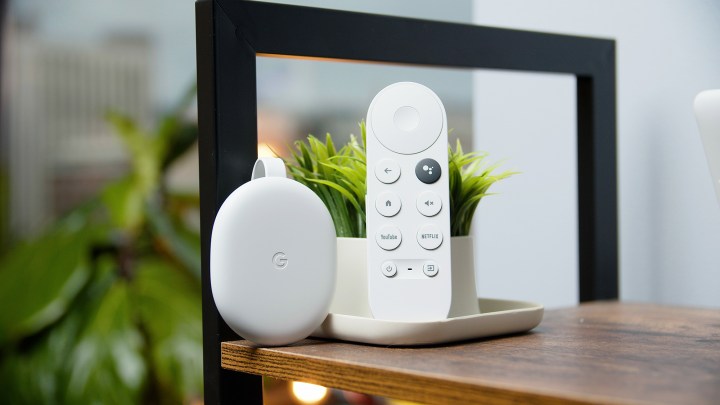
Chromecast with Google TV
Everything you want in a Chromecast
- Affordable
- Dolby Vision and Dolby Atmos support
- Slick UI
- Responsive
- Integrated Google Assistant
- Dolby Vision always on by default
- Recommendation algorithm still learning
When it comes to Android-based hardware, you typically get what you pay for. Cheap Android sticks are a dime a dozen and should mostly be ignored, as support can be iffy. Sticking with Google's own hardware means that you're going to get all the features and support that you want, plus the security that you should demand.
Chromecast with Google TV is the first Google hardware with the next-generation operating system. Technically, it's built on Android, but this isn't your father's Android TV device (or your grandfather's original Google TV device, but that's a trip down memory lane for another time). It's got the new operating system and home screens. It does a better, more sophisticated job of surfacing things you want to watch and apps you want to use. Sometimes to a fault.
And, yes, it's still a Chromecast, making it super easy to get any sort of content from a phone or Chrome browser onto your television.
The biggest complaint we have is that like other hardware in this price range, it can be a tad underpowered, and that's a concern when you're drawing as many images on the screen as Google TV does. And when you're talking about a device that you're likely going to be using every single day, even a little bit of lag gets amplified.
Still, though, it's a great way to round out the trifecta of affordable streaming devices.
Is a new one coming in 2024? We can only hope so, given that the 4K model (which is the only one you should buy) was birthed in September 2020. That said, this one is still getting better every few months thanks to software updates.
Frequently Asked Questions
We test our streaming players over a period of days or weeks, replicating exactly how you’d use them in real-life scenarios. That includes testing them for speed, convenience, intuitiveness, and a variety of features. Accessibility to a wide variety of apps is also crucial — after all, most TVs and Blu-ray players already are set up for basic streaming — so a designated streamer should offer something more.
But beyond that — we watch TV, too. We use these devices day after day, year after year. We live with them, just as you'll live with them.
A streamer might have the best hardware in the world, but this won’t matter if you can only watch content from one streaming service. To meet our standard, a streaming media player ideally supports all or most of the major content providers, as well as a wide variety of newer features like 4K Ultra HD and HDR. Finally, we look at how much quality and how many features you get on a dollar-by-dollar scale to ensure each of our top streamers is not only a great experience but also a great value.
Roku: Roku’s interface is consistent across every model, whether you’re talking the top-of-the-line Roku Ultra or the entry-level Roku Express. There also is a certain look to Roku apps (which the platform calls "Channels"), and you won’t find interface differences across different apps as much as you might on other platforms.
As we’ve mentioned before, you’ll find nearly every streaming service or channel you care about represented here, and unlike certain other platforms, you won’t find any gaps, with the notable exception of iTunes, which is only available on Apple streamers.
Amazon: Like Roku, Amazon offers a single experience across a bevy of devices. It's got four Streaming Sticks at various prices, the Fire TV Cube, which offers the same features plus hands-free voice control, various Fire TV televisions with the operating system built-in, and third-party soundbars that also have Fire TV OS built-in.
Apple TV: As you might expect, Apple TV devices are designed to offer a seamless experience, especially when paired with other Apple products. In addition to offering a huge number of streaming apps, the Apple TV platform also supports Apple Arcade, Apple TV+, and Apple Fitness+, and can even act as the master control for HomeKit devices. HomeKit-compatible security cameras, for instance, can be streamed to the Apple TV with just a few clicks.
The Apple TV app (yes, there's an app that goes by the same name as the device) is actually a curated and personalized interface for browsing content from your favorite streaming services as well as being the official home of Apple TV+. Other features include watch lists, watch next, and dedicated tabs for sports and live TV.
Apple would prefer that users buy and rent content via iTunes, so you won’t currently find an app for Google Play Movies and TV. There's a workaround: Make sure you're signed into the YouTube app, and your purchases should show up. Failing that, Google Play offers a mobile app that allows content to be streamed to an Apple TV via AirPlay— but only from an iOS device.
Android TV (Nvidia Shield, Chromecast with Google TV): Android TV is a little different from the other options here in that manufacturers can put their own spin on the interface, similar to phone manufacturers with Android.
You'll find that many apps exhibit plenty of individuality on Shield TV and Chromecast with Google TV, which contrasts with the visual in-app consistency with Roku apps. Generally speaking, Android TV devices include the Google Assistant for voice commands and smart home control, and they have Chromecast built-in, too.
Google has been slowly migrating Android TV over to the Google TV interface, which debuted on the Chromecast with Google TV. This interface de-emphasizes individual apps in favor of a curated and personalized content recommendation layout that is arguably much more helpful when trying to find something to watch.
Chromecast: Until the debut of the newest version of Chromecast with Google TV, Chromecast ran entirely on the magical power of casting — i.e., beaming content from one device wirelessly to your TV. Everything about the Chromecast was controlled via your casting device — including app search, content playback, and even private listening modes — whether that's an Android or iOS smartphone or tablet, a Windows PC, or a Mac.
But the new Chromecast with Google TV changes that script, bringing in a handy remote control and on-screen interface. Essentially, this new $50 dongle is the best of both worlds.
4K ultra HD: While no longer the highest resolution available (that title goes to 8K), 4K UHD is the highest resolution with significant support from content creators and distributors. At around four times that of 1080p HD (3840 x 2160), it's the standard for all but the most expensive new TVs.
802.11ac Wi-Fi: Superseded by Wi-Fi 6, 802.11ac is still plenty fast — fast enough even for streaming 4K HDR content — but it's not as reliable (or as fast) as Ethernet.
Android TV: An app-centric smart TV platform powered by Google's Android software and available across smart TVs, set-top boxes, and more.
Google TV: A curated and personalized smart TV interface that runs on top of the Android TV software. We expect that Google will eventually make the Google TV experience the default for all Android TV devices.
Casting: A term popularized by Google for making content found on a mobile device or PC appear on a TV or wireless speaker.
High dynamic range (HDR): Short for high dynamic range, HDR offers better contrast, better brightness, and more colors than standard dynamic range (SDR). It's considered by many to be a more notable visual improvement than the jump from 1080p Full HD to 4K Ultra HD resolution. Not all media streamers support it, and of those that do, not every flavor of HDR is necessarily supported.
HDR10: The most widely adopted HDR format. If you buy an HDR TV, it may support other formats too, but it will always have HDR10.
Dolby Vision: A dynamic HDR format (as opposed to the static HDR10), Dolby Vision has several advantages, such as the ability to gauge your HDR TV's capabilities and tailor the HDR experience. Not all TVs or media streamers support it, however, so be sure to check the specifications before you buy.
HDR10+: A license and royalty-free dynamic HDR format that competes with Dolby Vision. It initially showed up on Samsung TVs (which do not offer Dolby Vision), however, it is now gaining traction among other TV makers like TCL and Vizio. So far, only a handful of streaming video services, like Amazon Prime Video, support HDR10+.
Dolby Atmos: A technology that allows sound designers to specify the positioning of audio in an immersive, 3D soundstage. Sounds can be placed anywhere around a room, bringing you deep inside the action on-screen. Dolby Atmos sound systems can include multi-thousand-dollar setups with installed ceiling speakers, but can also be had in a $200 soundbar that creates a virtual Atmos experience from as few as two channels. Support for this sound format varies from device to device, and not all streaming services offer Dolby Atmos content. Those that do, don't offer it on all of their TV shows and movies.
Single sign-on (SSO): A feature that allows users to use a single login to automatically sign in to all linked apps, provided they support the feature. This is supported by each of the devices we've picked here, but it requires an account through a paid TV provider.
Editors' Recommendations
- The best music streaming services of 2024
- The 5 best YouTube TV alternatives in 2024
- Fire TV sticks are up to 40% off in Amazon’s Big Spring sale
- Best Apple TV deals: Save on the Apple TV 4K and more
- Get streaming: Amazon Fire TV sticks are up to 40% off right now