Choosing the best phone in 2024 can be quite daunting, as there are so many excellent options available. Whether you are an iPhone fan, an Android user, or open to any smartphone, finding the perfect one may seem like an insurmountable challenge. But don't worry, we're here to help!
Below, we have compiled a list of our top picks for the best phones you can currently buy. We believe that there's something for everyone on this list, and we're confident that you'll find a phone that suits your preferences perfectly.
If you have stronger preferences you want to stick with, see our picks for the best Android phones and the best iPhones. Otherwise, keep reading to see what we think are the best phones in 2024.
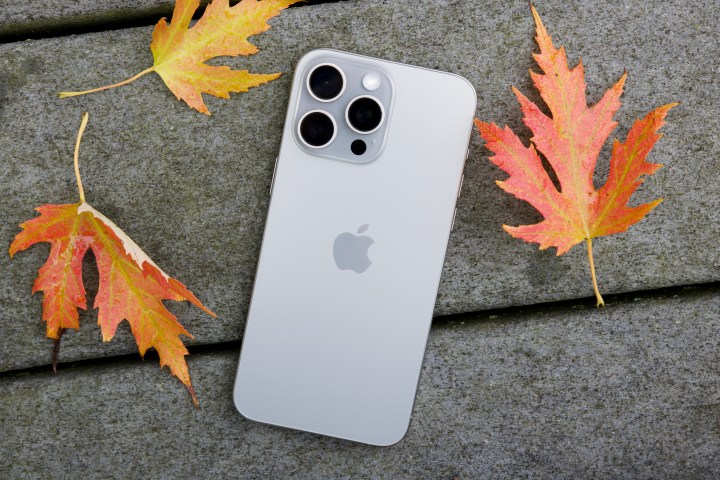
Apple iPhone 15 Pro Max
The best iPhone
- Titanium design is a huge upgrade
- The Action button is excellent
- Outstanding camera system
- Virtually perfect display
- Blazing-fast performance
- iOS 17 is great (especially StandBy)
- USB-C port is convenient
- Slow USB-C charging speeds
- Only one way to use the Action button
- Disappointing battery life
Why you should buy this:The iPhone 15 Pro Max has every feature imaginable — the most on any iPhone today.
Who it’s for: Anyone who wants the best iPhone currently on the market.
Why we picked the iPhone 15 Pro Max:
Until recently, the regular iPhone models and the “Pro” variations were not significantly different. However, the new iPhone 15 Pro series — particularly the 6.7-inch iPhone 15 Pro Max — has fantastic features that can only be found on these most expensive models. The new titanium body is just the beginning, and the camera features vary even between the Pro and Pro Max models.
Our favorite iOS phone, the iPhone 15 Pro Max, is available in Natural Titanium, Blue Titanium, White Titanium, and Black Titanium. Each offers a matte glass back and smaller bezels around what continues to be an always-on Super Retina XDR display with a 120Hz refresh rate.
The iPhone 15 Pro series has undergone significant hardware changes compared to previous models, including a switch from stainless steel to titanium and ghe additions of a USB-C port, an Action button, an A17 Pro chip, and improved cameras. With the new USB-C port, you no longer need to use Lightning cables, making it more convenient if you have a recent iPad or any other electronic device that uses USB-C. This switch also means quicker file transfer speeds, although it doesn’t necessarily result in improvements on the charging side. Apple promises the same 50% charge in 35 minutes using a 20-watt adapter.
At first glance, it may seem like nothing has changed with the iPhone 15 Pro Max’s camera system. The device still has a 48-megapixel (MP) main camera, a 12MP ultrawide camera, and a 12MP telephoto camera featuring apertures of f/1.78, f/2.2, and f/2.8, respectively, which is identical to the specs of its predecessor, the iPhone 14 Pro Max. However, some notable differences have a significant impact on the user experience.
For starters, the main camera of the iPhone 15 Pro Max now takes 24MP shots by default instead of 12MP, resulting in more detailed images. Additionally, Apple's latest Smart HDR 5 image processing technology enhances the colors of the photos. Finally, the telephoto camera of the iPhone 15 Pro Max now supports up to 5x optical zoom, which is an improvement over the previous maximum of 3x.
It's big and expensive, but if you want the very best smartphone running Apple's iOS operating system, the iPhone 15 Pro Max is the one to get.
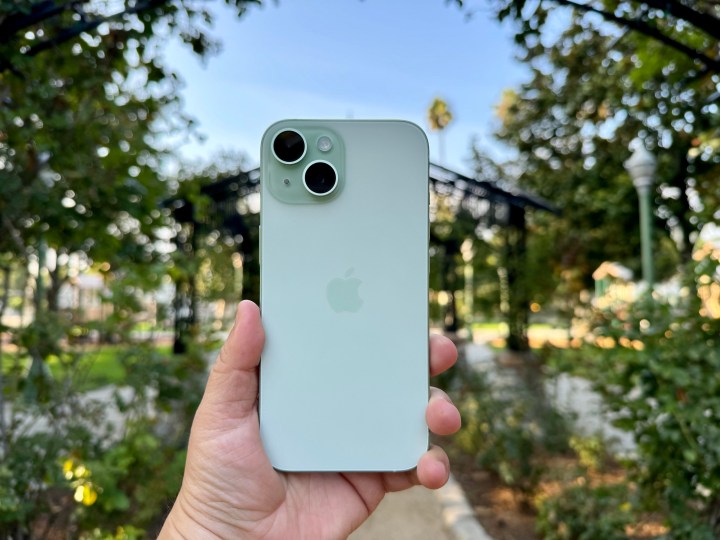
Apple iPhone 15
The best iPhone runner-up
- Big camera upgrade
- USB-C
- Matte glass feels incredible
- Dynamic Island
- Curved edges are more comfortable
- Reverse wired charging
- 60Hz refresh rate display
- Most color options are too light
- Can get warm when running intensive apps
Why you should buy this: It's Apple's latest and greatest iPhone.
Who it’s for: Anyone would needs an iPhone upgrade, but doesn't want to go the Pro route.
Why we picked the iPhone 15:
For those who don't require all the advanced features of the more expensive iPhone 15 Pro series, the all-new iPhone 15 is a great option. This flagship device by Apple comes in five colors: pink, yellow, green, blue, and black. It has a 6.1-inch Super Retina XDR display like its predecessor, as well as several new features that make it worth considering, starting with the Dynamic Island.
The Dynamic Island, first introduced on the iPhone 14 Pro series, is a fun new way to view notifications, Live Activities, and more. If the Dynamic Island isn't enough to persuade you to consider the iPhone 15, take a look at its new camera system.
The iPhone 15 has significantly upgraded its camera game this time with a 48MP primary camera and a 12MP ultrawide lens with a wide 120-degree field of view (FoV) that can capture your memories in breathtaking detail. However, the ultrawide lens has remained unchanged from the previous generation and still lacks an autofocus feature. The selfie camera still delivers stunning results, but it is also unchanged at 12MP.
Unlike the iPhone 14 Pro models that only allowed shooting in 48MP full resolution with ProRAW and defaulted to 12MP for regular photos, the iPhone 15 now defaults to 24MP photos. You can switch it back to 12MP to save storage space, but the 24MP photos are worth the extra space as they look remarkable overall and the minor size difference is negligible. The new camera features will help you capture every moment in stunning detail and relive them for years to come.
USB-C has replaced Lightning in the iPhone 15, bringing quicker transfer speeds between devices, but no charging speed improvements. Connecting the iPhone 15 with at least a 20W adapter gets you about 50% charge in 30 minutes, which is the same as before.
The iPhone 15 still only supports a 60Hz refresh rate, which is unfortunate for a smartphone in 2023. This limitation negatively affects gaming and web-browsing experiences for users with quick fingers. It should also be noted that the iPhone 15 comes with the older A16 Pro chip. This isn't bad, but you aren't getting the latest and great chip Apple has to offer on a smartphone.

OnePlus 12
The best Android phone
- Beautiful curved display
- Flowy Emerald is a truly unique color
- Powerful performance
- Hasselblad camera system delivers great results
- Two-day battery
- Very fast wired and wireless charging
- Back glass is slippery
- Curved screen has some annoyances
- Large size can be unwieldy
Why you should buy this: It's a show-stopping premium flagship at the price of a regular flagship.
Who it's for: Anyone looking for the best Android has to offer.
Why we picked the OnePlus 12:
While OnePlus never really went away, it had been pushed into the shadows by strong offerings from Samsung and Google. Well, that period has ended, as OnePlus is back, and the OnePlus 12 is one of the best smartphones you can buy — period.
It's not fair to describe most current phones as featureless slabs, but next to the OnePlus 12, they might as well be. This phone is distinct, with a beautiful green design, gently sloping sides, and one of the more unique-looking camera systems we've ever seen on a smartphone. There's a strong family resemblance with the OnePlus Pad, and it looks great. It feels good, too, but be advised it's a slippery phone — a case is highly advised.
That premium feeling extends to the display. The OnePlus 12 has a 6.8-inch LTPO AMOLED display, running a 1440p resolution (for a crisp 510 pixels per inch), with a 120Hz refresh rate. If that isn't enough, it also gets bright enough to be visible on the surface of the Sun, thanks to a peak brightness of 4,500 nits. Frankly, that's a little ridiculous and enormously overkill, as most other flagships sit around the 2,000 nits mark, and those are fine. But "overkill" was clearly what OnePlus had in mind, as the phone's other specs are way, way beyond what they need to be.
We'll start with the most reasonable part of the spec sheet: The Qualcomm Snapdragon 8 Gen 3. Qualcomm's latest processor is incredibly fast, and it won't shy away from any app or game you care to run on your big screen. It's a stupendously powerful piece of kit, so when we say it's the most understated part, you know OnePlus isn't messing around. First comes the storage options, which start at 256GB and go up to 512G. RAM is where things get really bonkers, with the base model getting 12GB. That's the same amount as the Samsung Galaxy S24 Ultra — and it only gets higher from there. Upgrade the storage, and you get a boost in RAM, too, up to 16GB.
The camera system is a little toned down, at least compared to the RAM specs, but not by too much. The rear camera system comprises a 50MP main lens, a 64MP periscope telephoto with a 3x optical zoom, and a 48MP ultrawide lens, and there's a 32MP selfie camera around the front. It's a solid suite, and it takes good photos with realistic colors. Portrait shots can be a little lacking, and it sometimes struggles with moving subjects in low-light photos, but these are relatively small negative points.
The OnePlus 12 runs Android 14, under the Oxygen OS 14 skin, and it's a great piece of software, clear and uncluttered. OnePlus has promised five years of updates, which is a good, if not stellar, promise.
Finally, we'll touch on the battery life. It is, in a word, excellent. You can expect two days of battery life from the 5,400mAh battery with moderate use, and since the recharging is super fast, it won't spend long on the charger either. Wired charging goes up to 80W, while the 50W wireless charging is faster than most flagship phones' wired charging. There's even reverse wireless charging up to 10W.
The OnePlus 12 is a certified premium flagship killer, albeit at a flagship price. It starts from $800, putting it on a level basis with the Samsung Galaxy S24 while offering specs on a level with the S24 Ultra. It's an incredible piece of tech and absolutely our pick for the best Android phone you can buy today.
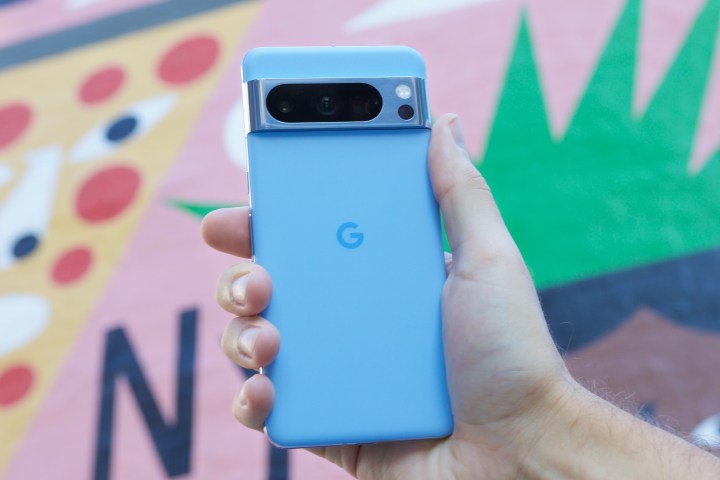
Google Pixel 8 Pro
The best Android phone runner-up
- Google's best phone design yet
- Lovely, vibrant display
- Phenomenal cameras
- Unbelievable photo-editing tools
- Face Unlock is magical
- Tensor G3 is a big improvement
- Seven years of updates!
- The temperature sensor
- Mediocre battery life
- Slow charging speeds
Why you should buy this: The Pixel 8 Pro has a lovely design, excellent cameras, and amazing AI features.
Who it's for: Anyone who wants a top-tier Android phone that isn't made by Samsung.
Why we picked the Google Pixel 8 Pro:
The Google Pixel 8 Pro is a smartphone that has set a new standard for the Pixel line. With its stunning design, improved camera system, and Google's latest Tensor chip, it's no wonder that it's being hailed as the best Pixel yet.
While the Pixel 8 Pro bears a striking resemblance to its predecessor, the Google Pixel 7 Pro, it's the subtle changes that make all the difference. The rear glass boasts an impressive, smooth matte finish that feels great in your hand, while the rounded corners make it even more comfortable to hold. The dual camera cutouts found on the previous model have been replaced with a single cutout that spans the length of the camera bar, adding to the phone's sleek aesthetic.
The display on the Pixel 8 Pro has also seen some major improvements. With a 120Hz refresh rate that can scale down to 1Hz as needed, it's more energy-efficient than ever. The display is also much brighter, rising to 1,600 nits for HDR content and 2,400 for peak brightness, making it perfect for enjoying your favorite movies and shows.
Now, let's talk about the cameras. The primary camera on the Pixel 8 Pro is a work of art, with a resolution of 50 megapixels and an aperture of f/1.68 that makes it incredibly light-sensitive. It also has a 2x optical zoom, giving you even more control over your shots. The new ultrawide camera has a resolution of 48MP and an f/1.95 aperture, significantly improving its light sensitivity and macro mode. The telephoto camera has a resolution of 48MP, an f/2.8 aperture, and a 5x optical zoom, making it perfect for capturing even the most distant subjects. The front-facing camera has an f/2.2 aperture and autofocus support, ensuring that your selfies always look their best.
The Pixel 8 Pro also comes packed with some exciting new camera software tools. Best Take is one of the most prominent features. It automatically stitches together multiple photographs so everyone in the shot looks their best. Magic Editor is another great feature, allowing you to erase and move objects from existing photos, even those not taken with the Pixel 8 Pro.
The Pixel 8 Pro's new Tensor G3 chip is a game-changer, with the ability to handle various tasks such as gaming, live video streaming over a 5G connection, and capturing photos without overheating like its predecessors.
In short, the Google Pixel 8 Pro is a remarkable Android phone that's worth considering for anyone looking for a beautiful design, exceptional camera system, and lightning-fast processor. It's a true workhorse that can keep up with even the most demanding users, whether you're a professional photographer or simply someone who wants a reliable and powerful smartphone.
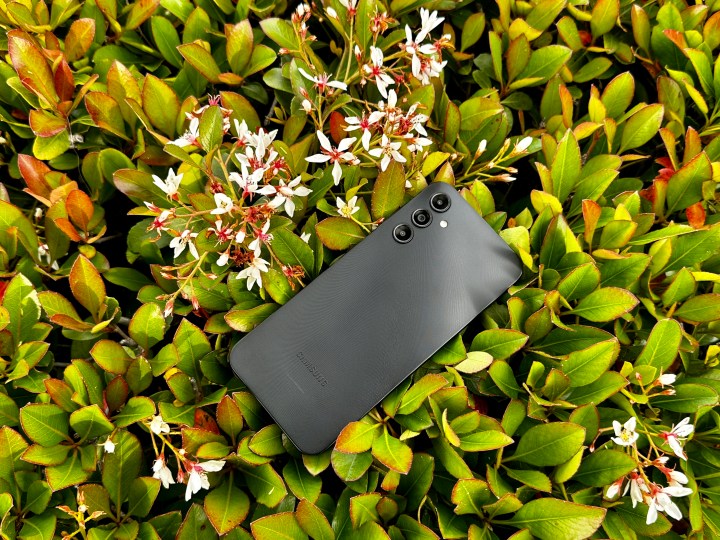
Samsung Galaxy A14 5G
The best cheap phone
- Only $200
- Large display with a 90Hz refresh rate
- 5,000mAh battery
- 50MP rear camera, 13MP selfie camera
- Respectable performance
- Unique, textured back
- Secondary cameras aren't impressive
- No water or dust resistance
- Fast charging up to 15W only
Why you should buy this: The Samsung Galaxy A14 5G looks good and packs a punch for a budget price.
Who it’s for: Buyers on a budget looking for a safe, sensible choice that won't disappoint.
Why we picked the Samsung Galaxy A14 5G:
Are you on a budget but want great value? Then you can't go wrong with Samsung's A-Series phones, which are excellent for the price. The Galaxy A14 5G is one of the latest entries in the family, and it's well worth your attention.
With the Galaxy A14 5G, you get a large, 6.6-inch LCD display that has a 1080p resolution with a 90Hz adaptive refresh rate. Though you do get some bezels around the display, the screen itself looks nice, has vibrant colors, and you get relatively smooth scrolling with the 90Hz refresh rate. The design of the phone itself is simple and minimalistic, and the plastic back has a unique texture that helps give you more grip than the glass on most phones.
The A14 5G has 4GB of RAM and a MediaTek MT6833 Dimensity 700 chip. So while it's not packing the newest Snapdragon 8 Gen 2, it has decent performance for the price. You may notice a tiny bit of stutter when navigating the phone's interface or opening up apps, but considering that the phone is just $200, it's expected. It only comes with 64GB of storage, but that can expand to 1TB through a microSD card. Samsung ships the A14 5G with Android 13 and OneUI 5, and you will get two major Android upgrades and four years of security updates. For $200, you're getting a good amount of longevity, especially considering that this phone is 5G-capable.
The camera is also quite impressive, as you get a 50MP main shooter, with a 2MP macro and 2MP depth sensors. Thanks to the MediaTek chip, taking photos is fast and the results are quite good for a $200 phone. When the phone was used to capture some in-motion shots of a child, the results came out quite well. Colors are also bright and punchy, like most of Samsung's other higher-end phones.
And lastly, though the Galaxy A14 5G doesn't have wireless charging, it does have a massive 5,000mAh battery that will last at least two days with regular use. But wired charging caps out at 15W, so it's a little slow. However, considering how much use you'll get from a single charge, you may not be having to plug it in every night.
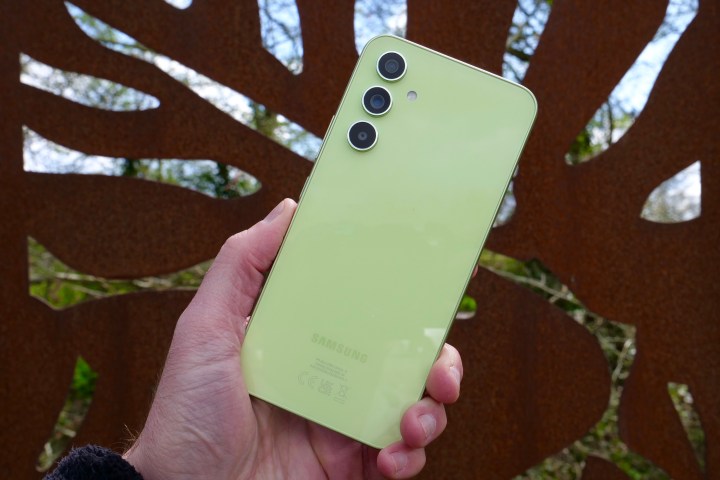
Samsung Galaxy A54
The best cheap phone runner-up
- Eye-catching colors
- It looks like the Galaxy S23
- Colorful screen
- Speakers sound good
- Long software commitment
- Battery doesn't last two days
- No wireless charging
- Camera lacks realism
Why you should buy this: The Samsung Galaxy A54 5G has the flagship looks and features without the flagship price.
Who it’s for: Anyone who wants a phone that looks like Samsung's flagship S24 and has good performance — but for half the price.
Why we picked the Samsung Galaxy A54 5G:
The Samsung Galaxy A54 5G offers a lot of flagship features for less. It looks like the company's newest S24, and though the internals aren't quite the same, it still has fast and snappy performance — just like the S24. But there are some differences, so let's talk about them.
The Galaxy A54 is slightly bigger than the S24 with a 6.4-inch Super AMOLED display, and it even has a 120Hz refresh rate on the screen. This means scrolling through the system, and apps, and playing games is smooth and easy on the eyes, and the colors are vibrant and rich with deep blacks.
Though the chassis is made of plastic, the screen and back consist of Gorilla Glass 5. The phone feels quite nice in the hand with this combination, and the increased brightness to 1,000 nits from the A53's 800 nit max makes it easier to see when outdoors.
You get a 50MP main camera with optical image stabilization (OIS), as well as a 12MP wide-angle camera and 5MP macro lens. The front-facing selfie camera is 32MP. However, the photos that result from these lenses may be a love-hate relationship, as Samsung has fully embraced its reputation for overly saturated colors in photos with this phone. Photos may appear too vibrant and punchy, with amplified reds, blues, and greens to the point where they may just be too intense. For some, this kind of vibrance is preferred, but it may take away from the realism of photos. And while the selfie camera is 32MP, it may struggle with capturing minute details and skin tone in more difficult lighting.
Samsung put its Exynos 1380 processor inside, with either 6GB or 8GB RAM and 128GB or 256GB storage, plus you have a microSD card slot. While the Exynos 1380 may not be as fast as the new Snapdragon 8 Gen 3 in the S24 series, it's still reasonably fast and performs well for the price point. It comes with Android 13 and One UI 5.1, which is the same as last year's S23. Samsung promises software upgrades for the next four years, with five years of security updates.
Though the Galaxy A54 has a 5,000mAh battery inside, it won't get you through two consecutive days without a charge overnight. But it should last most of the day if that's all you need. It charges at a maximum speed of 25W, and unfortunately, there's no wireless charging.
There are also four total color options for the Galaxy A54, making it a fun phone for the price. It has the standard black and white options, as well as Awesome Violet and Awesome Lime Green. But the availability of the colors depends on where you live. If you're in the U.S., you can only purchase the black version from all major carriers, and Samsung's site has the black and Awesome Violet colors for U.S. customers. If you're in the U.K., you can pick up a Galaxy A54 in all four colorways.

OnePlus 12R
The best phone value
- Sleek, polished design
- Top-notch display
- Fast performance; runs cool
- Excellent battery life
- 80W charging!
- Unbeatable price
- Poor ultrawide and macro cameras
- No wireless charging
Why you should buy this: It's a true flagship killer, offering flagship specs on a budget.
Who it's for: Anyone who loves getting great value from their money.
Why we picked the OnePlus 12R:
Love the OnePlus 12 but don't really want to spend $800? The OnePlus 12R is worth taking a look at instead. It brings in a lot of what makes the OnePlus 12 great — including strong specs, a unique design, and Oxygen OS — but at a much lower price. This is the best value you'll get on the phone market in 2024 by a long shot.
The design is reminiscent of the OnePlus 12 and 11, with a sleek but slippery aluminum body and a very distinctive camera suite that makes the phone stand out. The display is a little odd, with a 2780 x 1264 resolution across the 6.78-inch AMOLED display, but thanks to the ppi of 410 and a 120Hz refresh rate, it's fast and crisp enough that you're not likely to care about the odd numbers at play. Like the OnePlus 12, it also tops out at 4,500 nits for brightness.
The flagship killer credentials are provided by the flagship specs. The Snapdragon 8 Gen 2 processor is last year's chip, but it's still incredibly powerful and provides exceptional performance. Add in 8GB or 16GB of RAM and 128GB or 256GB of internal storage. A cooling chamber inside further bolsters the strong hardware, and ensures the phone runs cool even when playing demanding games.
The camera is more of a mixed bag than its more expensive cousin. The 50MP main lens is good, but the 8MP ultrawide lens is a bit of a disappointment, and the less said about the 2MP macro lens, the better. Thankfully, the 16MP selfie lens is a good inclusion, and it means the camera system is a good one, even if it's not the most versatile around. It's more than acceptable for $500, even if it is massively outpaced in this regard by similarly priced options like the Samsung Galaxy A54 or Google Pixel 7a.
The battery is another return to glory, and even if there's no wireless charging, wired charging up to 80W means few will care. Moderate use will have this be another two-day smartphone, and even four and a half hours of screen time (demanding by most measures) left the phone at 43% at 11:25 p.m. after a long day. That's a stellar performance and a genuine reason to buy this phone.
The OnePlus 12R is a true cut-price king. At $500, it has some strong competition from Samsung and Google, but they generally can't match the sheer oomph offered by the 12R's Snapdragon 8 Gen 2 and other flagship specs. OnePlus's midrange phone is the phone to get if you prize value above all else.
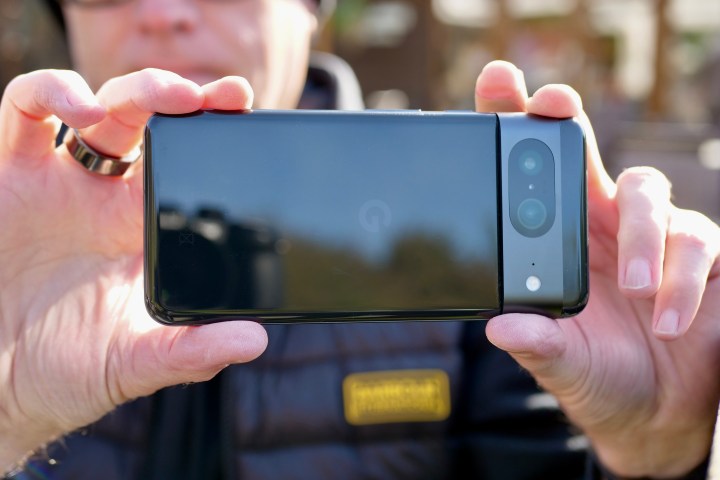
Google Pixel 8
The best phone value runner-up
- Great main camera
- Amazing AI photo editing tools
- Two-day battery life
- Slick, fast Android 14
- Tensor G3 is cool and efficient
- Seven years software support
- Wide-angle camera disappoints
- Average charge speed
Why you should buy this: What's not to like? This is a terrific Pixel that might even be better than the Pixel 8 Pro.
Who it's for: Anyone who wants a cutting edge Pixel for less money.
Why we picked the Google Pixel 8:
The Google Pixel 8 has turned many heads since it was released, and there’s no surprise as to why. Its sleek and improved design is the first thing that catches your eye. It's more compact, lighter, and more stylish than its predecessors. The phone is easy to hold and to use one-handed, making it an ideal choice for people on the go.
But that's not all. The Pixel 8 boasts an incredible battery life that can last up to two days, even when connected to a smartwatch. Never again will you have to worry about running out of battery during your busy day.
The phone's camera is another impressive feature. Its exceptional photo quality and unparalleled AI editing features make it stand out from its competitors. You don't need to be a photography expert to capture and edit stunning shots. With the Pixel 8, you can create beautiful photos with just a few taps on the screen.
What's more, the Pixel 8's software will receive updates until 2030, so you won't have to upgrade your phone anytime soon. You'll have the latest software and security patches for years to come.
At a reasonable price of $699, the Pixel 8 is a great value given all its features. If you're looking for something even more advanced, the Pixel 8 Pro is also an option, but it comes at a higher price of $999. However, the Pixel 8's longer battery life is a compelling reason to consider it over the Pro.
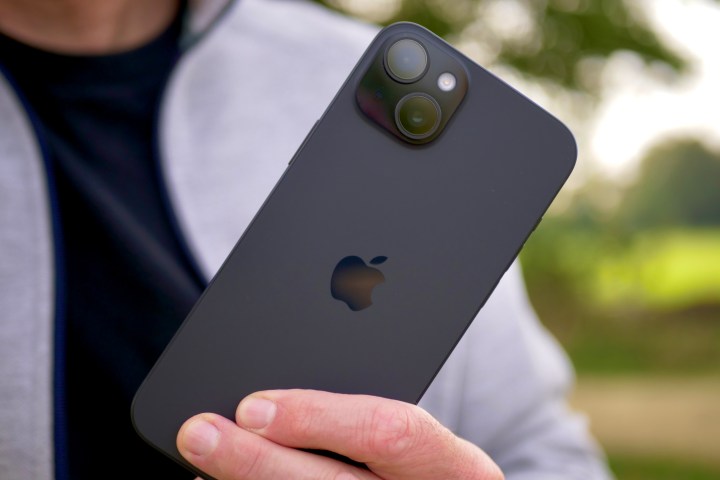
Apple iPhone 15 Plus
The best big iPhone
- Ergonomic design
- Big, bright, colorful screen
- Inspiring camera
- Two-day battery life
- USB C and MagSafe for charging
- 60Hz refresh rate screen
- No always-on display
- Not the latest processor
Why you should buy this: It packs a huge, stunning screen, it feels substantial, and the design won't fail to impress.
Who it’s for: Anyone who wants the best big-screen iPhone around for less.
Why we picked the iPhone 15 Plus:
The iPhone 15 Plus is almost identical to its smaller counterpart, the iPhone 15, except for its larger display. The 6.7-inch smartphone is beautifully designed and is available in pink, blue, black, yellow, and green. USB-C, which is faster for file transfers, is included in the iPhone 15 series, replacing the Lightning port. However, there have been no improvements in terms of charging. The battery life still lasts for two days, which is quite impressive.
Another feature the new phone boasts is the Dynamic Island, which was initially introduced in the iPhone 14 Pro models. This feature provides a fun way to view notifications, Live Activities, and more.
In terms of camera capabilities, the iPhone 15 Plus is highly impressive. Thanks to the depth-of-field feature, the phone can capture well-balanced, dynamic, colorful, and enjoyable photos. The new cameras and features are a significant upgrade from previous standard iPhones, and it’s great to see that the iPhone 15 Plus is not just limited to taking casual pictures, but also has the potential to enhance your creativity.
Unlike the iPhone 14 Plus, which felt out of place in the iPhone lineup, the new Plus model is a perfect fit. Ergonomic improvements have made a significant difference, the performance has been dramatically improved, and the cameras inspire one to take more photos.
On the downside, the iPhone 15 Plus still offers a low refresh rate of 60Hz, and it features last year’s A16 Pro chip. Nonetheless, it's a great option if you're looking for a large iPhone at a lower price point.
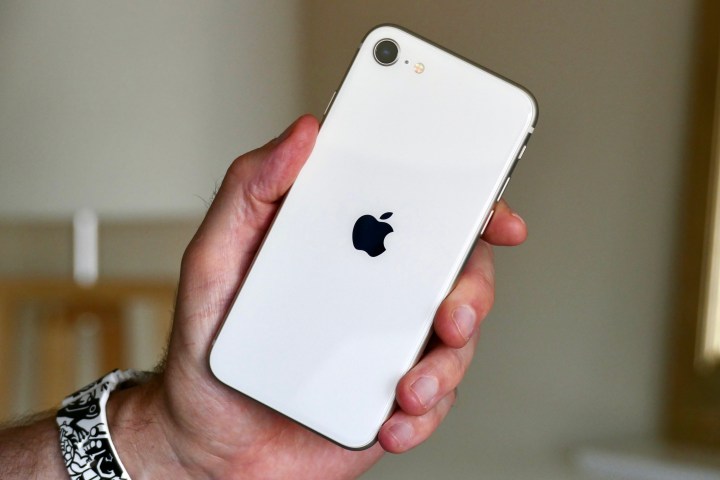
Apple iPhone SE (2022)
The best small iPhone
- Compact and light
- Very powerful
- Touch ID works really well
- Wireless charging
- IP67 water resistance
- Poor battery life
- 60Hz screen
- 64GB won't be enough
Why you should buy this: Apple's latest iPhone SE (2022) is a pint-sized wonder that's powerful, affordable, and future-proof.
Who it’s for: Those looking for a future-proof phone that fits in their pocket (and their hand).
Why we picked the Apple iPhone SE (2022)
Finding a truly small phone today feels like hunting for a needle in a haystack, but the iPhone SE (2022) is really, truly small, with its tiny 4.7-inch Liquid Retina display with 60Hz refresh rate. Sadly, the design feels a bit dated, cribbing the iPhone 8's design, with chunky bezels and a Home button with integrated Touch ID.
Looking beyond its size, there's a lot going for the iPhone SE. Under the hood, you're getting Apple's A15 Bionic chip with the same performance spec as the iPhone 13 Pro. There's also 4GB of RAM, 64GB, 128GB, or 256GB of storage, and a decent battery, though heavy use may see you struggle to make it through the day with much left in the tank. You'll be up and running fairly quickly with 18W fast charging and Qi wireless charging.
You also get a single 12MP rear sensor and 7MP selfie camera, identical to the previous iPhone SE. But it's Apple's software that makes a difference here, with Deep Fusion technology, Smart HDR 4, and Photographic Styles, as well as improved Portrait Mode. There's no Night Mode though, so shooting in low-light environments can be a challenge.
Add 5G connectivity, iOS 15 out of the box, and five or six years of OS updates, and it's easy to see why the iPhone SE (2022) is our best small smartphone. Yes, the design feels a bit old-fashioned, those bezels are pretty clunky, and there's no charger in the box — but now we're nitpicking. The iPhone SE (2022) comes priced at an incredible $429, so you won't need to break the bank to afford it.
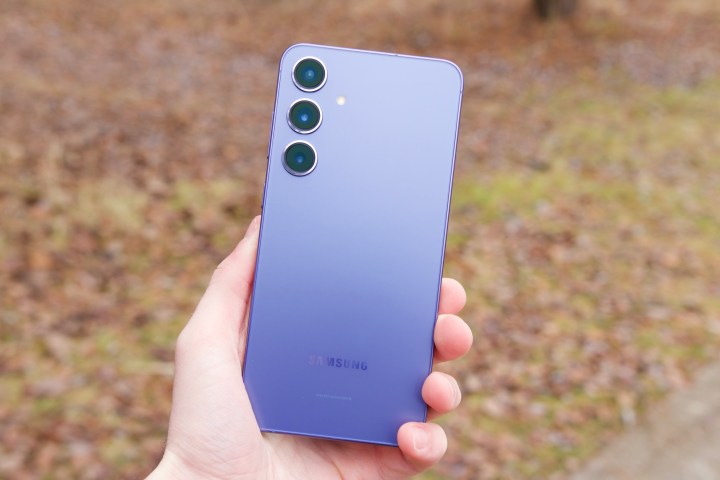
Samsung Galaxy S24 Plus
The best big Android phone
- The flat sides are wonderful
- New QHD+ screen looks fantastic
- Runs fast and cool
- One UI 6.1 is really nice
- Seven years of updates
- Phenomenal battery life
- It's a surprisingly good value
- Camera struggles with moving objects
- Galaxy AI features are hit-or-miss
Why you should buy this: It's the star of this year's Galaxy S-range, and has a big screen to boot.
Who it's for: Someone who wants an outstanding Android smartphone that doesn't cost a fortune and has a huge display.
Why we picked the Samsung Galaxy S24 Plus:
You'd be forgiven for expecting the S24 Ultra to be the shining star in Samsung's 2024 range, as so did we, but it's the Samsung Galaxy S24 Plus that really stands out when it comes down to it. It's big, it's powerful, and it's beautiful; the Samsung Galaxy S24 Plus is the Android smartphone to buy if you're looking for a big display.
The design hasn't changed much from the previous generation, but what has changed has been for the better. The new flat sides make handling the phone much more comfortable, and they add some additional design flair. The display has increased in size too, up to 6.7 inches, and it's seen a boost up to a 1440p resolution. Samsung makes some of the best phone displays around, and the S-range is the place to experience this. The Dynamic AMOLED 2X tech is utterly gorgeous, with a 1-120Hz dynamic refresh rate that's smooth when it needs it to be and ratchets down the refresh rate when it's not needed. It brightens all the way to 2,600 nits, too, so it's bound to be easily visible even in strong sunlight.
We're once again playing with the Snapdragon 8 Gen 3, and it's as good as it has been in all the other 8 Gen 3-equipped phones on this list. Suffice it to say it's fast and unfazed by anything you're likely to throw at it. The S24 Plus also comes with 12GB of RAM as standard with 256GB of storage. The big new addition here, though, is the much-trumpeted Galaxy AI. In reality, it's a mixed bag, with some good options (the Magic Editor-like edit suggestions) and some terrible ones (the message tone change suggestions). Ultimately, they're a bunch of small tricks that you're likely to use a few times and then forget about entirely.
Samsung's cameras tend not to disappoint, and that's true here. The rear camera suite is made up of a 50MP main lens, 10MP telephoto lens with a 3x optical zoom, and a 12MP ultrawide lens. It takes excellent shots, and Samsung has successfully balanced its saturation issues this time around. While the pictures are still on the more vivid side of realistic, it's nowhere near as unrealistic as they used to be. Movement is its Achilles heel, though, with many stills being ruined by a moving subject. But even with that taken into account, it's a great camera system.
Battery life time, and it's another triumph. Two days on a single charge isn't outside the realms of possibility, as the 4,900mAh battery really goes the distance, and even heavy use should easily last to the end of the day. Charging is slower than OnePlus's phones, but what phone isn't? 45W fast charging is respectable enough, with 15W wireless charging and 4.5W of reverse wireless charging.
The Samsung Galaxy S24 Plus is definitely on the more expensive side of this list, with prices starting from $1,000, but it's a small price to pay for a phone this good, especially when Samsung has announced seven years of updates. Flagship phones have the chops to last longer than cheaper phones, so this could be a very good investment.

Samsung Galaxy S24
The best small Android phone
- Small and compact design
- The flat edges are great
- Beautiful and bright display
- Long lasting battery life
- Powerful performance
- Improved color balance in photos
- Useful Galaxy AI features
- Matte glass feels slippery
- No big camera upgrades
- Only 25W wired charging
Why you should buy this: It's everything great about the Galaxy S24 Plus, but smaller.
Who it's for: Anyone who wants a powerful Android but prefers a smaller phone.
Why we picked the Samsung Galaxy S24:
The Samsung Galaxy S24 is a great phone, but most of what needs to be said about it can also be said about the Galaxy S24 Plus, which we've discussed in greater depth above. Feel free to refer to that section to see what's great about the Galaxy S24's design, cameras, and processor, as the smaller model is exactly the same as the larger one in those areas. But there are some places where the two phones diverge, and the biggest of those is, unsurprisingly, the size.
It's not a surprise that the standard Galaxy S24 is the smallest of the three flagship phones Samsung has released this year. The 6.2-inch display is 0.1 of an inch larger than the S23, but due to Samsung shrinking the bezels, the S24 is actually slightly narrower than last year's model, though it is slightly taller as a result. As with the S24 Plus, the display itself is a delight to behold, with a dynamic 1-120Hz refresh rate and 2,600 nits of brightness. Unfortunately, it's still limited to a 1080p resolution, but you can't have everything.
The Snapdragon 8 Gen 3 is as powerful as we've seen elsewhere, and the smaller phone has more modest but still powerful specs, including 8GB of RAM and 128GB of storage as standard. The battery is still good, but the 4,000mAh cell can't go as far as the S24 Plus and will only last a single day. It's a solid full day, though, and you'll normally have a decent amount left in the tank, just not enough to last a full second day. Charging is disappointing, too, being limited to just 25W. 45W charging included on the Plus and Ultra models means the S24 feels a little underwhelming.
At $800, it's hard to argue against the value proposition here. While it's not as powerful as the OnePlus 12 and doesn't have the camera brilliance of the Google Pixel 8, the Samsung Galaxy S24 holds up well enough against the two of them while also being small and compact in a way that most modern, powerful phones aren't.
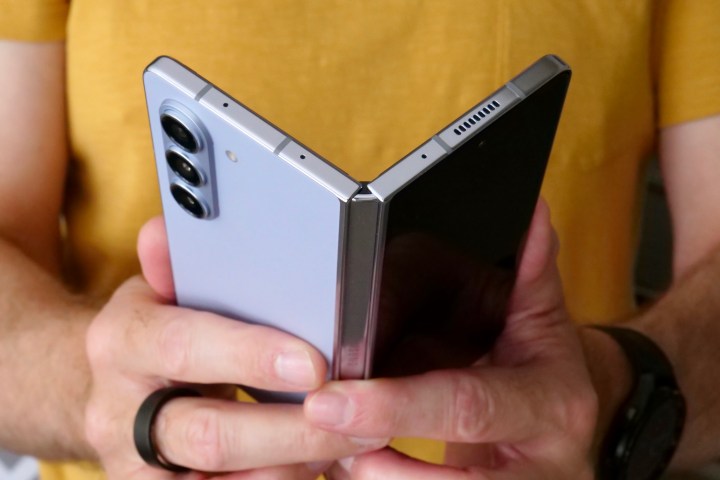
Samsung Galaxy Z Fold 5
The best foldable phone
- Thinner and lighter than ever
- Silent, high-quality hinge
- Strong multitasking tools
- Fun, social media-friendly camera
- Inner screen is perfect for games and video
- IPX8 and durable chassis
- Battery life hasn't dramatically improved
- Slow charging
Why you should buy this: Folding phones are the future, and the Galaxy Z Fold 5 is the most powerful foldable around.
Who it’s for: Anyone looking for a powerful phone in a foldable form factor.
Why we picked the Samsung Galaxy Z Fold 5:
If you want a phone and a tablet in one, then you can't go wrong with the Samsung Galaxy Z Fold 5. Now in its fifth generation, the Galaxy Z Fold 5 boasts some great improvements over its predecessor, making it not just a great folding phone, but an excellent smartphone in its own right.
While the Galaxy Z Fold 5 does not look much different than the Galaxy Z Fold 4 before it, Samsung has made some nice improvements that affect the overall usability of the foldable. The new Flex Hinge allows the phone to not have a gap when closed, unlike the wedge-shaped gap that was found on the Z Fold 4. This means less debris can get into the inner screens, and it feels better and more ergonomic to hold and use the cover display.
Though Samsung did not change the tall and narrow form factor when the Z Fold 5 is closed, the Flex Hinge and the gapless design make it a bit more comfortable to use the cover display. Speaking of displays, the Z Fold 5 did not change the screen sizes, so you still have the 6.2-inch, 2316 x 904 pixel resolution cover display and 7.6-inch inner screen with 2176 x 1812 resolution. Both have 120Hz refresh rates as well, so everything looks fantastic. The Flex Mode when watching videos even shows controls on the lower half of the screen, which is convenient.
Despite having pretty much the same camera system as the Z Fold 4 with 50MP main, 12MP ultrawide, and 10MP telephoto sensors, the Z Fold 5 does make some improvements over its predecessor. You'll still have super-saturated photos in bright sunlight, but if you don't take photos in harsh sunlight, the photo results appear much more natural and realistic than before, even with the ultrawide lens. The optical zoom is also improved, with more details, better color balance, and accurate exposure.
However, the camera isn't perfect. It struggles with focusing up close in 1x or 3x mode, and lowlight scenes may provide some trouble. If you want the absolute best camera on a Samsung phone, then you should go for the Galaxy S24 Ultra instead.
The Galaxy Z Fold 5 uses the Snapdragon 8 Gen 2 for Galaxy chip and has 12GB RAM, along with your choice of 256GB, 512GB, or 1TB internal storage. It ships with Android 13 and Samsung's One UI 5.1.1 installed, and there's plenty of power to handle pretty much anything you need with ease. The taskbar is great for multitasking, and it now can show up to four recent apps instead of two. You can have three apps plus a floating window at the same time, so this is a great device for power users.
Though the Galaxy Z Fold 5 has about the same battery capacity as its predecessor, it gets a little more life out of a single full charge, thanks to its more efficient processor. In our tests, we still ended up with between 35% and 50% battery by the end of the day. It's not a two-day phone, but it definitely has more than enough endurance to get through a day with heavy use. The Fold 5 also supports up to 25W fast charging, so with the right power adapter, it takes about 80 minutes to fully charge. With a slower charger, it could take up to two hours.
The Galaxy Z Fold 5 also supports the S Pen, and Samsung created a brand new S Pen specifically for the phone, called the S Pen Fold Edition. It's been upgraded to have a thinner tip, 4,096 pressure levels, and IP68 water and dust resistance. Unfortunately, you don't have a slot on the Z Fold 5 to store it — you'll need to buy a case that supports holding the S Pen.
Folding phones are more popular than they've ever been, but Samsung is still the ruler of the niche — and the Galaxy Z Fold 5 is the best foldable you can buy. Hands down.
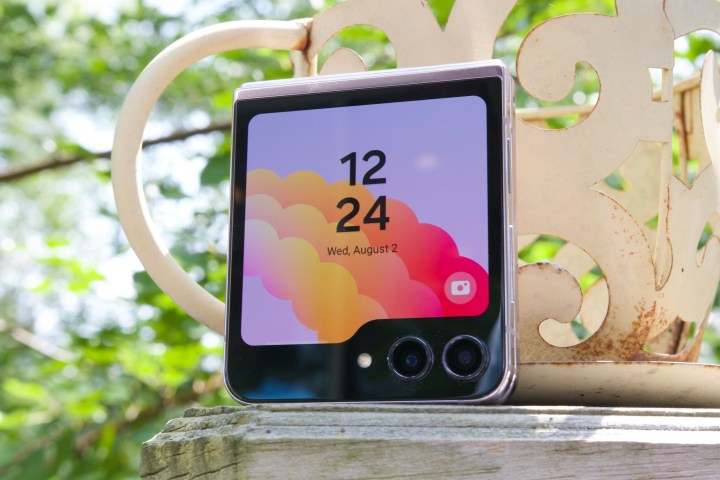
Samsung Galaxy Z Flip 5
The best flip phone
- No more gap when folded shut
- Extremely well-built
- Hinge feels outstanding
- Much more useful cover screen
- Fantastic performance
- Good and dependable cameras
- 5 years of updates
- The crease is still there
- Mediocre battery life
- Cover screen requires lots of tweaking
Why you should buy this: It looks great, boasts fast performance, and has a fun and foldable form factor and bespoke colors.
Who it’s for: Anyone looking for their first foldable who prefers a more compact flip design.
Why we picked the Samsung Galaxy Z Flip 5:
If you want a foldable, but prefer something smaller like a flip phone versus a foldable tablet, then the Galaxy Z Flip 5 is the better choice for you. And this time, Samsung has made the Galaxy Z Flip 5 much better than its predecessor in one very important way.
WIth the Z Flip 5, the biggest improvement is the cover display. Instead of a tiny little window on the front cover like last year, the Z Flip 5 now has a 3.4-inch cover display instead of a 1.9-inch window like the Z Flip 4. This makes the cover display much more useful, as you can view larger clocks and widgets, and even run apps on the cover display. The cover display on the Z Flip 5 is shaped like a folder so that the external camera system won't interfere with the display, unlike the Motorola Razr Plus. The cover screen also only has a 60Hz refresh rate, though it still runs fairly fast and isn't too noticeable.
The main screen of the Z Flip 5 is a 6.7-inch Dynamic AMOLED display with 2640 x 1080 resolution and a smooth 120Hz refresh rate. Like most Samsung phones, the inner display is beautiful, with vibrant colors, sharp text, and smooth scrolling and animations. But the crease is very pronounced, especially when compared to other flip phones like the Razr Plus, where it's barely noticeable.
Cameras on the Z Flip 5 are pretty similar to the Flip 4, with just a 12MP main camera with f/1.8 aperture and optical image stabilization, plus a 12MP ultrawide camera with a 123-degree field of view. However, there are some improvements overall, like better color reproduction. Samsung also added a clear lens coating that will help prevent lens flares in images, and the selfie camera has a slightly larger sensor.
The Galaxy Z Flip 5 has the Snapdragon 8 Gen 2 for Galaxy chip inside, along with 8GB RAM and 256GB or 512GB storage. This means that the Z Flip 5 is fast, and should be able to handle pretty much anything you throw at it. It comes equipped with Android 13 and Samsung's One UI 5.1.1 out of the box.
As far as battery life goes, it's pretty average. It has a 3,700mAh battery like last year's Z Flip 4, which means about a day of battery life with heavy use. The phone supports 25W fast charging, 15W wireless charging, and 4.5W reverse wireless charging.

Motorola Razr (2023)
The best cheap folding phone
- Lightweight and compact
- Camera is great for social media
- Fast battery charging
- Cute Moo character brightens up the cover screen
- Dust and water resistance
- No always-on screen
- Slow wireless charging
- Can get warm when pushed hard
Why you should buy this: Not everyone desires all features on a foldable phone. If that’s you, this is the one you want.
Who's it for: Anyone who wants a no-hassle smartphone experience.
Why we picked the Motorola Razr (2023):
The new Motorola Razr is all the rage with its compact flip design and no-frills features. It's easy on the wallet, perfect for everyday use, and you won't have to worry about learning many features you may never use.
It's not all sunshine and rainbows, though. The cover screen doesn't have an always-on mode, which may be a bummer for some users. And while the wireless charging feature is there, it's not the greatest. Plus, the phone's processor can struggle when it gets overloaded.
The Motorola Razr is still a fantastic option for anyone looking for a budget folding phone. It's one of the cheapest ways to get into foldable smartphones, making it a smart choice for anyone who wants to experience the latest technology without breaking the bank. And let's not forget about its unique and sleek design that sets it apart from the standard smartphones out there.
The Motorola Razr is an excellent phone that will turn heads, as well as a practical phone that's easy to use. With its flip design, you can answer calls and send texts with one hand without a hassle. It's also ideal for anyone who wants a simple and reliable phone without a ton of features.
So, if you're looking for a smartphone that's affordable, unique, and easy to use, the Motorola Razr (2023) is the one for you. It's perfect for anyone who wants to experience the latest technology without spending a fortune.
Frequently Asked Questions
There are two major players in smartphone operating systems: Apple's iOS, and Google's Android. Picking between them is going to form a big part of your smartphone choice, right? Sort of.
Apple's iOS and Google's Android are completely separate systems, so any apps or games you buy on one will not transfer over to the other. If you're heavily invested into one or the other already, that should play a part in whether you want to buy a phone running the other OS. But don't let it put you off entirely: Most of the apps you'll find on one, you'll also find on the other, and even if your purchases won't transfer over, you'll still be able to to find the same general experience from the free apps you use.
Apple's iOS is definitely the more unified experience. Since only Apple makes devices that use iOS, it decides how it looks, feels, and functions — down to the very last transition. Android is a lot more fluid and dynamic. While Google has its own design choices, other manufacturers are free to change the look and feel as they prefer by creating what's commonly referred to as a "skin." Samsung's One UI is probably the best known of these. While this has its advantages, sometimes these changes can make a phone feel drastically different. Sometimes this is better, sometimes it's worse. While you always know what you're going to get with iOS, Android can be a bit more of a mixed bag.
Software updates are hit by this same dynamic. Apple's control means it can push out updates on day one or two of a new patch or iOS version being available. Google can do that for its own Pixel devices, but updates to phones made by Samsung, Nokia, OnePlus, or other manufacturers will take longer — largely because each company will have to make sure the update works with its own skin or software. As a result, it can be anywhere between weeks and months before some Android phones get updated to the latest version of Android. This can be important when updates contain bug fixes or security patches, and even if those are pushed through as a priority, they'll still be landing later than they would on iPhone.
Ultimately, while there are differences between the two operating systems, there are far more similarities when it comes to Android and iOS. Both have largely the same selection of apps and games, and the day-to-day experience is much the same. While there definitely are differences, swapping to Android from iPhone (or vice versa) won't leave you confused.
While it is possible to get viruses on iPhones or Android phones, what most people mean when they say "virus" is malware. Technically, the term virus means software that infects a host, inserts itself into an existing program, and then spreads that infection by self-replicating. They are a very small percentage of malware and extremely rare on smartphones, but malware isn't. You should definitely think about how to protect your smartphone from hackers because a little common sense can save you from having to work out how to remove malware from your phone.
A locked smartphone is tied to a specific carrier's network, so if your phone is locked to Verizon, for example, you can only use it with a Verizon SIM and service plan. An unlocked smartphone can be used on any network. If you've paid in full for your phone, then it should be free to unlock. We have a guide that will show you how to unlock a phone on every carrier. You can also buy some great unlocked phones that will work with any carrier straight out of the box.
Realistically, you should expect to get two to three years out of your smartphone. You can extend the life of any smartphone by taking proper care of it and it's always worth shopping for good protective cases. There are also loads of good waterproof phones to choose from nowadays. The problem with many Android phones is that manufacturers and carriers are slow to push out software updates, so the software can become dated and even insecure over time. With that said, Samsung recently set new standards for updates, promising seven OS updates and seven years of security updates on select Galaxy devices including the Galaxy S24 series, and four upgrades and five years of security updates on the Z Fold 5 and Z Flip 5, and predecessors the Z Flip 4 and Z Fold 4. Apple is also known for its lengthy updates promise, while Google now offers seven years of Android OS updates and security updates for the Pixel 8 and Pixel 8 Pro.
Prepaid cell phones work just like any other phone, but they come without a monthly contract or long-term commitment. You usually pay for service in advance. When you buy a prepaid phone they tend to come with a fixed number of minutes, text messages, and possibly a fixed amount of mobile data. This removes the chance of any overage charges. When you run out, you simply top up by buying more minutes, texts, and data in chunks.
The most obvious thing to do with your old smartphone is to pass it on to someone else. If you want to gift it, then make sure to wipe it first; we have guides on how to wipe your Android phone and how to factory reset an iPhone. You may also want to turn that old phone into cash, in which case you'll want to read up on how to sell your smartphone. You may decide to keep it as a spare in case your new smartphone breaks, but you could also repurpose it with the right apps. It's better to pass it on to someone who can use it or find another use for it than let it languish in a drawer. If you can't think of a good way to reuse your smartphone then consider donating it or recycling it.
If you still haven't found what you're looking for, then we also have ideas about the best rugged phones, best phones for kids, and the best gaming phones.
How we test
A phone is so much more than its spec sheet. Your entire life is stored on it, from your photos and contacts to your music and your favorite apps. For that reason, we take great care when we review phones to recommend only the absolute best out there.
We use each phone we review as our daily driver for an extended period to test out all the features. We do benchmarks, play games, take photos, plunge them in water, and use them until their batteries expire. Then we charge 'em up and do it all over again. We test devices like real people use devices. We're not in some stuffy lab performing obscure tests. We're running around the cities we live in using these phones just like you use your phones. Then we think about each phone in comparison with its competitors to come to a decision: Should you buy this phone or something else? If the answer is "something else," we tell you what to buy instead.
Smartphone innovation has peaked, and the number of radical new features that come out each year is shrinking. As such, when you're buying a phone, you're buying a device that will be with you 24/7 for several years. It's a big choice, and things like apps, a product ecosystem, customer support, and security should be important factors in your buying decision.
Editors' Recommendations
- The best iPads in 2024: the 5 best ones you should buy
- Best iPhone deals: Save on iPhone 15, iPhone 15 Pro Max and more
- This Android phone is a surprisingly great buy at $100
- The 6 best tablets for travel in 2024
- The 6 best tablets for business in 2024