The days are getting shorter, you just wrapped up your summer job washing cars, and in a week or two, you’re going to show up on campus with a hatchback crammed to the top with cardboard boxes and hangars. Fall semester is beginning, and besides the funds you’ve set aside for food and beer, you’re going to need a nice chunk set aside for the bane of all college students: textbooks. Pounds and pounds of textbooks.
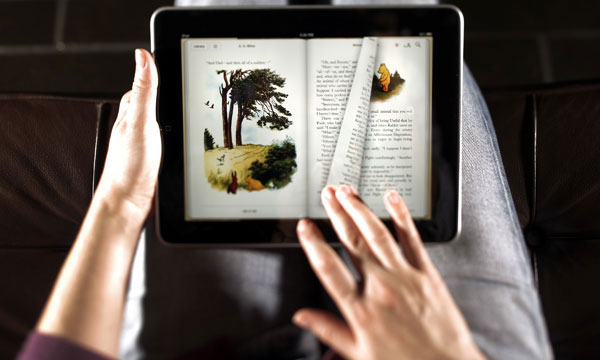
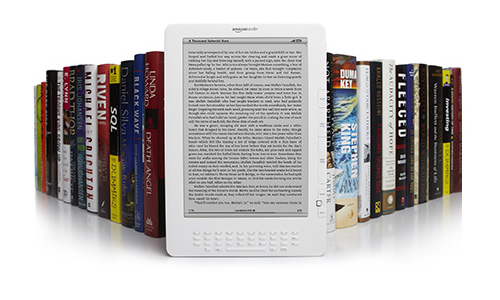
More recently, e-readers have promised to liberate college students from the heaving bundles of pages that most of them lug home from the bookstore at the beginning of every semester. From Amazon’s Kindle DX to Barnes & Noble’s Nook and even the iPad, a generation of digital readers promises to replace overstuffed backpacks full of musty textbooks with a lightweight, portable slate loaded with every book you’ll ever need for the entire semester – or every semester, for that matter.
But can you really just download the books you need for class? Are they cheaper? Do digital textbooks make any sense to begin with? We ran the numbers, considered all the factors, and the answers don’t all point to “buy.” Here’s everything you should consider before springing for an e-book reader this semester.
Portability
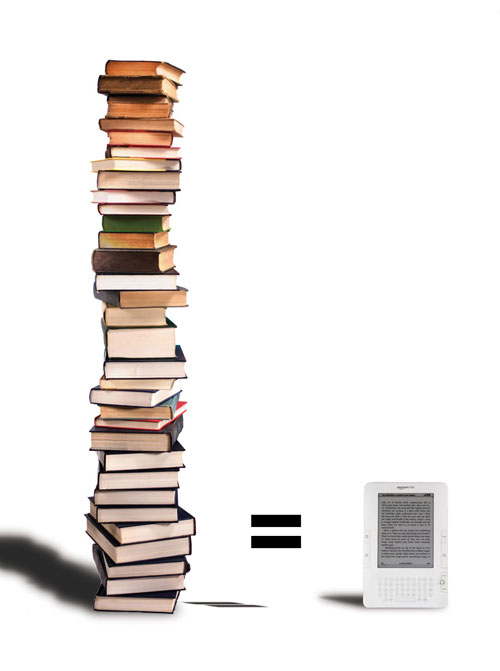
Nobody wants to hoof it to class looking like a hunchback, with 30 pounds of textbooks sagging off your back in a bag that looks like it’s about snap at the seams – if your spine doesn’t give out first. And therein lays the primary appeal of the e-book reader: Rather than 30 pounds, you’ll likely have just over one pound, in a package that’s typically as slim as a magazine. Readers like the Kindle DX weigh just 1.1 pounds, while the big daddy of the bunch, the iPad, hits only 1.5 pounds. A package that weighs and feels smaller than an average textbook can literally take the place of thousands of them. Thank, you technology.
Cost
Sure, Amazon’s Kindle DX will cost your $379 out of the gate, and Apple’s iPad will cost at least $500, but you’ll earn it back over time, right? Good question.
We made up an example schedule based on books a Syracuse University freshman might need for different introductory courses, to see how much you would actually save versus buying paper copies. The verdict: Money might not be a great reason to look into an e-reader.
We signed up for Spanish, writing, philosophy, religion and political science courses. The total tab for all the books we could buy online from the SU bookstore with one click came to $368.45. This included a total of 15 titles, buying used books whenever possible.
Then we went shopping on Amazon’s Kindle store. We had intended to compare the total cost of buying print versus digital, but the digital catalog was so incomplete we ended up comparing individual titles.
When comparing brand new, hefty textbooks, an e-reader can save a bundle. For instance, Writing Analytically would cost us $66.50 brand new from the SU book store, but we could download an e-book version instantly for just $46.30 on the Kindle. Total savings from just one book: $20.20.
Factor in the used-book market, and savings dwindle a little more. Let’s use Immigrant America: A Portrait as an example. It sells for $24.95 brand new from the Amazon store and the campus store. But the SU book store offered it to us used – automatically – for $18.75. Had we bought it for a Kindle, we could have scored it for $14.82 – savings of only $3.93 over the used paper copy.
Even those small savings dissipate when you consider that most students will sell their books after a semester. With Immigrant America, we could have turned around and sold our used paperback for $8.64 through online buyer AbeBooks, reducing our total cost to just $10.11 for a semester of use. We would actually pay more with the Kindle, since we can’t turn around and sell our digital copy. Even online rental services can’t match that: Chegg wanted $21.99 for a semester rental, CampusBookRentals wanted $18.92, and BookRenter wanted $18.95.
The bright spot for e-readers turns out to be old titles, which you can actually get for extremely cheap or even free. For instance, we could download The Book of Tea for free from Amazon, or pay $3.75 for the paperback. Ghandi’s autobiography was only 95 cents through the Kindle store, or $12 for the paperback.
Had we bought every single book possible through the Kindle store, we would have saved a grand total of $35.03 for the semester. That’s giving e-books the benefit of the doubt by comparing to only new paperback prices and not factoring in resale value. Other classes might offer more books online, but even if we were able to save double that every semester – $70 – we wouldn’t recoup the cost of the Kindle DX until six semesters in.
Availability
If the above example didn’t spell it out for you, or if you just want the Clif notes: You can’t just hop on Amazon or Barnes & Noble and buy all your books online. In fact, you can barely buy any of them.
Of the 20 books required for our courses, the SU bookstore offered 15 of them online in paper version. Amazon’s Kindle store offered four. So did Barnes & Noble.
The selection is bound to improve with time, but keep in mind that some materials won’t translate as readily. For instance, our Spanish materials included a CD loaded with video and workbooks, and some professors print specialized readers that only ever see distribution on college campuses. While we would like to think the videos could all eventually stream, the workbook sheets could be printed, and that professors might adopt the e-book format themselves, the slow-grinding, bureaucratic gears of academia and general fussiness of crotchety old professors suggests paper will reign in college for years to come.
You guys left out the professors. I am 67 years old. I hate carrying calculus books, trig books, etc around with me. They are even a pain in the ass to get off the shelves of my office. I can't wait to replace them with ebooks. Enlarging print and diagrams would also help. I am sure many older students will appreciate ebooks too.
Stacey – Yes, PDF is pretty standard for most e-readers. The kindle will read PDF's, and there are apps for the Ipad to read PDF's. They are still fairly primitive, nevertheless there are apps. If you don't have a kindle, but only have a laptop or netbook, you can simply download Kindle for PC @ http://www.amazon.com/gp/feature.html/ref=kcp_pc_…
Or download Mobipocket reader @ http://www.mobipocket.com
Zrb and Kate, your bickering is ridiculous. Blogs are next to never factual… by the nature of blogs it is someones feelings and opinions about a topic.
Nevertheless, I think the point was that ereaders for textbooks are under developed at the moment. Studies have shown that the Kindle and Ipad are insufficient for students needs. Reading a novel is one thing, but there comprehensive needs for a student is another. The most common programs used by students are ineffectively converted into "apps." Such as Adobe products and MS Office Products. Web browsing for researching is not a problem, but there are so many tools that a student needs that a device will need to include.
I am sure that the Ipad version 3 or 4 will be much more advanced than it is now. There will also be much more competition in the school market for the best comprehensive device. The Kindle is not meant as a comprehensive student devise. It is merely an ebook reader, nothing more.
This is my opinion, nothing more. Take no offense…
Yeah, the author does mention these things… but he does it in a biased, condescending manner. That was the whole point of my post. Clearly, your liberal arts college is washing away your ability to understand and reason.
Clearly Greg doesn't know anything. In the CourseSmart app for iPad I can search for a word or a part of a word and it will find any page in the textbook with that word. It will also find any of my citations that have that word or phrase in it. I can also do anything that he claims to not be able to do within the app.
My cost calculation included the laughable buy back prices.
Again, CourseSmart textbooks match up exactly with the in text page numbers.
That is why you don't use a Kindle for e-textbooks, and also why I am solely defending the iPad.
I am not saying there are absolutely no cons, and I am not saying that they are for everyone. I was making a point that this author, and apparently you, have done a poor job in fully researching and understanding the full capabilities of the iPad as an e-reader. Media is supposed to be about reporting facts, not being biased and clearly pushing one way or the other. When the facts in this article were incorrect I retorted with corrections, granted I may push the iPad but that is only because I am correcting the original bias of this article.
So yes, the iPad does have some cons, and it is not for everyone, I agree. But don't convince people not to buy it based on false facts. That's like convincing people to vote for you based on false hope… but then again you probably bought into that too….
I am looking into getting an e reader or something for school and I was wondering how you do reading for long periods of time on your i pad? also I looked into the coursesmart site and I could only find books offered for the semester length. do they offer permanent books? and do you have to have a internet subscription to access your books?
This article is rather biases, under researched, and incomplete.
Since I have recently bought an iPad for this reason, I will only defend the iPad and not the kindle as I don't know much about it.
Price problem:
I think under $400 is a gross underestimate of the average students costs for textbooks/ semester. I am currently at Texas A&M and I don't know anyone who spends less than $500 a semester on textbooks. My average probably sits around $700 a semester with a maximum of about $900 for a single semester. Granted I am majoring in Genetics/ Biochem and science textbooks are much more costly than others. I try to get used as much as possible but new editions come out about every year and can cost as much as almost $300 for a single new book.
Availability problem:
Barnes and Noble and other large book stores aren't known for carrying e-textbooks, so why would you support your article based on their availability? How about, hmm I don't know, using a company that only sells e-textbooks? Coursesmart has nearly the same selection of e-textbooks as my local bookstores have in paper copies.
Price difference:
I myself took the digital leap this semester and after accounting for the price of my iPad I spent $150 more this semester than I would have going to my local textbook store… let me emphasize… "AFTER ACCOUNTING FOR THE PRICE OF MY NEW IPAD". Every semester after this will be much cheaper now that I have gone digital, in fact, every semester after this one will save me at least $200.
Other comments:
You did mention that iPad has color at least….
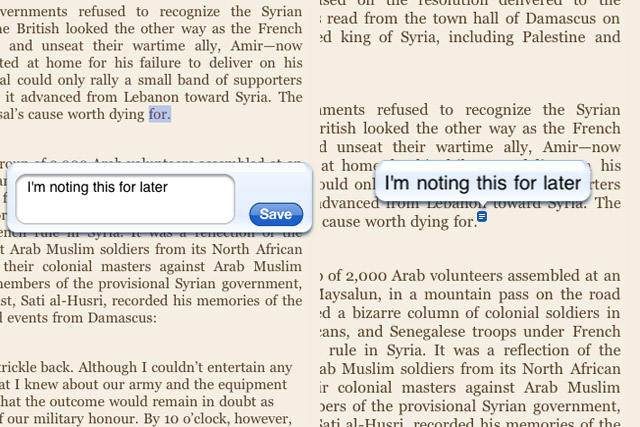
Unless you are completely technologically impaired, taking notes and highlighting on an iPad is simple.
Again, you did give credit to the multifunctional ability of an iPad… unfortunately it was in condescending manner. You failed to mention the countless other uses for an iPad in education. To name a few:
*you can take class notes on an ipad either by typing or by using a stlyus (just as easy as writing, pen to paper)
*apps for planners to keep your assignments organized and your exam days on mind
*various other helpful apps: calculator, periodic table, dictionary, databases, the list goes on
There are countless other benefits to using an iPad and e-books but I'm getting rather bored of listing them.
As a student who just replaced paper copies of textbooks for an iPad and e-books, I can say that I am very pleased. Not only with the cost but with the functionality of the iPad. Again, I can use it as a textbook, a planner, and all the tools I need to get me through out the day on campus.
Next time don't just hop aboard the hate train, do some proper research and maybe some interviews with students who are currently using this new type of system. Hope you don't have any plans to graduate past a reporter for an internet blog.
Did you read the comments above you? Clearly there are pros and cons to using an eReader, and they aren't for everyone. The author did point out most of these.
What you fail to mention is that you cannot sell your downloaded textbooks once you are finished with them. So any savings you may be getting upfront equates to the same as someone buying a textbook and then reselling it.
Plus you cannot buy used textbooks from an eReader, you have to pay full price every time.
As a college student, I can tell you that while I would love to use my iPad for a textbook, it just is not economical. When I am in class and the teacher says to pull out your book and turn to a specific page, it doesn't always translate over to the same page on an eReader. Plus, if you are using a Kindle, you are missing out on color pictures and other special features specific to that hardback book.
Look at Greg's comments above, clearly he knows more than you. You seem to be letting your ego wash away any true cons of using an eReader because you just think you are cooler than everyone else.
Don't forget about CafeScribe, which is another option for electronic textbooks, and you download them right to your existing laptop without needing a special reader! Not to mention, they have a social networking aspect that lets you connect with other students.
Yes, but only for those std, who use e-reader
Looks like they’re not all their cracked up to be in terms of textbook replacement. Still there ARE 3rd party stores that sell books for downloads that the iPad could use.
Also another benefit of eReaders: Saving paper & trees
I hear there are lots of formatting problems, with texts, and that the indexing is often next to impossible to follow. But some versions will do it better than others, as always.
Michelle…..can you put the books on the e-reader? I've been trying to just get my ECON textbook in a form to dump onto my 'The Book by Augen'. It's an $89.00 color e-reader I picked up and LOVE.
I'm thinking we're moving to fast, how 'bout just getting the textbooks moved first on e-readers and let the extra features come later. I just want one little gadget to hold all my textbooks, that's it…..I'll use my computer for the other stuff for now. It would take all the physical weight and bulk out of my world and is a little easier on the eyes as there is less glare than shiny textbook pages and computers screens.
Coursesmart.com is great! They have had most of my college texts, at a cheaper cost and you can put them on an ipod touch (very small) or ipad. Also can read them from your computer or print them. I love this site!
I do not believe the price of the books will reflect the cost savings of eliminating print text books. The writers and publishers as well as the device company will be fighting over the increased profit margins that come with selling an eBook vs. a printed book. Eliminating the print and shipping cost in the book industry is huge! Most book consumers do not buy based on budget but desire or requirements. Importing to an eReader platform is painless. Distribution is timeless and exposure is instantaneously worldwide. The established producers will not go quietly into the night so it will be a long day before we realize the benefits of eBook versions for every book. They keep printed books around to protect their revenue sources and they (academia) have been against everyone else doing this for the last 50 years or so but now it’s their turn to lose a large part of their livelihood to reduce paper use and fuel for transporting and all the pollution that goes with it. Now they are the ones saying No, we want to keep our way of life. Paper books will always be around though someday they will be a very expensive rare commodity looked upon like vinyl records. Libraries will be like Museums.
The college I attend does only e-books. You have to download from the college website they charge you aitomatically when you register for classes. Can you download textbooks in pdf secured format to any type of e-reader. The reason I ask is I already have to purchase the ebooks and if they would be able to work on an e-reader or kindle, it would be easy for me to take to work and read on break or lunch. Anyone have any reccomendations.
There's more to a text book than reading that none of the readers do or do well. Unlike Goldilocks and the Three Bears, a text book is not read from page 1 through to the end, rather, the text book is searched for the desired topic and the user skips around from book mark to book mark, from to index to text. So far, I've found no reader, including Adobe's digital edition that just searches the index. Adobe's digital edition will take you to a letter but once there, you'l have to page through the scores of pages to find your entry. You can search but the search encoumpases the entire book, takes forever and lists every insignificant mention. Boarders lets you book mark and get to the index after you've paged through scores of pages of table of contents then once there you have to page through the scores of pages (I spent an evening book marking each letter or the index. The readers won't let you search by part of the citation, thus if your looking for mucopolysaccharidases, you just can't type mucopol, not even if your text book is a dictionary.
For e readers to replace bulky college text books, and its about time they did, the features have to be added: searching the index or a single chapter (to save time and increase relevance) by a term in whole or in part, going back and forward for viewed pages as one does with a web browser, highlighting, making notes in the page, consolidating highlighted entries into a printable page or save-able document.
It's about time, it is after all 2010.
What about long-term access? Sure, some textbooks are instant sell-backs, but some texts are worth keeping and using in the distant future. Ten years hence, will your device still work? Doubtful. Will you still be able to access your content on some kind of platform? Possibly. Not a deal-breaker, but worth considering.
I think that the price will decrease (see the new Kindle for 139$ or the indian e-book for less than 40$) and that the color missing for pie-charts or pictures, or even for videos, will not be a problem in the next two years (look the Qualcomm Mirasol).
But it's neccesary that school books editors begin to edit new books adapted to this new gadget (or better tool). The best is that possibly we will asume better to pay every year new versions of textbooks with a bigger range of benefits for editors.
And the solution is less expensive as buy computers for each student.
(I don't know how is goes at other countries, but here at Spain we, the fathers, must pay every year a lot of money – more than 150$ – for the text books of each our childrens)
I too am hoping that the price of e-books will decrease (although I doubt it will happen before I graduate). I just bought my textbooks today for this term and it ended up costing me around $370 (I am in the US) so I would love to be able to buy a $139 Kindle and then perhaps only pay $200-$250 per term for textbooks, but that won't happen until the companies making and selling the textbooks realize that e-books are (hopefully) the way of the future.