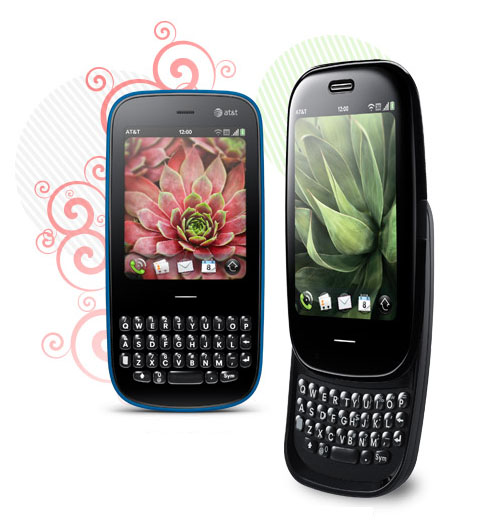
As soon as HP announced in August it was ceasing development of webOS — leaving the HP TouchPad and Palm smartphones out in the cold — attention immediately focused on what other tech companies might be interested in licensing or acquiring webOS. Early speculation focused on the likes of Samsung, HTC, Sony, and even Intel, but a new report from VentureBeat indicates the most serious contender might be e-retailing giant Amazon — although other companies are still in the running.
Would it makes sense for Amazon to invest in webOS now that it’s put serious development effort into Android devices?
The case for webOS
At first, Amazon’s reported interest in webOS seems nonsensical: The company has just rolled out its Android-based Kindle Fire ereader, which has already turned the Android tablet market on its ear with its $199 price tag (and an apparent $210 in parts, meaning Amazon is selling them at a loss). Why would Amazon consider another mobile operating system when it’s already using Android — let alone consider buying another operating system when Android is free?
First, consider that Amazon’s Kindle Fire is in many ways an Android device in name only: Check out the Kindle Fire product page and see how many times the word “Android” appears. The answer? Once, in a subhead for email apps. The fact that the Fire runs Android simply isn’t a selling point for Amazon, and it isn’t concerned with marketing the Fire as an Android device. Amazon has put its own highly customized user interface on top of Android, divorcing users from a “true” Android experience. The Kindle Fire is a content-delivery system with a Web browser, and its Android capabilities don’t even merit an also-ran mention. The Kindle Fire experience doesn’t have to happen on Android: It could just as easily be running webOS and most consumers would never notice.
 Basing future tablets and mobile devices on webOS would also enable Amazon to innovate on its own platform, apart from whatever directions Google wants to impose on Android. Call it “Google freedom.” Google has been repeatedly accused of clamping down on Android device makers who want to push the platform in new directions, reportedly by restricting access to the latest builds and demanding rights to review tweaks to the platform. Amazon undoubtedly doesn’t want to be treated like a second-class citizen in the Android device maker universe, even though it’s suppressing the “native” Android experience. If Amazon were to acquire webOS, it would be more able to chart its own course without influence from a third-party OS developer.
Amazon may also gain some technical merits from a switch to webOS: Although it never really had a chance to succeed in the marketplace, webOS was nearly universally lauded for its multitasking and browsing experience, as well as its media capabilities. HP has already done most of the heavy lifting to move webOS from smartphones to tablets and other devices (like PCs and printers). Android has a lot of those same capabilities, but webOS has actually been around longer, and comes from the same folks who invented the PDA: webOS might be able to bring more capability to comparatively under-powered hardware, enabling Amazon to save money on manufacturing costs.
Another asset in a webOS acquisition might be former Palm chief Jon Rubenstein. During his tenure running Palm, he shifted the company from its encumbered Palm OS to webOS and launched what was considered one of the most promising smartphone platforms to date; if the company hadn’t run out of money, Palm could have been a major player in the smartphone space. During his days at Apple, Jon Rubsenstein is also the man who designed the iPod hardware and played a major role in turning it into the dominant digital media player. The man understands hardware, understands how to make consumers devices — which is exactly what Amazon is producing — and he’s already on Amazon’s board of directors. HP and Amazon are known to have at least discussed Amazon using webOS in the last year.
The patent angle
Of course, no major deals happen in the mobile technology world without patents getting involved, and Amazon’s apparent interest in webOS makes sense in two ways.
 First, Amazon would either acquire or gain significant access to Palm’s stable of technology patents. Let’s not forget that Palm was the company that put personal digital assistants (PDAs) on the map, and later was on of the first makers of what we’d call smartphones today, so its patent library runs deep. When HP bought Palm back in mid-2010 for a whopping $1.2 billion, former HP CEO Mark Hurd stated outright that HP didn’t buy Palm to get into the smartphone (or tablet) business: it bought Palm for the patents. With all the patent litigation in the mobile world, Palm and webOS have been almost entirely exempt. If Amazon were to bank on webOS for future Kindle devices, it would likely be able to sidestep litigation over Android (with Apple vs. HTC and Google vs. Oracle currently being at the forefront). The deep Palm patent portfolio would also put Amazon in a strong position if the company ever comes to loggerheads with Apple.
Second, going with webOS would enable Amazon to neatly sidestep the patent licensing tax Microsoft seems to be putting on Android device makers. The Redmond software giant has been very successful applying pressure to Android device makers with offers to shield them from possible future litigation in exchange for per-device royalties. The latest Android device maker to fall is Samsung, joining the likes of HTC, Acer, and ViewSonic. Microsoft’s success has significantly tarnished the notion that Android is “free,” and ironically may put the company in a position where it’s earning more money from Android devices than Google does… or maybe even than it earns from Windows Phone devices, at the moment.
At what price?
Hewlett-Packard paid $1.2 billion for Palm just over a year ago, and that valuation was based largely on Palm’s patent portfolio, rather than Palm’s existing smartphone business — which hadn’t taken off and which HP didn’t really want. HP’s webOS business lost about $330 million in the last quarter, and the company has already warned financial analysts that its fourth-quarter earnings will include a write-down on Palm assets of about $1 billion. So it’s a good bet that HP is, at a minimum, looking to offset those costs, even though HP’s quickly-aborted TouchPad business is worthless to potential suitors.
However, in the year since HP acquired Palm, the mobile industry has seen an explosion in high-dollar patent acquisitions. In July, a consortium led by Apple and Microsoft spent $4.5 billion on a porfolio of about 6,000 patents and patent applications from Nortel. That same month, Google splurged on over 1,000 patents from IBM — while at virtually the same time decrying how “bogus patents” were being used to attack Android. Add high-stakes litigation between Apple and Samsung to the mix (which hinge on both technical and design patents), and the Palm patent portfolio could very easily be worth more than the $1.2 billion HP paid for it a year ago. HP might even be able to ratchet up the price by playing bidders against each other (and HP’s current chief, former eBay CEO Meg Whitman, knows a thing or two about bidding processes). Amazon has pockets deep enough to invest in webOS, but there’s no telling yet if it’s willing to take the leap.
The case against webOS
All this doesn’t make webOS a slam dunk for Amazon. First, Amazon has already invested significant resources into customizing Android for its Kindle Fire tablet. Although some of that effort could undoubtedly be leveraged if Amazon were to try to produce webOS-based Kindles, the company would definitely have to spend time and engineering effort bringing the Fire experience to webOS. That’s time the company would be spending re-inventing what it’s already done, instead of refining the Fire platform. In the fast-moving mobile world, that’s probably not a good thing.
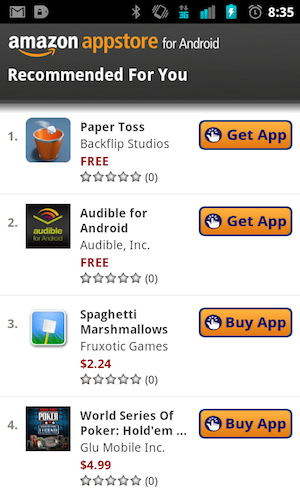 Second, Amazon is already a major player in the Android ecosystem, with its own Android marketplace and Kindle apps for Android devices. Amazon can leverage that investment in Android with its own Android devices, but webOS devices would be exempt, potentially making then less valuable to consumers. Right now, most of the buzz about the Kindle Fire isn’t that it enables users to easily tap into the Amazon e-commerce ecosystem and spend lots of money: It’s that it’s a cheap Android tablet. That may change once the Kindle Fire goes on sale November 15. Consumers are notorious for not caring about platforms, and being more concerned with what a device does for them.
Amazon could conceivably launch its own developer network and app store for hypothetical webOS-based devices, but it seems like a long shot. The webOS developer universe is sparsely populated, with existing devs having been burned twice now — once by Palm, once by HP. They may not be willing to take the risk that the third time is a charm. Amazon has demonstrated that it isn’t particularly concerned about the Android ecosystem — after all, it’s only mention to Kindle Fire customers is as a source of email apps — but that might all fall apart with one thing so many mobile device users love: games. Hordes of casual games are available for iOS and Android, and the Kindle Fire tablet will be able to access a heap of Android games. A hypothetical webOS tablet is going to have major trouble attracting development interest from game developers, and that may be a serious impediment to devices intended to provide consumers with content and entertainment.
Finally, there’s the fundamental fact that Amazon is not a hardware company: It’s an online retailer that has built a major digital content business. One of the reasons Apple has been so successful in recent years is that Apple is primarily a hardware company. It sells well-designed hardware at a significant profit, and barely bothers to break out its iTunes content business as a separate item in its financials. Amazon’s Kindle ecosystem is almost the opposite. Amazon’s Kindle e-readers are primarily inexpensive gateways to Amazon’s vast digital content business. In fact, with the Kindle Fire, Amazon appears to be selling hardware at a loss in order to get customers into its ecosystem. Most customers like their Kindles, but aside from their E-Ink displays, the devices don’t get high marks for their design and build quality. With webOS devices, Amazon would likely continue to push towards low prices (and low unit costs), hoping to make up the difference (and most of its profits) by turning customers on to its digital content and retail offerings. That means webOS devices would probably be (at best) inexpensive and feature-limited, and (at worst) cheap and chintzy. At that point, consumers probably don’t care what’s under the hood… and Amazon might not either.
Editors' Recommendations
- Who needs the Pixel Tablet? Amazon’s new Fire Max 11 looks great
- Which Amazon Kindle should you buy on Cyber Monday 2021?
- The TicWatch E3 will get Wear OS 3, making it a better buy
- There has never been a better time to buy an Amazon Kindle
- Amazon Kindle Oasis vs. Kindle Paperwhite: Which Prime Day deal is better?