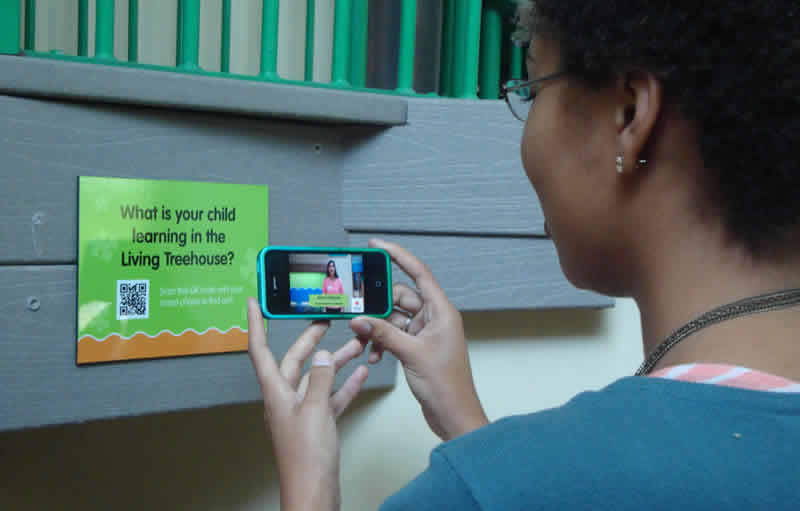
According to a recent study conducted by youth marketing company Archrival, the majority of college students with smartphones have no idea how to scan a QR (Quick-Response) code. The study was conducted with over 500 college students across 24 different college campuses. While 81 percent of students owned a smartphone and 80 percent were familiar with the concept of a QR code, only 21 percent were able to scan a provided QR code when asked. Of the 79 percent that were unable to scan the code, some tried and ultimately gave up while others attempted to take a picture of the code with the built-in camera. Others complained of the process taking too long and some students didn’t want to download an app to scan it.
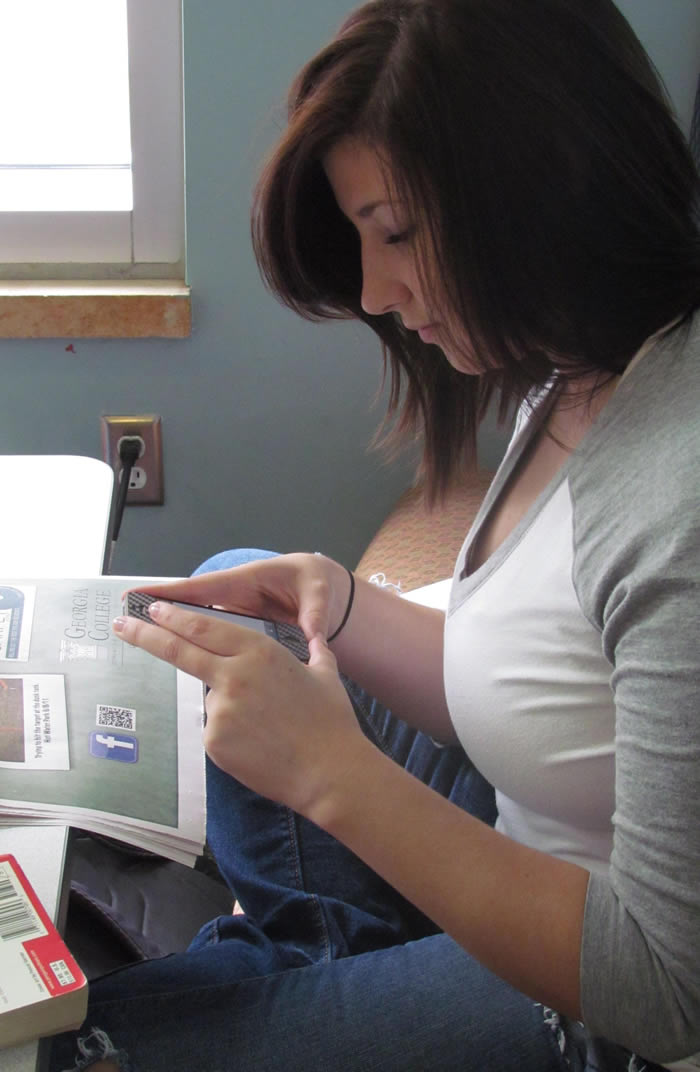
The result of the study found that 75 percent of college students are “Not Likely” to scan a code in the future. This trend should serve as a warning sign to advertisers attempting to reach a younger demographic through QR codes. According to Bart Johnston, the Interactive Director at Archrival, students with Android phones were most proficient at scanning QR codes followed by iPhone users, BlackBerry users and Windows phones users. Females showed slightly more interest in scanning QR codes over males. Some of the colleges included University of Florida, Ohio State, Penn State University, Texas A&M, University of Cal-Berkeley, University of Michigan and North Carolina State.
While college students may be shunning QR codes for now, this hasn’t stopped creative implementations of the technology. A Seattle-based startup named Dynotag has been using QR codes to help find lost pets as well as missing luggage. Companies that sell prepackaged food or simple ingredients are including QR codes on the packaging that lead to instructional videos regarding preparation of a specific dish as well as written recipes and tips.
I consider myself to be pretty tech-savvy and I understand the PR side of the QR codes…..but as a consumer, I tried to enter a contest as my local grocery store (@HEB), and the QR code scanned just fine – it was the website and process that followed the scan that was so cumbersome that I gave up after 4 attempts. I dont know many people that would actually try that many times…
There are major faults in America’s higher education efforts around technology, but poor research and an erroneous judgment on QR codes is on display here.
1) simply asking a control group to judge a single tactic or tool would yield similar results no matter if it was Twitter, coupons or a Blue-Light special at Kmart.
2) Archrival is missing the point if they are slapping a QR code on signage or posters without including education on how to scan/what to expect, and a clear and compelling call-to-action.
3) To print or publish with confidence that 75% of an audience is “not likely” to do something in the future that most of them know nothing about today…rubbish.
Digital Trends can do better than this.
Actually, QR codes are pretty ugly. A plain black box does nothing for me. I noticed a few really interesting ways of creating colorful designs, even in 3D, at qr-codeworld. So there’s hope that those codes can get some personality after all.
I would say they are more of a pain in the arse to use, then a benefit… Have had more luck just scanning real bar codes of products.
I consider myself to be pretty tech-savvy and I understand the PR side of the QR codes…..but as a consumer, I tried to enter a contest as my local grocery store (@HEB), and the QR code scanned just fine – it was the website and process that followed the scan that was so cumbersome that I gave up after 4 attempts. I dont know many people that would actually try that many times…
Most people dont know what QR codes are. Why would they have difficulty using something when they know its as simple as scanning it? I only found out what it was when a friend of mine scanned one at a coffee shop. I asked what the hell he was doing. Then he told me that you had to download an application to scan it. I was like ‘no thx’.
TxTImpact has Mobile QR codes or 2D code are codes in the same way as ordinary barcodes are, but their matrix structure can hold more information. The codes are also mobile in the sense that you can use the camera on your mobile device to scan and decode them. You can convert a web address (URL), a phone number, an email address or plain text into a mobile code. After scanning it with your camera phone, you will have instant access to the encoded information straight on the display of your mobile device.
(http://www.txtimpact.com/mobileqrcode.asp)
I think the problem is that people don’t know what QR codes are! Hell, I had to google it myself! Then I saw the box barcode and was like “Derp”! I scan them all the time!
I think on many phones it’s too difficult to find the barcode scanner, if there is one built in at all. Requiring people download an app to do something that usually has minimal payoff is kind of silly.
Good article. However, I suspect the reason for lack of enthusiasm is there are no applications that offer any end user value. The dynotag.com is a nice application that helps end users, not marketing companies and merchants. The free use of dynotag is also nice. We don’t want to pay just for a basic digital service especially in college.
Seems odd to me that Windows Phone users wouldn’t just whip out Bing vision and scan the code. I dumped the QR code app I had installed after I updated to mango. I guess majority of college students with Windows Phones don’t realize how great of a feature that is.
There are so many features in new smartphones, it is overwhelming for all but the ubergeeks.
Give them time, they’ll figure it out…
BTW, Bing QR scan works great on the iPhone as well once you install the Bing app.