This past August, President Barack Obama signed the Unlocking Consumer Choice and Wireless Competition Act into law, finally making it legal once more to unlock your phone. Additionally, back in 2013, the Cellular Telephone Industries Association (CTIA) and Federal Communications Commission (FCC) convinced several U.S. carriers to agree to new smartphone unlocking rules by February 11, 2015. Now, the deadline to comply with the CTIA’s rules is here, so anyone whose two-year contract is up can ask their carrier to unlock their
Here, we’ll answer all the pertinent questions about the new unlock rule.
Updated on 02-11-2015 by Malarie Gokey: Added news that carriers must now unlock your phone if you ask, so long as your two-year contract is up.
How did the law come about?
The new law originally started as a petition created by a digital rights activist on the White House’s We The People website, where you can post ideas for the government to mull over. More than 114,000 people signed the petition, with the huge response prompting the FCC to work with Congress, networks, and the government to come up with some kind of a solution.

The result was the Unlocking Consumer Choice and Wireless Competition Act, which made its way through the U.S. House of Representatives back in February. However, that version of the bill disallowed cell phone unlocking in order to conduct “bulk unlocking,” something that caught the eye of digital rights activists. In other words, businesses wouldn’t be allowed to buy phones en masse, unlock them, and proceed to sell them.
Related: Cell phone unlocking bill passes through U.S. House, but advocates are not happy with it
The version of the act that passed the Senate on July 16 eliminated that part, thus paving the way into becoming a law. This makes it the first piece of legislation that originally began as a petition on We The People.
Why was it illegal to unlock a smartphone?
Every three years, the Library reviews the specific rules of the Digital Millenium Copyright Act (DMCA) and makes exemptions allowed under the law. In 2006, the Library decided that phone unlocking should be exempted under DMCA. But that changed in October 2012, when the Library did not renew the exemption. The Library’s justification was that unlocking a phone required making changes to its firmware – software that is copyrighted and owned by your carrier – which would be a violation of the DMCA.
Why did the rule change?
Because the Library was convinced, for a number of reasons, that allowing unlocking was no longer a necessary exemption.
The primary reason cited by the Library is, there are an increasing number of phones you can buy that come unlocked. Apple and its carrier partners sell the iPhone 5S unlocked, for example. Google’s Nexus 5 also comes unlocked. Finally, retailers like Best Buy offer all sorts of unlocked phones. In short, the Library decided that there was no reason to alter the DMCA to allow people to unlock any phone since people can easily buy an unlocked phone nowadays, if they choose to do so.
Related: Stick it to the man! Phone unlocking skyrockets 70 percent since becoming illegal
Furthermore, new court decisions changed the interpretation of the law. In 2010, the Ninth Circuit court decided in Vernor v. Autodesk, Inc that we cell phone owners do not actually “own” the software running our phones. Instead, we are only “licensing” this software – a key difference – which means that we don’t have a right to alter that software. This also played a role in the Library’s decision.
Is it legal to unlock all smartphones?
Based on the language of the bill, you can bring any
AT&T will let you unlock your device permanently, provided your contract has already expired. AT&T customers still on contract may unlock their devices up to five times per year (for international travel purposes), as long as they don’t owe any past-due amount on their accounts, and have been a customer for 60 days or more. You can see the full rules here or simply fill out the unlock request here.
Meanwhile, while some Verizon devices are sold unlocked, others are not. However, like AT&T, customers in good standing can request to have their devices unlocked for international travel. You can see the full rules here or call Verizon at 1-800-711-8300 and ask for a SIM unlock.
Related: T-Mobile surpasses Sprint to become the top prepaid phone service in the U.S.
Sprint will allow customers to unlock their devices for travel after three months with the carrier. You can also call 1-888-211-4727 to unlock your phone or join a Web chat to do so. Full rules are here.
As for T-Mobile, while they no longer offer standard two-year contracts, letting you pay for the device in monthly installments, that doesn’t mean you’re buying an unlocked device. To unlock a device on T-Mobile, you must first see whether you’re a postpaid or prepaid customer and go from there. You can call 1-877-746-0909 or request an unlock through a Web chat. Full explanation is here.
How does the unlocking process work?
Some carriers may even unlock your device automatically and remotely, without you having to do anything, but others will require a formal request. Regardless, the carriers must either unlock the device themselves, give you instructions on how to do so, or facilitate the process through your phone’s manufacturer. Although most carriers won’t automatically unlock your device once you’re eligible, the FCC says the participating providers will alert you when your device is eligible for unlocking.
If your device is not eligible, the carrier must explain why it won’t unlock your phone in an easy to understand manner. However, carriers are required to unlock users’ phones when asked, provided that the two-year contract has expired, or you’ve paid off your phone.
Those who have prepaid phones will get a similar alert at the point of sale, the time of eligibility, or in a short blurb on the carrier’s website. The new rules state that every prepaid carrier must unlock users’ phones one year after it was purchased and activated.
It is also forbidden for carriers to charge you to unlock your phone.
What are the benefits of an unlocked phone?
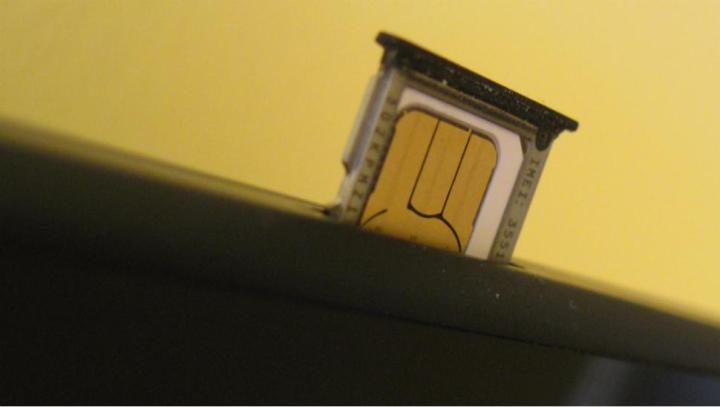
Unlocked phones can be freely used on other networks simply by swapping out the SIM card. So if you’re an AT&T customer, and you want to take the phone you have to T-Mobile, you could do so very easily with an unlocked phone.
The most common beneficiaries of unlocked phones are world travelers. Say you have an unlocked iPhone 5S; you could take your device to Europe, for example, buy a pre-paid SIM card (which is readily available there) and use your phone on the local network, allowing you to avoid exorbitant roaming fees.
What are the downsides of unlocked phones?
If you’re buying a new unlocked phone, it will cost you far more money up front than a carrier-locked device. A 16GB unlocked iPhone 5S, for instance, will cost you $650. Buy the same phone through AT&T, Sprint, or Verizon, and you’ll pay just $200 thanks to carrier subsidies – but you also have to agree to a two-year contract. In the long run, you will likely end up paying more for your locked device than for an unlocked one.
Is jailbreaking the same as unlocking?
No.
Jailbreaking allows you to run apps on your device that you couldn’t with an un-jailbroken phone, such as iOS apps that are not available through the iTunes App Store. But jailbreaking does not let you switch to a different carrier. Also, jailbreaking is still completely legal under the DMCA.
Is this law permanent?
No.
While the law does allow you to unlock your phone, it is not a permanent solution. At its core, the law requires the Library to put the previous DMCA exemption that allowed for cell phone unlocking back in place. The exemption will expire next year, which will put us in the same situation as we were in back in 2012.
Related: Awesome new bill legalizes cell phone unlocking, “fixes” the DMCA
However, many are hopeful that the Unlocking Consumer Choice and Wireless Competition Act paves the way towards permanent legalization of cell phone unlocking, with Representative Zoe Lofgren (D-Calif.) having tried to do just that with the Unlocking Technology Act of 2013. While it was shot down, Open Signal founder Sina Khanifar launched FixTheDMCA.org in the hopes of amending the DMCA’s controversial anti-circumvention provisions.
Article originally written by Andrew Couts in January 2013.
Updated on 08-08-2014 by Williams Pelegrin: Cell phone unlocking is now legal. Sections have been added and edited to reflect the new law going into effect.
Editors' Recommendations
- What is an eSIM? Here’s everything you need to know
- Does the iPhone 15 fold? What you need to know
- What is Vudu? Here’s everything you need to know