 The wireless industry sued the city of San Francisco on Friday to stop a law that requires cell phone stores to post how much radio energy each model emits.
It’s the first law of that kind in the nation. The industry trade group known as CTIA — The Wireless Association said the law will mislead consumers into thinking that one phone might be safer than another on the basis of radiation measurements.
Studies have not conclusively found that cell phone radiation is a health risk. Research continues on brain tumors.
In its lawsuit filed in U.S. District Court in San Francisco, the industry group said the city is usurping the authority of the Federal Communications Commission, which sets limits for phone radiation.
The city attorney’s office said it had not seen the lawsuit and was unable to comment.
Previously, Mayor Gavin Newsom’s office has said that the ordinance is “a quite modest measure that will provide greater transparency and information to consumers for whom this is an area of interest or concern.”
The local ordinance requires cell phone retailers to disclose a measure of much energy will theoretically be absorbed by a user’s head. FCC limits this specific absorption rate, or SAR, to an average of 1.6 watts per kilogram. Measurements for phones sold in the U.S. are available on the agency’s site, but not usually in stores.
“Nobody should be suggesting to consumers that they ought to be shopping for phones based on a difference in SAR values,” said John Walls, vice president for public affairs at CTIA. “There’s no scientific basis to suggest, as the ordinance does, that two phones with different values have a safety distinction between them,” as long as they’re below the FCC’s limit.
Under the law, larger chains will have to place SAR notices starting in February, while other stores will have until 2012.
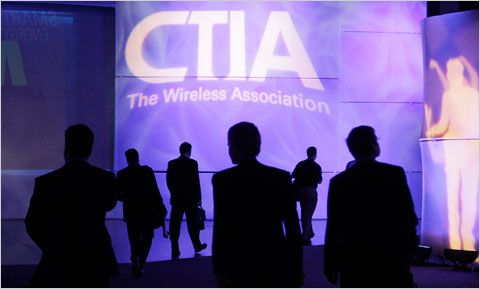
The lawsuit is not the first response from CTIA. The association, which represents all major wireless carriers, usually holds a trade show in San Francisco in the fall. After the law was passed, CTIA announced that it would hold the show as planned this year, then look for another host city.
“We thought it was a clear message from the mayor that we weren’t wanted there,” Walls said.
San Francisco is known for novel legislation. It has banned plastic grocery bags, ended municipal use of bottled water, made composting mandatory and required the posting of nutrition information in restaurants.