
 The most effective chains are the ones you don’t realize bind you.
After AT&T unveiled its own version of a shared data plan on Wednesday, dozens upon dozens of posts hit the Web heralding the news and weighing Mobile Share against both traditional data plans and Verizon’s Share Everything. (Even yours truly got in on the frenzy.)
Most posts considered the deal’s advantages for the consumer. But how do shared data plans benefit the carriers? Ah, that’s where things get a bit more devious.
Pooled data is the bait on the trap
AT&T and Verizon have structured shared data to give themselves several advantages. The plans meet customer demands for a family data pool. Low subscription prices for tablets should drive more consumers to connect their slates to cellular networks. And both Mobile Share and Share Everything include unlimited talk and text minutes.
Wait! That last one’s a consumer benefit, not a carrier benefit. Isn’t it?
Not quite.
Analysts who have studied the plans agree: If you aren’t already on an unlimited talk and texting plan, shared data plans will actually cost you more money — often, a lot more money. Being for-profit businesses, carriers of course love pulling down more dough, but even more than that, they like the idea of getting you used to paying for unlimited talk and text.
That’s because talk and text deliver insane profit margins. It is a cash cow for carriers, and the cow’s milk is running dry.
Data killed the voice plan star
Don’t take my word for it, though. Back in June, the Wall Street Journal reported that cellular subscribers have spent less time talking on the phone ever since the iPhone launched in 2007. That follows several years of an upward usage trend prior to the arrival of smartphones.
You never hear anybody complaining about their rollover minutes any more, do you? Now you know why.
Carriers have been keen to the mass migration for a while now, which helps explain why Skype had to fight a terrible struggle to even land on the original iPhone. (AT&T only caved in after both consumers and the FCC complained heavily.) That griping isn’t a thing of the past, either; this past May, Nokia tried to blame its Lumia struggles on Skype’s Windows Phone app.
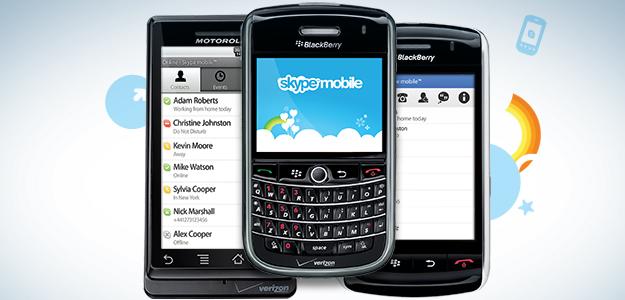 In a 2011 New York Times report, Verizon vice president Brian Higgins conceded that as Internet speeds and availability increase, “Eventually, everything migrates to a data channel. We’re moving away from silos of communication to one where everything is combined together.”
That worries carriers, who see much more profit from voice subscriptions than data subscriptions.
After Apple announced that FaceTime would begin working over cellular networks in iOS 6, GigaOm and 9to5Mac examined the situation and found that chatting over FaceTime uses 3MB of data per minute. On a 2GB plan, that’s good for 666 minutes; a 3GB bumps that to an even 1,000. Comparable minutes on a voice plan cost significantly more than those on data plans — sometimes more than twice as much, the publications found.
Surprise! It’s rumored that AT&T might charge iPhone users an additional fee if they want to use FaceTime over Cellular. (Sprint definitely won’t, though.)
Data also killed the SMS star
Carrier profits are even more gargantuan when it comes to text messages. In the wake of Apple’s iMessage service, CNET’s Steve Shankland did the math and found that on per-text SMS plans, which normally charge 20 cents per text, carriers receive the equivalent of $1,250 for every MB — not GB — of data — a 8,333 percent markup over the $30/2GB data plan Verizon had available at the time.
Shankland said the $20/month unlimited texting plan was “a better deal if you send and receive more than 100 messages a month.” No matter which way you cut it, though, carriers make a ton of money on texting.
That’s why iMessage and services like Kik (which send texts via data networks) have the carriers worked up. Data-based texting services were estimated to cost carriers $13.9 billion (with a “B”) in lost revenue in 2011.
 “You lie awake at night worrying about what is that will disrupt your business model,” AT&T CEO Randall Stephenson said in May. “Apple iMessage is a classic example. If you’re using iMessage, you’re not using one of our messaging services, right? That’s disruptive to our messaging revenue stream.”
People who talk and text less often drop down to lower-priced limited service plans. But carriers won’t have to lose revenue or leave their messaging services lying dormant if they can convince you to pay for unlimited talk and text as part of a shared data plan.
Coincidentally, shared data plans began appearing shortly after Stephenson made his comments.
Can you escape the trap?
If you don’t chat on the phone very often and don’t want to pay a premium for a service you don’t use — things are looking grim.
After introducing its Share Everything plans, Verizon did away with all the rest of its individual offerings. Unlimited talk and text is now the only way to fly on the nation’s largest 4G LTE network. Existing subscribers can keep their current plans, but be prepared to say sayonara to your low-cost limited voice minutes when you upgrade to a new handset.
AT&T’s a better option for tentative talkers and texters. It is still offering its traditional individual and family plans alongside Mobile Share — at least for now. Don’t expect that to last forever, though. As AT&T Mobility honcho Ralph de la Vega said in the aforementioned June WSJ article:
“The industry’s definitely moving towards unlimited… [E]specially as more people adopt smartphones that have voice capabilities over the Internet, segmented voice plans will become less relevant.”
In other words, the talk and text cash cow isn’t dead. If shared data plans give us a glimpse of the future, we’ll be paying for its life support for a long, long time.
Editors' Recommendations
- The 9 best cell phone plans for 2024
- The best phone plans for one person in 2023: our 6 favorites
- The best 5G phone plans in 2022
- The best mobile plans and smartphones for seniors
- AT&T plans explained: 5G, pricing, and deals


