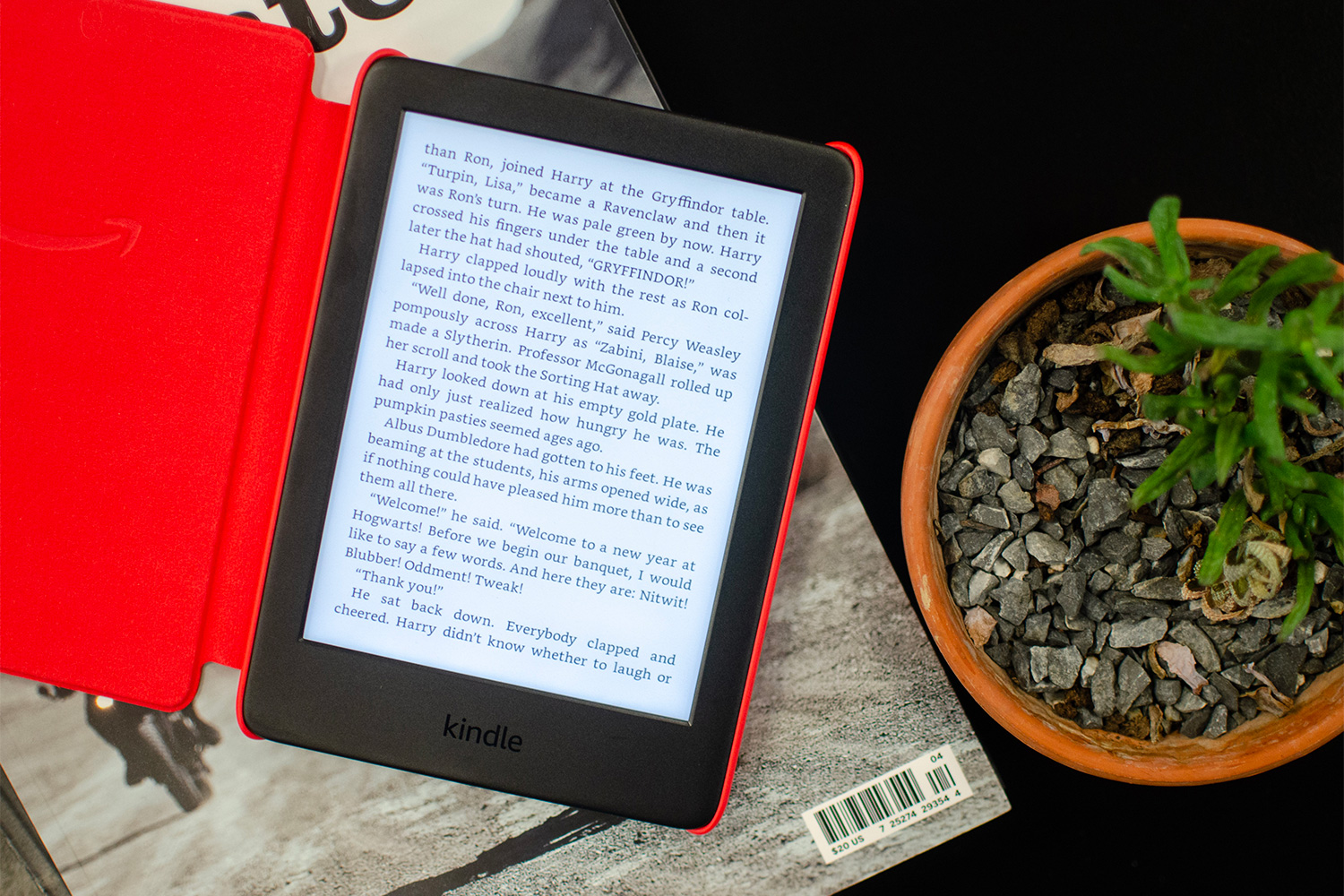
Over the next 10 years, eBooks are likely to change dramatically. Their capabilities have already started to blend with MP3 players, and will blend with video players next year when the Apple tablet launches (assuming Steve Jobs gives the product its final blessing). But what does the future hold?
Initial reviews of the Barnes & Noble Nook showcase promise, but also hint at a first-gen product that should likely be avoided by most. The full details and verified existence of the Apple tablet have been held off until March or April. And the Sony eBook reader is still crippled by its store. The near-term future remains the Amazon Kindle 2.
The long term future is anything but certain.
From eBook to Web Appliance

When new technology comes out, it tends to emulate something we are already familiar with and use. MP3 players initially emulated tape players, and eBooks initially emulated books, but in both cases the devices were capable of much more. The Kindle has a rudimentary browser and an MP3 player built in, and the Nook has a MP3 player. However, much of what we read today isn’t magazines or books: It is Web content, and this content is in constant flux. Many of us are spending more time reading on MSN, Yahoo, Twitter, or Facebook than in reading traditional sources.
We are also watching more things on services like YouTube or Hulu, and listening to music off of a variety of music streaming sources like Slacker (my personal favorite). Apple will, if rumors are true, be the first to explore this breadth fully with its tablet. But the technology needed to do this right is at least three to five years out. If you use an LCD screen, battery life and readability are sacrificed. If you use e-Ink, multimedia is limited to low frame rate video and music. In addition, multimedia consumes a lot of bandwidth, and what makes the initial eBooks so affordable is that that books use very little.
There is a blended ePaper LCD screen coming next year, and at an analyst meeting last week, consensus was it is three years from making it into high volume products. In addition, 4G wireless (LTE and WiMax) is expected to be widely available by 2013, which gives us the potential for that perfect storm: an affordable blended device.
Content Aggregation: iTunes Model Wins?
I’m putting a question mark on this because it hasn’t really proven true of the Web. We tend to shop at a variety of online properties. However, the Sears of the Web is Amazon, and they are clearly the most successful, by significant margin, of American online retailers. But large and dominant are two different things. While iTunes showcases that a hardware-to-services connection is preferable (much like AOL initially showcased the advantage to a protected garden Internet) the market could evolve to something closer to what we have with browsers, and a variety of services.
As it turns out, a group of powerful publishers are coming together to set some common standards that would tend to promote the idea of content sources that are independent from devices. However, ease of use still rules. My own take is that if Amazon or Apple can apply enough of the content and a better user experience, they will likely continue to do well, much as the iPod has continued to do well even though DRM-protected music is largely obsolete.

In addition, much of this content will be streamed. Assuring a good streaming experience will likely require a relatively high level of coupling between the device and the service, at least for the next three to five years, which should help the Apple and Amazon models as well. Long term, say 10 years out or so, I think a push to decouple devices from services, likely led by government agencies and anti-competitive concerns, will sever devices from the services and open them to a wider variety of content.
Flexible Screens
While these still look to be about five to 10 years out, the need to make these devices more portable will undoubtedly drive us eventually to flexible screens. Current e-readers just aren’t very portable. The electronics are a small part of the package, the problem is the screen, and eventually we will have a flexible one. The issue will be touch: Devices like the Nook are already showing up with touch screens, and doing touch on a flexible screen could prove to be problematic, suggesting a near-term choice between the technologies. Personally, between touch and flexible screens, for what e-readers are initially being used for, I think portability rules. But as these evolve, touch will likely become increasingly important.
Convergence: Smartphones, Smartbooks, eBooks, Media Players
Going forward, it will increasingly be difficult to tell where one of these device classes begins, and the other drops off. People are already reading eBooks on their iPhones, already listening to music on their eBooks, and once we get the blended ePaper-LCD screens, or OLED screens, and stronger Web-based services, even notebook computers may get dropped into the mash up. A future device may replace all of these devices in a single form factor. It will likely take 10 to 15 years – at least – for us to find this perfect storm product, but we are on our way. Stranger things have happened; I’m looking forward to the amazing things that are coming.
Check out our article on The Future of Electronic Paper.
Editors' Recommendations
- Are Kindle books free? How to read on your Kindle without paying
- How to share Kindle books with family and friends
- Your guide to the best e-book readers for 2022
- How to share Kindle books with family and friends
- Barnes & Noble refreshes its Nook GlowLight e-book reader