

Geely is preparing to unveil a new electric vehicle charging system that could make today’s fast-charging times look surprisingly slow. The Chinese automaker says its next-generation system will deliver 2.2 megawatts of charging power, potentially letting compatible EVs charge in about four minutes. The technology is scheduled to be formally announced on September 23 at Geely’s Global All-Domain Safety Center in Ningbo, China.
Geely is taking the charging race to another level
The announcement puts Geely directly into China’s rapidly escalating fast-charging competition. According to the source, the company’s 2.2MW system would deliver roughly 50% more power than BYD’s 1.5MW Flash Charging 2.0 system, which itself has pushed EV charging toward the five-minute mark. Geely’s existing Golden Brick technology has already claimed a 4-minute, 22-second charging time, though it has not yet disclosed the exact charging range covered by the new four-minute claim.
That last detail matters. EV charging normally slows as the battery approaches full capacity, so manufacturers typically quote charging times over a particular range rather than from zero to 100%. The source notes that Geely has not yet explained exactly what battery percentage the four-minute figure represents.

Geely is also calling this AI smart charging technology. The system reportedly uses charging algorithms to manage battery temperature and longevity, with claims of as many as 3,500 charge and discharge cycles with limited degradation. Those claims will need to be evaluated once Geely provides more technical details.
China’s charging infrastructure is leaving the US behind
The gap becomes particularly striking when compared with the US. Tesla’s Supercharger network currently reaches up to 325kW at some locations, while Electrify America offers chargers rated up to 350kW.
Geely’s proposed 2.2MW system is therefore more than six times the power of those 350kW chargers. However, power output alone does not determine how quickly a car charges. The battery’s chemistry, thermal management, state of charge, and maximum charging capability all matter.
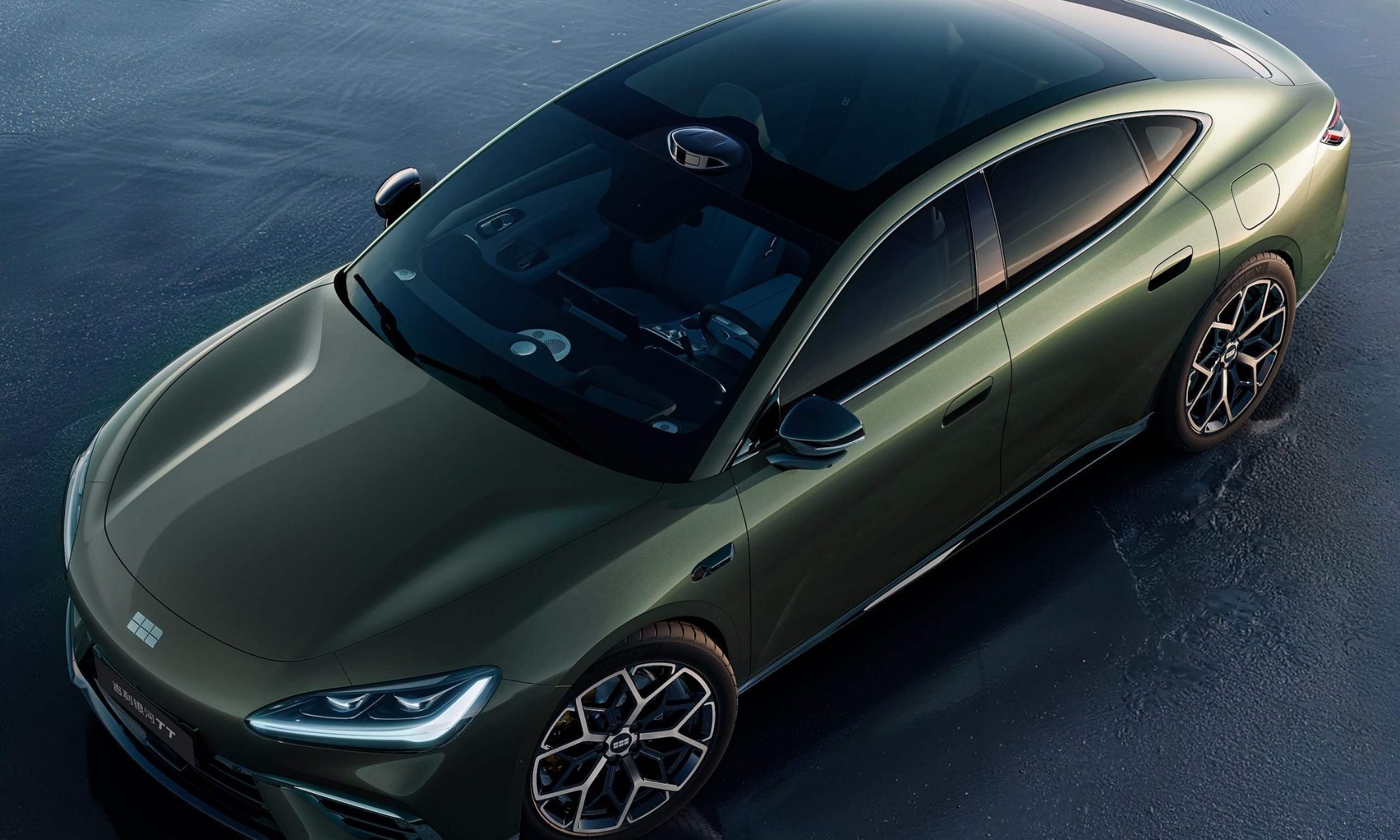
The technology also matters because Geely is not operating in isolation. Geely Holding owns Volvo Cars, having completed its acquisition of the automaker from Ford in 2010, and the group has continued collaborating with Volvo. Geely also has a 50:50 joint venture with Renault Group through Horse Powertrain, while Geely and Mercedes-Benz established the Smart joint venture to develop and produce Smart vehicles.
That broader global footprint could eventually give Geely’s charging and battery technology a path beyond China, although there is currently no indication that the 2.2MW system is coming to the US. For now, the biggest question is whether Geely can turn this headline-grabbing four-minute figure into a practical charging system that works reliably, protects battery life, and can be deployed at scale. More answers are expected when Geely officially unveils the technology on September 23.


