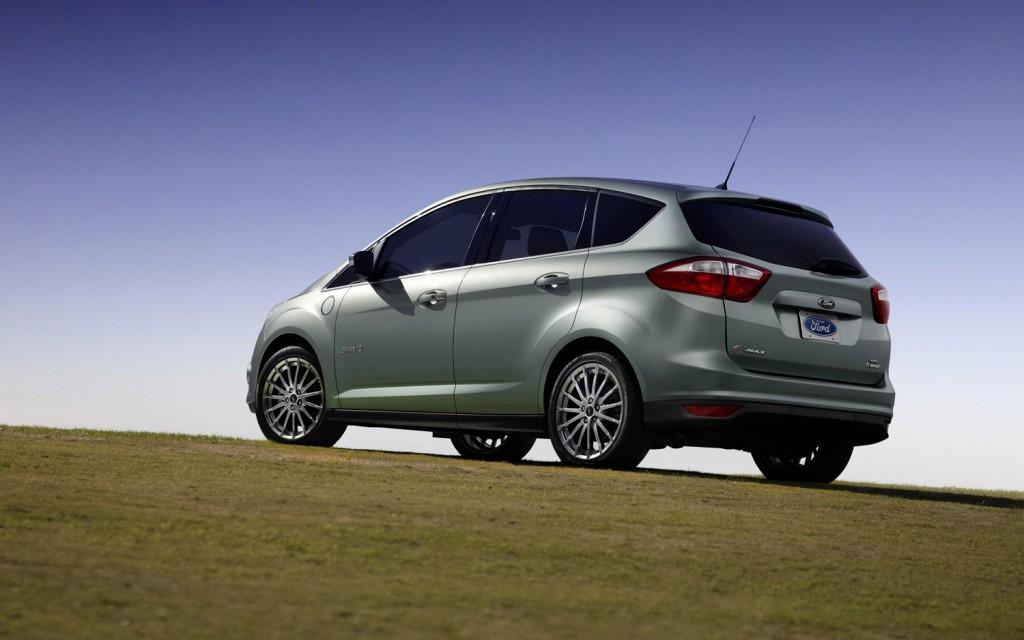
 Ford has finally released detailed information on the C-Max Energi, the plug-in hybrid version of its C-Max hatchback, and it has Toyota in its sights. Ford sees the Energi as a competitor for the Japanese company’s extended-range Prius plug-in. Ford says the C-Max Energi will double the Prius’ electric-only range for a lower price.
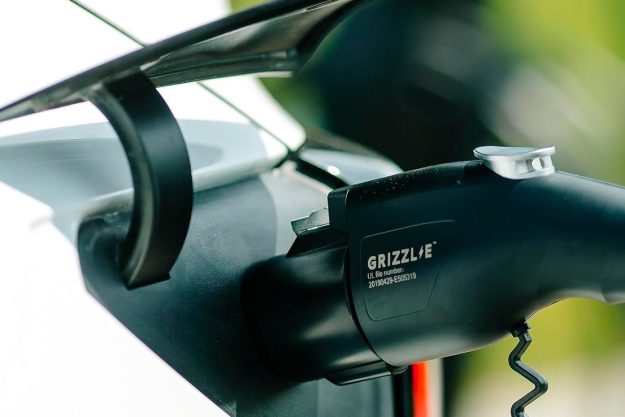
The C-Max Energi adds plug-in capability to the C-Max hybrid’s powertrain. The Energi shares the hybrid’s 2.0-liter gasoline engine and electric motor, netting a combined 188 horsepower. The Energi has a larger lithium-ion battery pack and an external charging port for plugging in.
Ford says the C-Max Energi will travel 20 miles on electricity alone, and 550 miles on both electricity and gasoline. The Prius plug-in’s electric-only range is 11 miles, and its combined range is 540 miles. The Ford does beat the Toyota, but by a narrow margin.
On the EPA’s MPGe scale, the Energi’s advantage disappears entirely. Both the Energi and the Prius plug-in are rated at 95 MPGe.
Ford says the C-Max Energi will also be cheaper than the Prius but, again, the margin is small. The Prius plug-in starts at $32,760, but a $2,500 federal tax credit brings the price down to $30,260. The C-Max Energi starts at $33,745, but it is eligible for a $3,750 tax credit, bringing its price all the way down to a nice, neat $29,995.
If Toyota is cursing the government’s tax credit system, General Motors should be praising it. The Chevy Volt starts at $39,995, but is eligible for a $7,500 tax credit, bringing its price down to $32,495. That’s still more than the Ford and Toyota, but not ridiculously so. The EPA rated the 2013 Volt at 98 MPGe.
For those willing to sacrifice some efficiency to save some money, the regular C-Max hybrid offers 47 combined mpg, with an overall range of 500 miles. The hybrid’s base price is $25,995. Buyers will need to crunch the numbers to see if 50 more miles of range is worth another $4,000 (after tax credits).
Whichever C-Max buyers choose, they will get a tall-roofed, five-seat hatchback based on the Focus. It may look like a mini-minivan, but the C-Max is more of a Focus for tall people. Leather seats are standard, and nifty features like MyFord Touch with navigation and the hands-free tailgate first seen on the 2013 Escape will be offered as options.
The C-Max Energi and hybrid will be in showrooms this fall. The Energi hasn’t exactly set a new standard, but its competitive mileage figures and (slightly) lower price should give Toyota shoppers a reason to pause.