

Hyundai has launched the Ioniq V electric sedan in China, and its feature list is hard to ignore. Beijing Hyundai’s new sedan went on sale at 109,900 yuan, which is about $16,380 before discounts. The Ioniq V is designed specifically for Chinese buyers, but Hyundai has previously said its China-developed design and technology could influence future global products.
What makes the Ioniq V different?
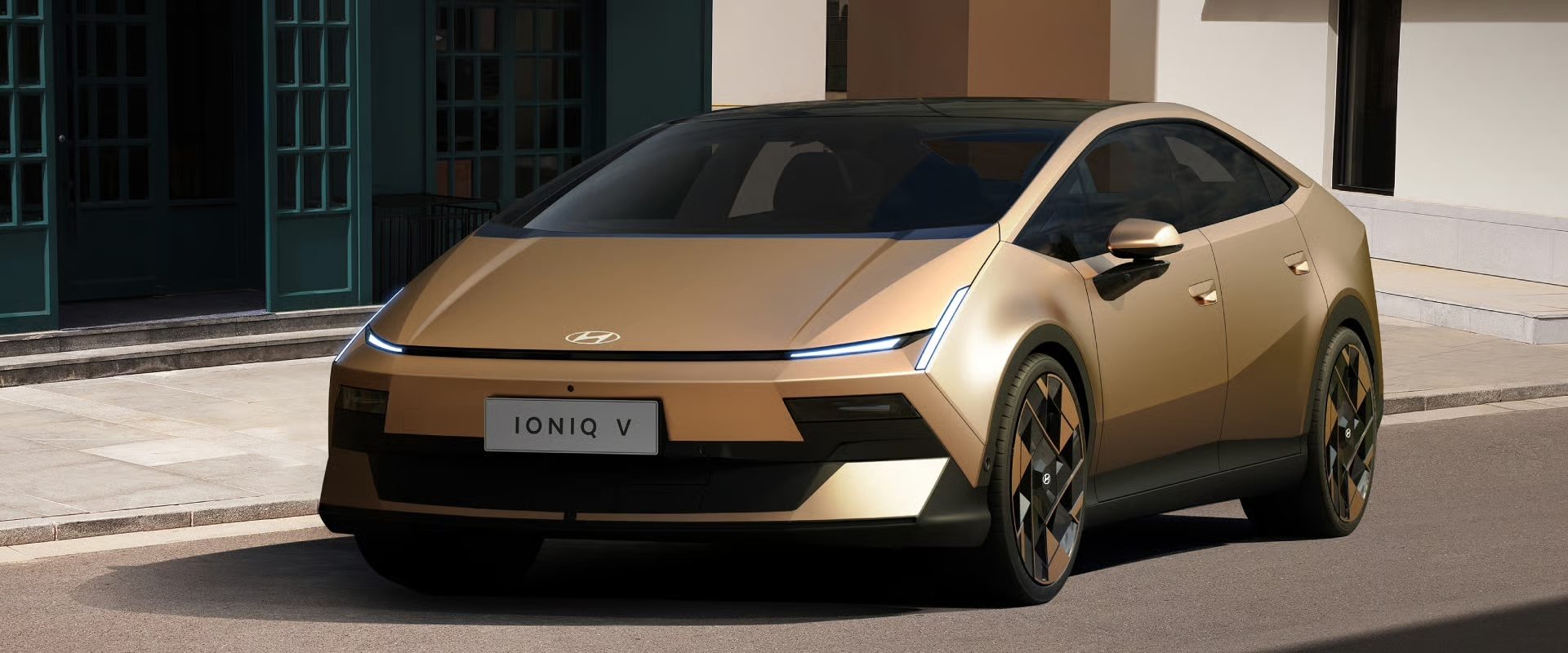
The Ioniq V rides on an 800-volt system with two CATL lithium iron phosphate batteries. The 53.5 kWh pack powers a 140 kW motor for 540 km of CLTC range. The 66.8 kWh pack pairs with a 168 kW motor for up to 650 km. CLTC is China’s test cycle, and CarNewsChina lists WLTP equivalents of 443 km and 533 km. Beijing Hyundai’s spec sheet lists a 30% to 80% fast charge in 20 minutes.
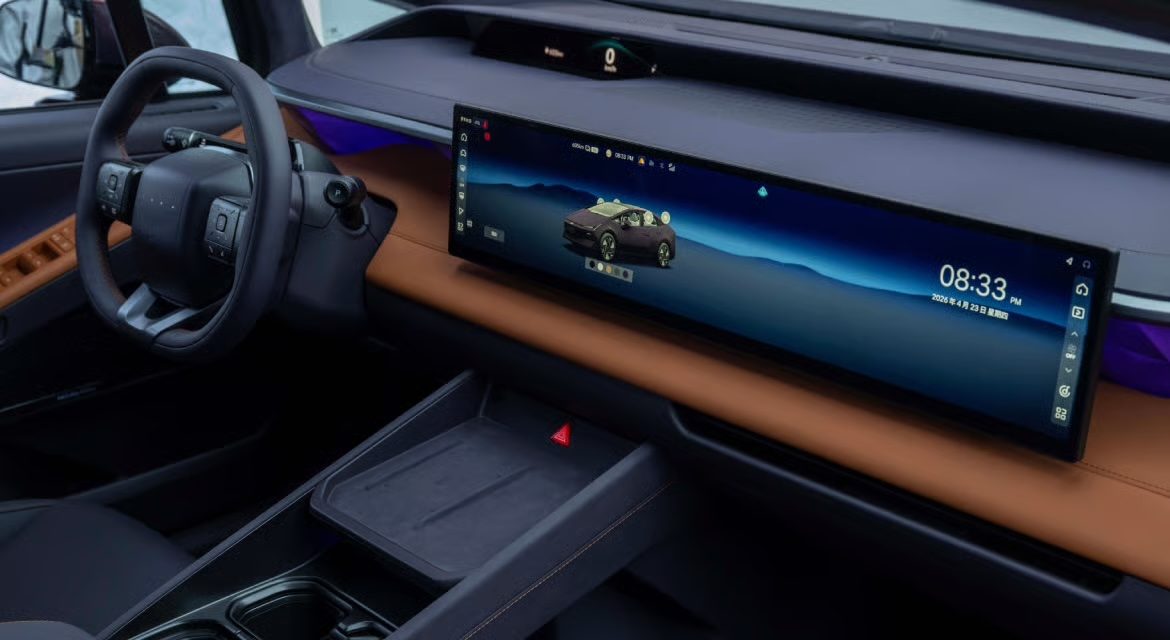
Inside, you get a 27-inch 4K display powered by Qualcomm’s Snapdragon 8295 chip, plus a head-up display and a wireless charging pad. The infotainment system also integrates AI models from Baidu and ByteDance for voice control. A Cyber Eye head-up display adds information directly into your view, while Momenta’s assisted-driving system provides high-speed navigation assistance.
How much it costs, and will it leave China?
The Ioniq V comes in five trims, priced as follows before any discounts.
- Ioniq V 540 Pro at 109,900 yuan ($16,380)
- Ioniq V 540 Max at 119,900 yuan ($17,870)
- Ioniq V 540 Max+ at 129,900 yuan ($19,360)
- Ioniq V 650 Max at 129,900 yuan ($19,360)
- Ioniq V 650 Max+ at 139,900 yuan ($20,850)
A limited-time offer lowers that to between 99,900 and 131,900 yuan, roughly $14,890 to $19,655. For US buyers, the closest yardstick is America’s cheapest EV, the 2027 Chevrolet Bolt, at $28,995, which costs more than $8,000 above the Ioniq V’s top trim.

The sedan is 4,900 mm long with a 465-liter trunk and comes in eight colors. First owners get a lifetime warranty on the battery, motor, and electronic control system.
CarNewsChina expects the Ioniq V to go global, but Hyundai has only said it’s studying exports to Asia-Pacific, Australia, the Middle East, and Latin America for now. Beijing Hyundai plans 20 new models over five years, and the next is an SUV due in the first half of 2027.


