
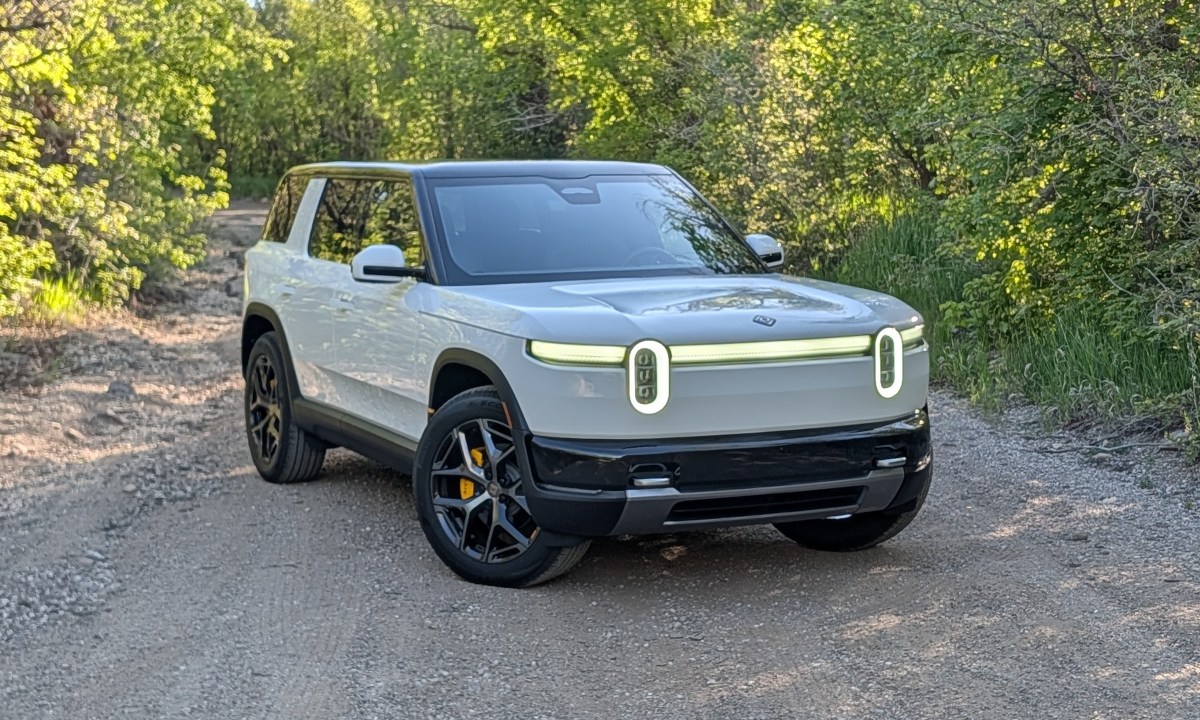
Building a mass-market EV faster than legacy automakers and actually making it available for people comes with growing pains.
Rivian lived both sides of that bet in one morning. While the company announced a record sales quarter for the R2, it also announced a second recall of the same vehicle in a month (a small one, though).

What’s wrong with the battery pack?
Rivian says around 14 R2s have under-tightened fasteners on their high-voltage battery packs (via TechCrunch). The defect can cause a sudden loss of power while driving, which could lead to loss of control and collisions.
The automaker traces the issue to September 17, 2026, when a worker at its Normal, Illinois, factory caught an automated station under-tightening bolts and reprogrammed it to reject bad torque readings.
This follows a massive recall in September, when nearly 98,828 R1S, R1T, and R2 vehicles were pulled over due to a software glitch that could briefly block the backup camera. That one fixed itself over the air. However, this one actually needs a visit to the repair shop.

How did the R2 also break a sales record?
Here’s some great news for the company’s stakeholders and customers alike. Rivian also announced it delivered 19,248 vehicles last quarter, up 45% from the same period last year. In fact, this was the company’s best quarter ever.
However, the automaker isn’t stopping there. It is chasing 20,000 to 25,000 R2 deliveries by year’s end. If it happens, Rivian will become one of the fastest-selling EVs in U.S. history, behind Tesla’s Model Y.
I’ve watched plenty of launches stumble under that kind of pressure (especially after the October recall). A record-quarter announcement after back-to-back recalls says that the brand can handle it.
RELATED COVERAGE:
- Tesla’s emergency escape feature could help in a crisis, but damage could cost $25,000
- BMW i3 is here to make range anxiety look silly because now it can go up to 468 miles on a single charge
- Hyundai Ioniq V launches with a 27-inch 4K display, 20-minute fast charging, and up to 650 km of CLTC range
- Car apps are sharing sensitive data, and fixing car privacy takes more than a settings toggle


