1. Home
  2. Cars
  3. News

Toyota will boost car connectivity via built-in flat panel satellites

Add as a preferred source on Google

At the far less splashy end of the Detroit Auto Show spectrum, Toyota revealed its Mirai-based research vehicle, which also showcases the benefits of its partnership with Kymeta.

The Japanese automaker recently announced it would invest $1 billion in machine learning and Artificial Intelligence to prepare for the next generation of vehicle safety systems. This Mirai model is no doubt part of those experiments. It boasts a flat-panel satellite antenna from Kymeta, black leather seats, rear-seat infotainment systems, and numerous additional displays.

Recommended Videos

Some of the Mirai’s features are a mystery, but we do know that its satellite technology is destined to aid with high-speed data transfer. Toyota will install a Data Communications Module into future vehicles to hasten the processing of “huge amounts” of data that might play into safety systems and car-to-car communication.

As opposed to traditional dish-based satellites, Kymeta’s satellite antennas use software and liquid crystals rather than mechanical components to electronically track and steer themselves towards satellites. This flat-panel system is one that can be installed from the factory or in the after-market.

“For several years, Toyota met with emerging companies around the world to investigate new technologies,” said Shigeki Tomoyama, senior managing officer of Toyota Motor Corporation. “We were very excited to learn about Kymeta, because their flat antennae technology could solve the challenge of vehicle-based satellite communications.”

Toyota claims that satellite-based data communication isn’t as prone to “out of network” issues, a huge plus in cases of a vehicle collision or natural disaster. Though much of Toyota’s other research will yield results five to fifteen years off, satellite integration into production models, and thus faster data transfer, is likely right around the corner. One indication of Toyota’s commitment to this approach is the car company’s recent investment of $5 million into Kymetra to “accelerate its research.”

Miles Branman
Miles Branman doesn't need sustenance; he needs cars. While the gearhead gene wasn't strong in his own family, Miles…
A new sodium battery posts wild four-minute charging numbers, but don’t expect it in an EV yet
The breakthrough could improve fast charging and battery life, but the study hasn’t demonstrated those results in a production-sized pack
EV Charger

A new sodium-metal battery has posted a charging number that makes today’s EVs look painfully slow. In laboratory testing, the cell operated at a 15C rate, equivalent to completing a charge or discharge in roughly four minutes.

That doesn’t mean researchers plugged in an electric car and watched it fill up before the driver finished buying coffee. The result came from a small experimental cell using a new quasi-solid electrolyte, while the larger pouch-cell prototype delivered far less dramatic performance.

Read more
The Apple Car may be dead, but it became the foundation of Apple Intelligence
A decade of work on a canceled car project reportedly laid the groundwork for Apple Intelligence.
Apple Intelligence in Apple Car

The Apple Car may have never left the garage, but it apparently gave birth to Apple's AI ambitions. According to Bloomberg's Mark Gurman, Apple's canceled autonomous vehicle project, one that consumed more than a decade of work and over $10 billion before being scrapped in 2024, ended up laying the technological foundation for Apple Intelligence. In a rather ironic twist, one of Apple's most expensive failures may also become one of its most important long-term investments.

The Apple Car forced Apple to think like an AI company

Read more
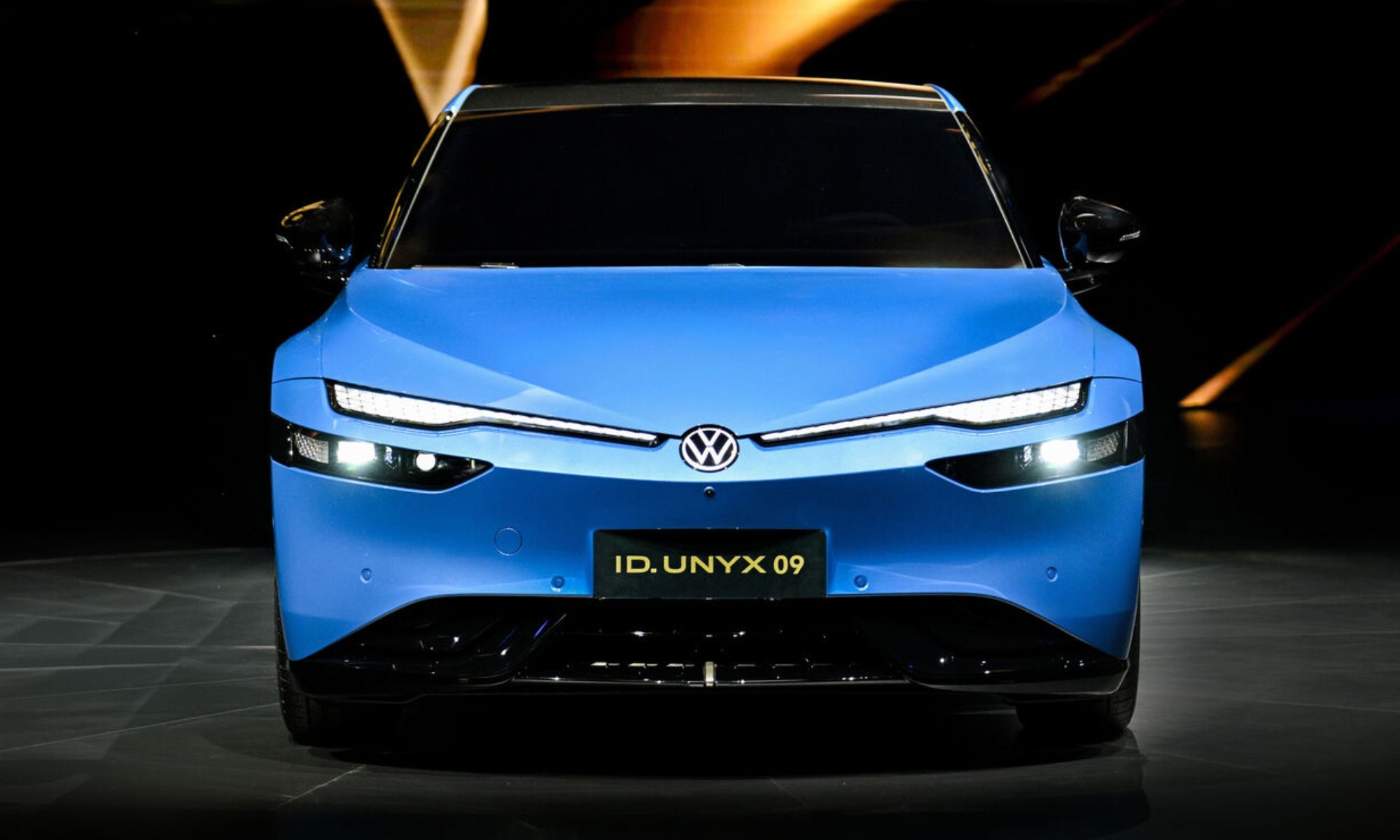
Volkswagen’s ID. Unyx 09 just leaked, and it’s the kind of EV I want to see in the US
VW's partnership with Xpeng is producing exactly what we hoped.
Bumper, Transportation, Vehicle

I've been watching Volkswagen's China lineup quietly get cooler for the past two years, but the ID. Unyx 09 might be the moment it finally gets exciting, not just for Chinese buyers, but for the rest of the world as well. 

Regulatory filings from China's Ministry of Industry and Information Technology, Batch 409, have exposed the full specs of the upcoming sedan ahead of its official launch later this year, and it looks nothing like any VW car I've seen before (via CarNewsChina).

Read more