1. Home
  2. Computing
  3. Legacy Archives

At $1,500, Toshiba’s 4K laptop is affordable, and launches next week

Add as a preferred source on Google

Toshiba has officially lifted the curtain on their new 4K notebook, now dubbed the Satellite P55t, and it’s cheaper than we initially thought it would be.

In terms of specs, Toshiba’s Satellite P55t packs an Intel Core i7 CPU by default, and an AMD R9 M265X graphics card with 2GB of GDDR5 RAM. It’ll also come with 1TB of storage. As was the case with the 4K Satellite notebook that Toshiba showcased at CES 2014 a few months ago, RAM can be maxed out to 16GB.

Recommended Videos

However, the star of the show is the notebook’s 4K display, without a doubt. The Toshiba Satellite P55t features a 15.6-inch display with a resolution of 3840×2160, and 282 pixels per inch (PPI). The display is also Technicolor-certified, and comes with Chroma Tune software, which allows you to set color setting profiles for different programs on the system. Though the P55t’s display sounds impressive, we’re itching to get our hands on it and test it for ourselves, and see how it fares in our sRGB benchmarks.

Port selection includes quad USB 3.0 connections, 802.11 ac Wi-Fi, HDMI, and a memory card. The Toshiba Satellite P55t also packs in a Blu-ray burner.

Aside from the P55t, Toshiba is refreshing a bunch of its mainstream and back to school notebooks, which will carry price tags that range from under $500 and roughly $900. Meanwhile, Toshiba’s 4K Satellite P55t will hit the market next week on April 22, and will sell for $1,499.99.

4K resolution on a notebook is an intriguing prospect, and we wonder whether this will catch on with video editors on the go, as well as mobile gamers. Considering that it’s priced a couple hundred dollars north of the entry-level MacBook Pro with Retina and the Lenovo X1 Carbon Touch, we can’t help but ponder how the P55t will fare against those two crowd favorites, and whether its AMD R9 M265X graphics card can consistently handle 4K gaming. Then, of course, there’s the issue of battery life with a system that sports such a high-resolution display.

What do you think? Sound off in the comments below.

Konrad Krawczyk
Former Computing Editor
Konrad covers desktops, laptops, tablets, sports tech and subjects in between for Digital Trends. Prior to joining DT, he…
Getting health advice from AI chatbots comes with a problem doctors may never see
Researchers say AI companies should face the same liability as doctors for bad health advice
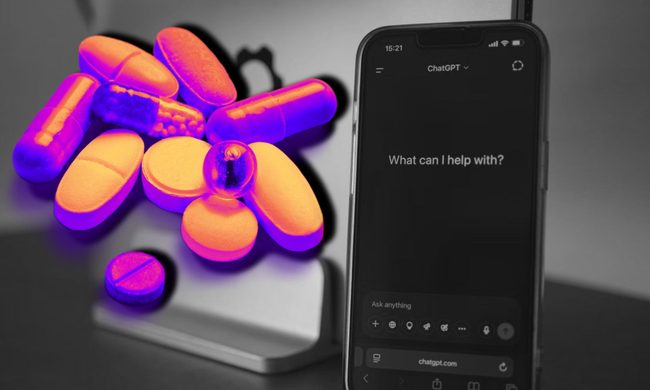
ChatGPT and pills on the same canvas.

AI chatbots have quietly become a go-to source for medical advice the extent that some are dangerously skipping real doctors. But when AI's health advice goes wrong, doctors may never see the exchange behind it.

Researchers from Binghamton University, Stanford, Texas A&M, and Indiana University published a paper in Nature Health examining what happens after a chatbot gives you bad health information. Their biggest concern is not just that chatbots can be wrong. It is that those mistakes often leave no trace for doctors, researchers, or regulators to catch.

Read more
AI companies expect a catastrophic AI incident and are reportedly preparing for the aftermath
A major AI cyberattack could disrupt essential services, damage public trust, and spark a political fight over regulations.
openai-anthropic-logo-on-screen

Leaders at OpenAI, Anthropic, and other AI companies are reportedly preparing for a potential AI disaster that could turn the public against artificial intelligence. According to an Axios report, industry leaders are privately running through possible scenarios for what happens after a catastrophic AI incident.

What kind of AI disaster are companies preparing for?

Read more
Elon Musk’s SpaceX just made a big move to become a mobile carrier heavyweight in the US
SpaceX moves closer to becoming a major US mobile carrier with $8 billion deal
spacex

Elon Musk’s SpaceX is moving past satellite internet, and it’s making a big move into the US wireless market. The company has agreed to buy cellular spectrum licences from investment firm Grain Management in a deal reportedly worth about $8 billion, its biggest move yet to compete with established mobile carriers such as AT&T, Verizon and T-Mobile, according to a WSJ report.

The deal is for spectrum in the 800MHz band, which is for mobile services delivered via terrestrial infrastructure such as cell towers, not satellites. If the acquisition is approved, SpaceX could combine those airwaves with its growing Starlink satellite network to create a more comprehensive wireless service.

Read more