
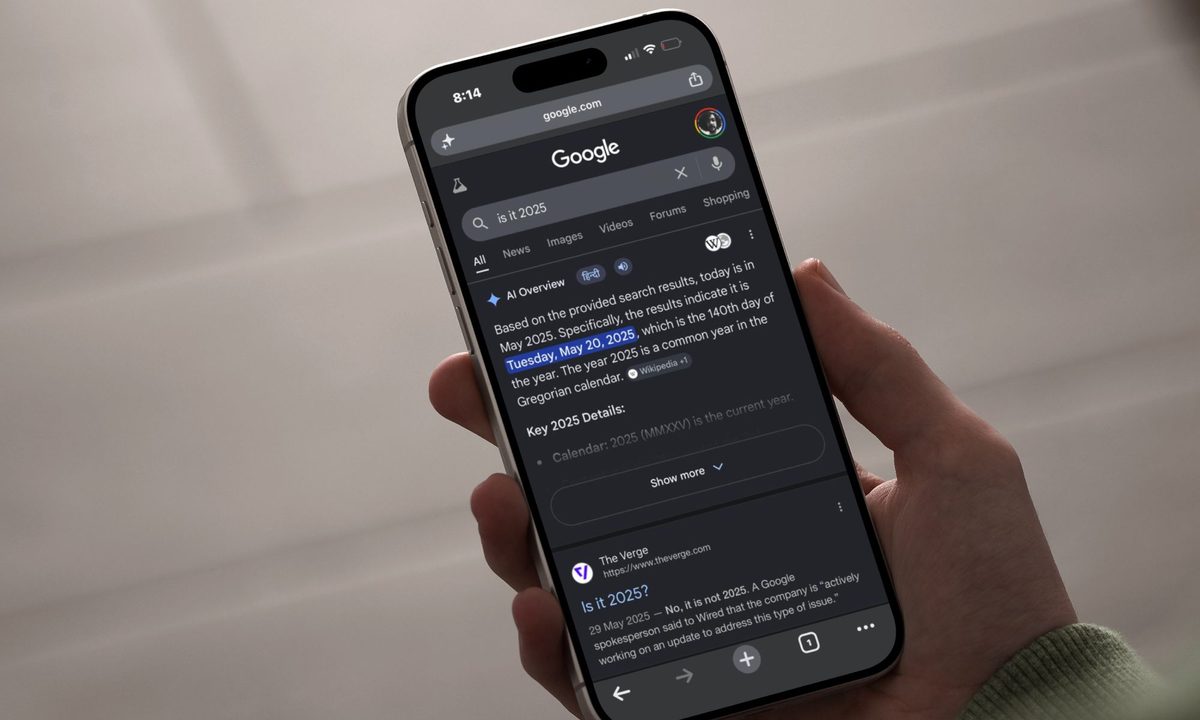
Asking a chatbot instead of Googling has become second nature, but you may be getting a thinner slice of the world’s knowledge. A University of Copenhagen study found that every AI model it tested gave more uniform answers than a simple Google search. Even OpenAI’s GPT-5, the most varied of the bunch, offered at least 18.7% less variety.
How much knowledge are AI chatbots leaving out?

Researchers tested 27 large language models from OpenAI, Meta, Google, and Alibaba on 155 topics tied to 12 countries. The topics ranged from nuclear weapons and marriage to racism, genocide, K-pop, and country-specific subjects. Each topic got 200 prompt versions drawn from real user questions, yielding about 1.7 million answers and 70 million claims.
Here, “narrower slice of knowledge” means less variety, not shorter answers. The AI chatbots kept repeating the same information and perspectives instead of covering a wider range. Meanwhile, search engines can send you toward different pages, perspectives, and sources, thus broadening your knowledge base.
Another important finding is that smaller models produced more varied answers than larger ones, and newer models beat older ones, though none matched Google. A reason behind this is how these AI models work, which is essentially compressing training text and keeping the most common patterns while filtering out anything unusual.
RELATED COVERAGE:
- Google AI Mode will reinvent Search. I’m worried — and you should be, too
- Your favorite AI chatbot might not be telling the truth
- AI wants to summarize it all. TripAdvisor’s misleading reviews show AI will also ruin your travel plans
Why researchers fear that AI could cause a ‘knowledge collapse’

Senior author Isabelle Augenstein worries this could feed on itself. If future models train on text written by other AI models, which is already less varied, each generation could get narrower and gradually shrink the range of information available through AI.
Researchers call that “knowledge collapse.” It hasn’t happened yet, since newer models are a bit more diverse, but the mechanism is already in place. The team also built a method developers can use to measure diversity in their models.
The bottom line here is that you should not treat AI summaries as your only source. Checking different sources can help you find missing context and perspectives.


