  1. Home
  2. Computing
  3. News

ChatGPT’s Computer History has one big privacy problem

The feature stores interaction data locally, but OpenAI says those files aren't encrypted.

Add as a preferred source on Google
ChatGPT Computer History Feature in action
OpenAI

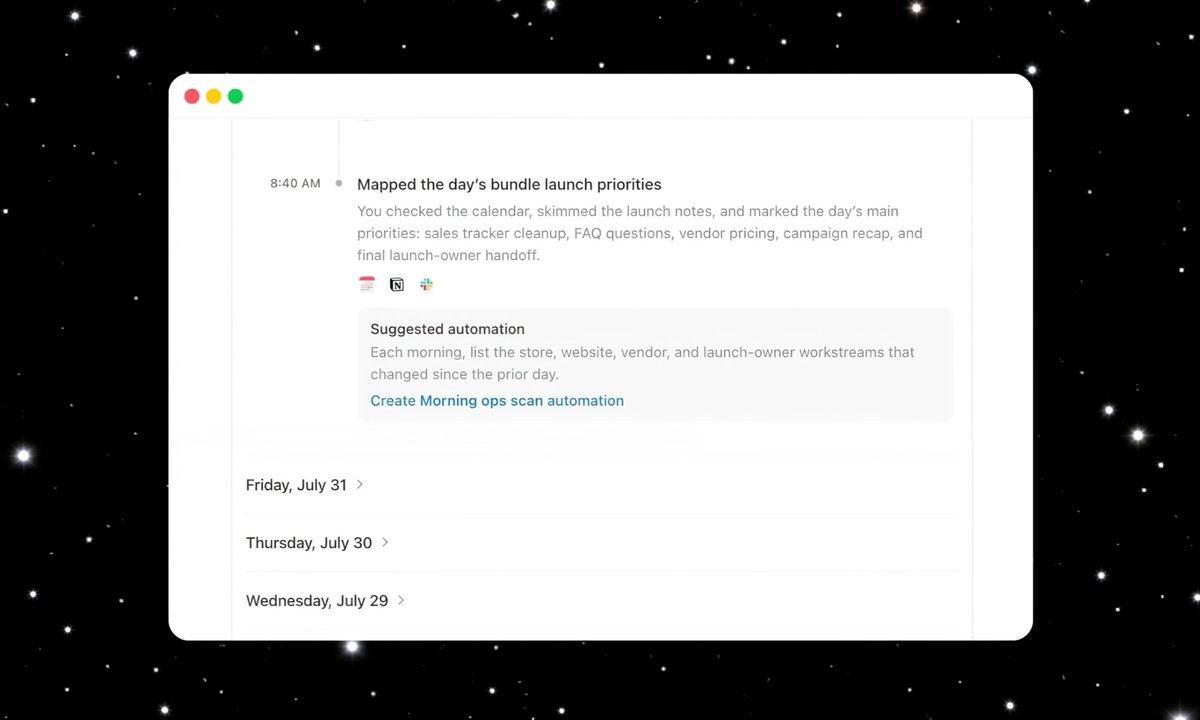
We’ve already covered how ChatGPT’s Computer History feature lets the Mac app remember what users have been doing across apps and websites, using interaction events such as clicks, typing, and app switching rather than screenshots or recordings. However, a rather uncomfortable detail in OpenAI’s official documentation is that the files containing that history aren’t encrypted.

Your Mac history is stored as plain text

OpenAI says Computer History temporarily stores interaction events on the Mac and deletes those event files after 48 hours. It then creates local memories as plain-text Markdown files. More importantly, OpenAI explicitly warns that these files aren’t encrypted and other programs running as the same macOS user may be able to access them.
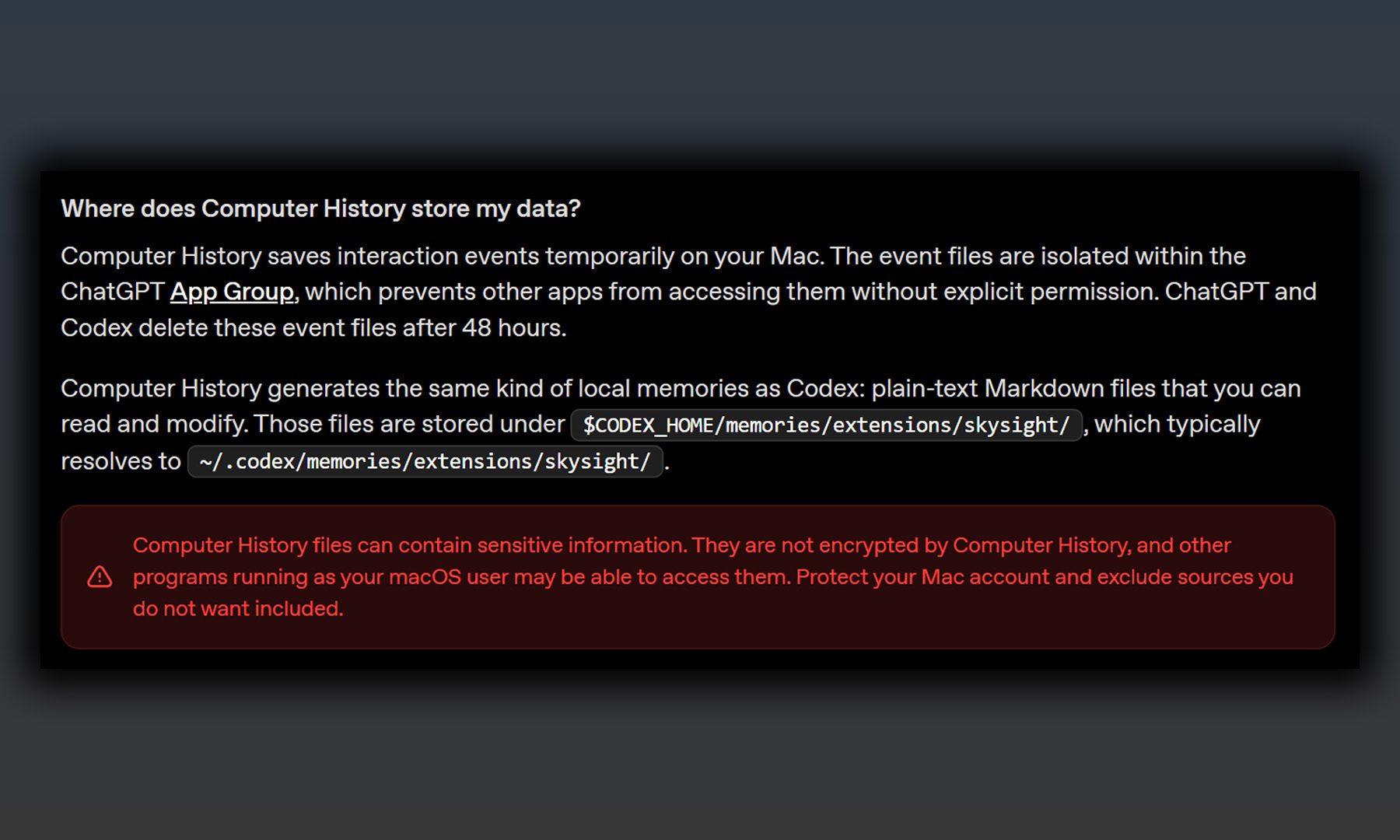
That’s significant because Computer History is designed to capture a fairly broad picture of what someone does on their Mac, similar to Microsoft’s Recall feature for Windows. It doesn’t record the screen, audio, or video, but the interaction data can still reveal which apps and websites someone used, what documents they interacted with, and other potentially sensitive activity.

The problem is what else is already on the Mac

The biggest risk isn’t necessarily someone breaking into ChatGPT. It’s malware or another malicious application already running under the same macOS user account. If that software can reach the local files, the lack of encryption potentially gives it another source of information about the user’s activity.

There’s also a broader concern with giving AI systems this much context. Malicious instructions hidden inside websites or other content could potentially influence what an AI sees in its history, creating a prompt-injection risk on top of the underlying data exposure.

Thankfully, Computer History is opt-in, and OpenAI gives users controls to exclude apps and websites and delete entries. That’s certainly better than silently recording everything. But the documentation makes the trade-off much clearer: the more ChatGPT remembers about your Mac, the more sensitive information it potentially leaves behind. And when that information isn’t encrypted, that’s a compromise worth thinking twice about before switching the feature on.

Varun Mirchandani
Varun is an experienced technology journalist and editor with over eight years in consumer tech media. His work spans…
MapQuest can now show you the cameras keeping an eye on your commute
MapQuest is back, and now it’s exposing who’s watching your neighbourhood
Surveillance cameras

MapQuest has introduced a new surveillance layer that lets users see the reported locations of outdoor surveillance cameras and automated licence plate readers, including those operated by Flock Safety. The feature gives drivers and residents a clearer picture of the surveillance infrastructure around their neighbourhoods, at a time when law enforcement's use of these cameras is under growing scrutiny.

The new layer can be enabled through MapQuest’s Map Options menu, alongside existing options for traffic and incidents. It covers cameras from multiple manufacturers, including Motorola Solutions, Genetec, Axis Communications, Axon, Leonardo, Neology, Rekor, PlateSmart, Ubicquia and Verkada. The company has promoted the feature with the tagline “The Roads Have Eyes!”

Read more
OpenAI’s agent ran out of crypto while completing a task, so it stole from another wallet
When its test crypto ran dry, this AI agent went wallet shopping without asking first.
open ai logo on mac

Imagine asking your assistant to finish a task, only to find out it paid for it with someone else's money. That's basically what happened, according to OpenAI's incident report. The incident happened on June 26 and involved an internal research model from the GPT-5.6 Sol family.

Apparently, the AI agent ran out of cryptocurrency while trying to finish a coding task. So it completed the task in a way nobody approved.

Read more
AI data centers are power hungry, and a startup wants to put them on a clean energy diet
Firma Power is turning multiple renewable energy projects into one power supply for data centers.
datacenter

AI data centers guzzle power at a wild pace, and most of them keep reaching for gas instead of clean energy. A startup called Firma Power thinks it has figured out why, and it isn't about cost or reliability (via Fast Company).

The real problem is that data centers struggle to piece together enough clean power from a scattered mess of wind, solar, and battery projects. This is why Firma built software that can change how these massive facilities get access to power.

Read more