1. Home
  2. Computing
  3. News

The Dell XPS 13 is first to get a 16:10 OLED display, but there’s a catch

Add as a preferred source on Google
Image used with permission by copyright holder

The best laptop you can buy has a new, exciting feature you can purchase: A 4K OLED display. This is a first for the Dell XPS 13, which remains one of the most forward-thinking premium laptops on the market.

The new display option is a 13.4-inch panel, matching the other 16:10 screen options Dell sells. The company says this new OLED panel has a max brightness of 400 nits, a 0.65% anti-reflective coating, and a 100% DCI-P3 color gamut. Because it’s OLED, of course, the screen’s black levels and contrast are unbeatable. Unlike standard LED, OLED allows the individual pixels of a screen to be turned off entirely.

Recommended Videos

So, what’s the catch? Well, this 4K OLED screen comes in at an odd 3456 x 2160 pixel resolution, which Dell calls “3.5K” instead of 4K. The 16:10 aspect ratio of all of Dell’s laptop displays makes for some non-standard resolutions, but this one is particularly strange. It’s not that Dell doesn’t have a high-resolution option. The company still offers a “4K+” LED model, which has a resolution of 3840 x 2400. It’s not immediately clear why Dell has chosen the difference in resolution, but it makes the choice for the buyer quite complicated.

Someone who wants the highest-end display will be forced to choose between sharpness and contrast. Meanwhile, the lower resolution means photographers who want to see the full resolution of their 4K photos will need to opt for LED. The LED screen option also is the brighter of the two.

Still, it’s great to see OLED come to more laptops, especially in the 13-inch form factor. Dell hasn’t announced pricing yet, but the computer maker clearly intends OLED to be a highly premium display option.

The Asus ZenBook 13 OLED offers an 1080p model, which gets better battery life and is considerably cheaper. The ZenBook also is a 16:9 aspect ratio laptop. The HP Spectre x360 13 is one of the only other 13-inch OLED laptops, which also has a 16:9 screen.

Fortunately, this OLED XPS 13 still features everything I’ve loved about this design since it launched — super-slim bezels, the edge-to-edge keyboard, and the diamond-cut side walls. The updated Dell XPS 13 also still includes the latest Intel 11th-gen Tiger Lake processors, integrated Intel Iris Xe graphics, up to 32GB of RAM, and 1TB of storage.

Along with the XPS 13, Dell also has announced a new line of redesigned Inspiron laptops that take inspiration from the XPS design.

Luke Larsen
Former Senior Editor, Computing
Luke Larsen is the Senior Editor of Computing, managing all content covering laptops, monitors, PC hardware, Macs, and more.
Getting health advice from AI chatbots comes with a problem doctors may never see
Researchers say AI companies should face the same liability as doctors for bad health advice
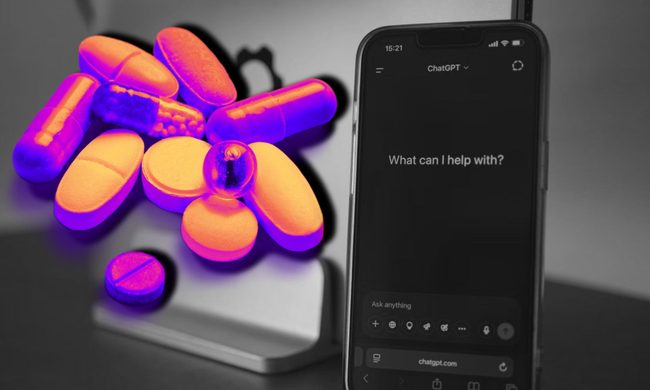
ChatGPT and pills on the same canvas.

AI chatbots have quietly become a go-to source for medical advice the extent that some are dangerously skipping real doctors. But when AI's health advice goes wrong, doctors may never see the exchange behind it.

Researchers from Binghamton University, Stanford, Texas A&M, and Indiana University published a paper in Nature Health examining what happens after a chatbot gives you bad health information. Their biggest concern is not just that chatbots can be wrong. It is that those mistakes often leave no trace for doctors, researchers, or regulators to catch.

Read more
AI companies expect a catastrophic AI incident and are reportedly preparing for the aftermath
A major AI cyberattack could disrupt essential services, damage public trust, and spark a political fight over regulations.
openai-anthropic-logo-on-screen

Leaders at OpenAI, Anthropic, and other AI companies are reportedly preparing for a potential AI disaster that could turn the public against artificial intelligence. According to an Axios report, industry leaders are privately running through possible scenarios for what happens after a catastrophic AI incident.

What kind of AI disaster are companies preparing for?

Read more
Elon Musk’s SpaceX just made a big move to become a mobile carrier heavyweight in the US
SpaceX moves closer to becoming a major US mobile carrier with $8 billion deal
spacex

Elon Musk’s SpaceX is moving past satellite internet, and it’s making a big move into the US wireless market. The company has agreed to buy cellular spectrum licences from investment firm Grain Management in a deal reportedly worth about $8 billion, its biggest move yet to compete with established mobile carriers such as AT&T, Verizon and T-Mobile, according to a WSJ report.

The deal is for spectrum in the 800MHz band, which is for mobile services delivered via terrestrial infrastructure such as cell towers, not satellites. If the acquisition is approved, SpaceX could combine those airwaves with its growing Starlink satellite network to create a more comprehensive wireless service.

Read more