  1. Home
  2. Computing
  3. Gaming
  4. Mobile
  5. News

Falcon Northwest TLX, DRX laptops now sport GeForce GTX 10 Series graphics chips

Add as a preferred source on Google

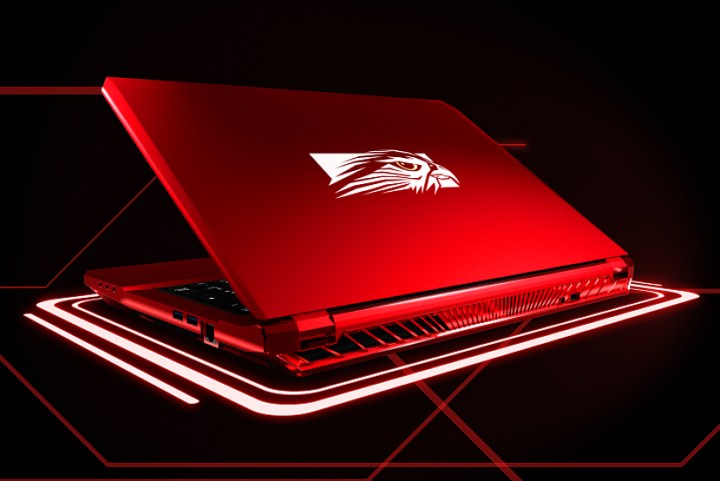
Falcon Northwest said via its Facebook page that its TLX and DRX laptops for PC gamers now sport options for discrete Nvidia GeForce GTX 10 Series graphics chips. The TLX is the smaller unit of the duo, sporting a 15.6-inch screen, while the meatier DRX provides a 17.3-inch screen. The former focuses on thin and light PC gaming with a starting price of $2,200 while the latter aims to be a desktop replacement starting at $2,600.

Here is the base configuration of the TLX model:

Recommended Videos
Processor Intel Core i7-6700HQ
Graphics GeForce GTX 1070 with 8GB GDDR5
System memory 16GB @ 2,400MHz
Storage 256GB Micron M600 M.2 SSD
Screen 15.6-inch IPS panel
Resolution 1,920 x 1,080 with G-Sync
Networking Wireless AC + Bluetooth
Operating system Windows 10 Pro
Battery Embedded 4-cell (60WH)
Illuminated keyboard Yes

Customers can configure this laptop to feature the Intel Core i7-6820HK processor, and up to 64GB of system memory. There are also options for three additional storage drives spanning standard and M.2 SSDs, and an external 8x DVD writer optical drive. Its overall dimensions are 15.2(w) x 10.6(d) x 1.2(h) inches, and it weighs a mere 5.8 pounds.

Port-wise, the laptop provides two Mini DisplayPort jacks, one HDMI port, four USB 3.0 ports, one SD card reader, a headphone jack, a microphone jack, and a line-in jack. Customers can choose to have just the lid sporting a different color than the rest of the body, or go with a full-body paint job for an added $287.

Now here is the base configuration of the DRX model:

Processor Intel Core i5-6500
Graphics GeForce GTX 1060 with 6GB GDDR5
System memory 16GB @ 2,400MHz
Storage 256GB Micron M600 M.2 SSD
Optical drive External LG 8x DVD Burner
Screen 17.3-inch IPS panel
Resolution 1,920 x 1.080 with G-Sync
Networking Wireless AC + Bluetooth
Operating system Windows 10 Pro
Battery Swappable, two hour runtime

For this model, customers can upgrade to the Intel Core i5-6600K or the Core i7-6700K processor. They can also swap out the GTX 1060 graphics chip for one of the two other GTX 10 Series GPUs including the GTX 1070 (8GB) and the GTX 1080 (8GB). The former graphics chip is an extra $250 while the latter is an extra $550.

As for other configurable options, the laptop can play host to 32GB and 64GB of system memory, three more data drives spanning M.2 and standard SSDs, and a single color covering the full body instead of just the standard colored lid. The laptop includes two Mini DisplayPort 1.3 jacks, one HDMI 1.4b port, one USB 3.1 Type-C port, one USB 3.1 port, three USB 3.0 ports, a dedicated Thunderbolt port, an SD card reader, and jacks for the microphone, headphones, and audio input.

Finally, this laptop measures 16.5(w) x 11.6(d) x 1.6(h) inches and weighs a heavier 8.6 pounds. To check out and configure the DRX laptop and its smaller TLX sibling, head here. The laptops are extremely attractive, but given their steep starting prices, try not to get too carried away throwing in all the tasty options!

Kevin Parrish
Kevin started taking PCs apart in the 90s when Quake was on the way and his PC lacked the required components. Since then…
What’s the Right Laptop for a Student on a $1,000 Budget?
The best college laptop isn't the one with the longest spec sheet. It's the one that fits your budget and the way you'll actually use it.
Dell XPS 14 Review: Sticker

This post is brought to you in paid partnership with Dell

Buying a laptop for college isn't a decision made in isolation. Tuition, textbooks, housing, meal plans, transportation, and course materials all compete for the same budget, leaving most families with one question before the semester begins: how much is enough to spend on a laptop without paying for features that may never get used?

Read more
Siri is about to hear everything you say, but Apple’s privacy approach has me cautiously on board
Apple's new Audio Intelligence features want to hear almost everything you say. A privacy document released alongside them explains why I am mostly okay with that.
Apple Watch Audio Intelligence features

Apple used its September 2026 launch event to enter a feature category it has mostly avoided until now: ambient listening. Siri Recap, Live Rewind, Music Recognition with Shazam, and Sound Recognition all landed on the Apple Watch Series 12 and Apple Watch Ultra 4. All four depend on the watch microphone picking up sound around you far more often than any previous Apple product has.

Siri Recap listens for conversations throughout your day and turns them into short AI summaries you can check later. Live Rewind is smaller in scope but arguably more useful day-to-day. It transcribes the last 15 seconds of whatever was just said with a double-press of the crown. This is perfect for catching a name, a book title, or directions you missed the first time. Music Recognition uses Shazam to identify songs playing nearby without you lifting a finger, much like Now Playing on Google's Pixel devices. Sound Recognition is a useful accessibility feature that listens for sirens, doorbells, and alarms to alert users who have a hearing impairment.

Read more
Can You Turn a Mini PC Into a Local AI Agent?
Furniture, Table, Computer

This post is brought to you in paid partnership with MSI

Not every AI task needs the scale of the cloud. An employee searching company documents, a retail kiosk answering product questions, or a digital sign reacting to customer behavior all need fast responses, but they don't necessarily need to send every prompt to a remote data center. Running those workloads locally reduces latency, keeps sensitive information closer to where it's generated, and can lower the ongoing cost of AI deployments. As a result, many organizations are moving toward hybrid AI architectures that handle routine requests on-device while reserving cloud models for tasks that genuinely need more processing power.

Read more