  1. Home
  2. Computing
  3. Gaming
  4. News

G.Skill throws cash-strapped gamers a bone with affordable versions of its best keyboard

Add as a preferred source on Google

G.Skill is a relative newbie to the world of gaming peripheral making, despite its pedigree with internal components aimed at that crowd. Its first round did rather well, with reviewers praising the high-quality of its mouse and keyboards. Now it’s looking to expand the range, by offering cheaper, more streamlined variants of its solid KM780.

The original board came with RGB backlighting, additional key caps, a cable tidy, key changer and a little carry case for the extra caps. The KM 780R RGB will strip out a number of those extras, leaving you with ‘just’ the keyboard itself, and its fancy multi-colored back-lighting.

Recommended Videos

That shaves $10 off of the original price, making the KM 780R RGB a little more affordable at $160. It’s still an expensive keyboard, but if you are one of those gamers that doesn’t feel the need to change out your WASD key caps regularly (and we suspect most gamers don’t), you can save yourself a few bucks this way.

Perhaps more attractive still, for those looking to get a high-quality mechanical keyboard on a budget, the $120 KM780R MX, offers the same high-quality switches, keyboard layout, macro keys, back-end software and wrist rest, but without the RGB backlighting. Instead buyers get just one color — red.

Although that won’t allow for the same fancy color changes and reactive lighting that you can get with the full RGB and standard 780 models, it does make the board much more affordable. It will still have full N-key rollover and a choice of red, blue or brown Cherry MX mechanical switches, which to many are the most important factors.

What is your gaming keyboard of choice? We have used (though did not review) the original KM780 and put it up there with some of our other favorites. Especially if it is sporting brown switches.

Jon Martindale
Jon Martindale covers how to guides, best-of lists, and explainers to help everyone understand the hottest new hardware and…
Google finally lets you turn any website into an app on Googlebook
Google heard your complaints, and now every website can be an app on your Googlebook.
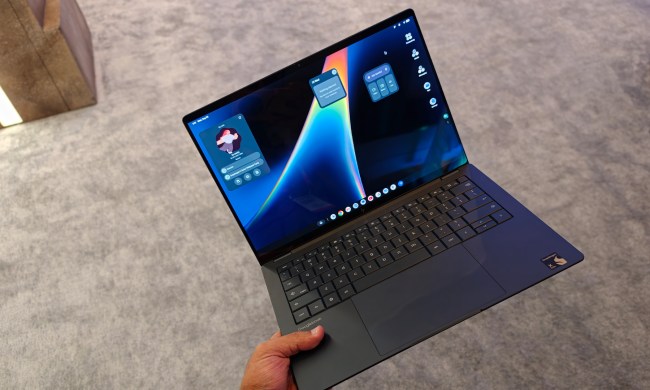
Using the HP Googlebook

Googlebook users, rejoice. Google is rolling out a Chrome update that turns any website into a web app, and you have the community to thank for it.

When Googlebook first arrived, Chrome was picky about which sites you could install. Only websites that developers had set up as web apps got the Install option. Everything else ended up as a shortcut that simply launched a browser tab.

Read more
DigUp lets users find Mac files by describing them, not remembering their names
Can't remember where that screenshot, PDF or recording went? Just describe it and let AI do the digging.
DigUp App in Use screenshot

There's a particular kind of frustration that comes with knowing a file exists somewhere on a computer but having absolutely no idea what it's called. Was that screenshot saved as IMG_4837? Which PDF contained that clause? And where did that podcast recording mention the thing worth remembering? DigUp wants to end the filename guessing game, letting Mac users search for files by describing what they remember instead. The free, open-source app uses Google's EmbeddingGemma 2 to search across photos, documents, PDFs, audio recordings and videos, all without sending personal files to the cloud.

DigUp turns everyday descriptions into file searches

Read more
A new AI detector looks beyond words to check whether the ideas came from AI
This could help journals distinguish AI-written research from human work polished with AI.
ai-writing-book

Most AI detectors look for telltale signs of AI-generated text by examining word and sentence patterns. A new tool called IdeaLens takes a different route to solving this problem. It spots AI-generated research by looking at the ideas behind it instead of the wording itself (via TechXplore).

Researchers from the University of Maryland, Google DeepMind, and Simon Fraser University built IdeaLens to check whether a document's core arguments came from a human or a machine, regardless of who wrote the final draft.

Read more