1. Home
  2. Computing
  3. News

Google Maps has another “America” on the map, and Canadians aren’t amused

First the Gulf of Mexico, now Google Maps has renamed Lake Ontario

Add as a preferred source on Google
Google Maps Lake Ontario renamed to Lake America Featured
Vikhyaat Vivek / Digital Trends

If you’re in the US and open Google Maps to go looking for Lake Ontario, something is going to look a little off. It’s now called Lake America. Google began rolling out the change after the US Geographic Names Information System formally changed the lake’s name following an executive order from President Donald Trump. Google says its longstanding policy is to reflect geographic names from official government sources.

The result is a map that changes depending on where you happen to be looking at it. US Google Maps users see Lake America. Canadians still see Lake Ontario. Everyone outside those two countries gets both, displayed as Lake Ontario (Lake America). Sound familiar yet?

Google has done this before

President Trump posted “Donald Ducks” guarding the new Lake America 🤣☠️ pic.twitter.com/LjBSXBc31h

— J (@JayTC53) August 29, 2026

We went through almost exactly the same thing with the Gulf of Mexico in early 2025. After the US government changed its domestic designation to Gulf of America, Google Maps followed suit. Americans began seeing Gulf of America, Mexican users retained Gulf of Mexico–and most of the rest of the world saw both names. According to Google, it follows official government naming databases when regional names differ.

Recommended Videos

Google confirmed that same policy again for Lake Ontario this weekend. The circumstances are different, however. Lake Ontario forms part of the international border between the US and Canada, with Canadian territory running along much of its shoreline. The US name change does not alter what Canada officially calls it, nor does it determine the internationally accepted name.

Your map now depends on where you live
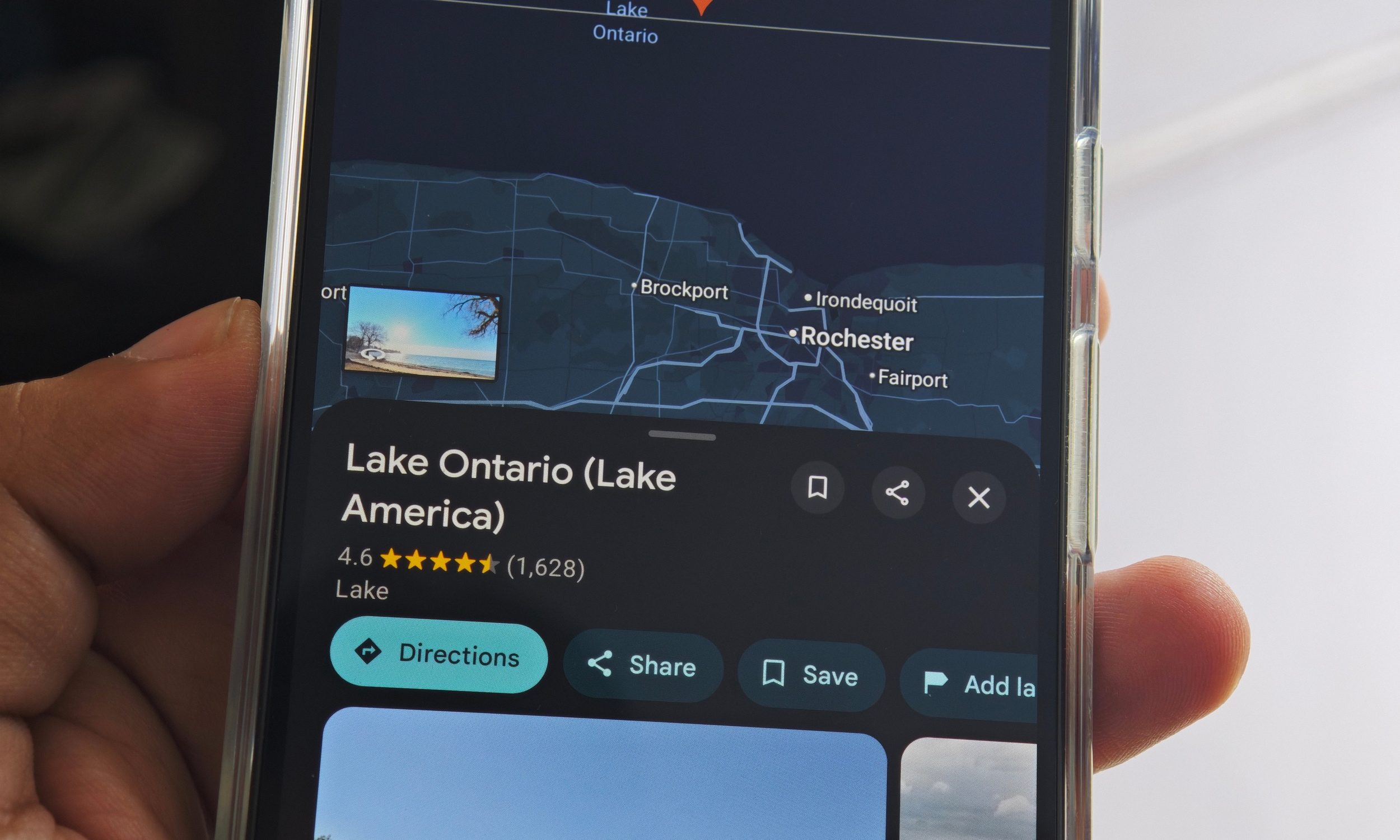
For most Google Maps users, it is almost instinctive to assume that the names in the app are fixed pieces of geography. In reality, Google has increasingly had to present different versions of the same map depending on local governments and disputed naming conventions. The Gulf of Mexico already demonstrated this perfectly.

Now one person looking at Google Maps from New York can see Lake America, while someone directly across the water in Ontario sees Lake Ontario. So rather than picking sides and deleting one and keeping the other, it is just localizing the map according to official naming sources in each country. Though having two people look at the same enormous lake and see two different names on the same app is going to take some getting used to.

Vikhyaat Vivek
Vikhyaat Vivek is a tech journalist and reviewer with seven years of experience covering consumer hardware, with a focus on…
The Adobe clones are real, but so is the work left to finish them
Seven free alternatives are out now, but their own documentation shows how much work remains
Nature, Outdoors, Sea

Free versions of Photoshop, Premiere Pro, and Lightroom are an easy sell to anyone tired of paying Adobe. Add a developer who says he vibe-coded replacements for seven of the company’s apps, and the triumphant headline practically writes itself. Adobe can presumably start clearing its desk.

Brandon Thomas’s Crafting Apps give that excitement something to work with. People can download the tools, inspect the source code, and find their way around familiar interfaces.

Read more
Getting health advice from AI chatbots comes with a problem doctors may never see
Researchers say AI companies should face the same liability as doctors for bad health advice
ChatGPT and pills on the same canvas.

AI chatbots have quietly become a go-to source for medical advice the extent that some are dangerously skipping real doctors. But when AI's health advice goes wrong, doctors may never see the exchange behind it.

Researchers from Binghamton University, Stanford, Texas A&M, and Indiana University published a paper in Nature Health examining what happens after a chatbot gives you bad health information. Their biggest concern is not just that chatbots can be wrong. It is that those mistakes often leave no trace for doctors, researchers, or regulators to catch.

Read more
AI companies expect a catastrophic AI incident and are reportedly preparing for the aftermath
A major AI cyberattack could disrupt essential services, damage public trust, and spark a political fight over regulations.
openai-anthropic-logo-on-screen

Leaders at OpenAI, Anthropic, and other AI companies are reportedly preparing for a potential AI disaster that could turn the public against artificial intelligence. According to an Axios report, industry leaders are privately running through possible scenarios for what happens after a catastrophic AI incident.

What kind of AI disaster are companies preparing for?

Read more