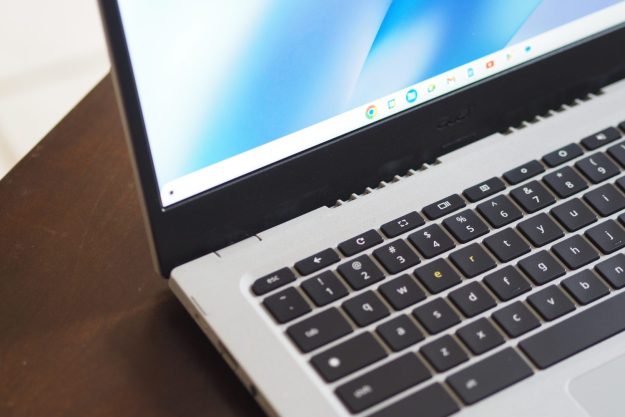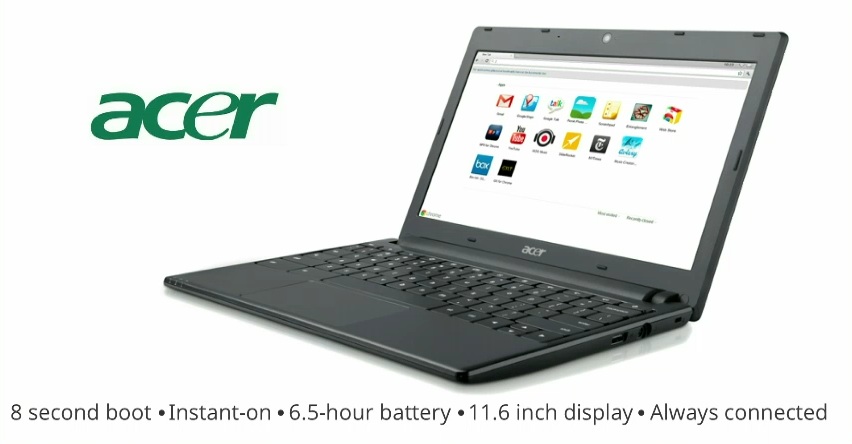

Google officially confirmed the June 15 launch of Chrome OS-powered Chromebooks from Acer and Samsung yesterday. It turns out that the previously rumored student package, which was said to put Chrome OS-powered notebooks into the hands of students for a $20 monthly fee, is a much more full-featured program than the original reports suggested. There will be a business subscription component as well, though a number of questions about the fine points of this offering remained following yesterday’s reveal.
Some additional details emerged in a press conference with top Google executives immediately following the keynote reveal at the second day of the annual Google I/O conference, as reported by Engadget. For starters, the monthly subscription offer is going out to both educational institutions and businesses, with different rates for each: $20 monthly for education and $28 monthly for enterprise (add $3 to each number for 3G-equipped Chromebooks). Consumers will be able to buy them a la carte, but the larger institutions have to make a three-year contract commitment for at least 10 Chromebooks in order to qualify for the monthly subscription rates.
There are several advantages to going the subscription route, provided you’ve got a large enough organization to support it. The 36 month commitment includes full warranty and replacement services, tech support and official updates from Google. All support comes directly from Google rather than the notebook’s manufacturer. The thinking is that the up front cost of buying a Chromebook outright, roughly $400, is less attractive for a larger organization than a monthly commitment that costs more in the long-term but includes a built-in support network for all users.
If there’s a sticking point at all, it’s Chrome OS, which is more a platform for accessing the Internet than it is a proper operating system; even Google Apps, the company’s suite of productivity tools, must be purchased separately for these Chromebooks as an add-on. Users won’t be able to install software on these machines in the traditional sense, but a workaround is being developed. The Citrix Receiver, developed in a Google/Citrix partnership, will allow a Chromebook to access applications loaded into a central server. A Google I/O demo showed off a Cr-48 notebook running a full version of Photoshop CS5 without any hitches. The software is still in beta, but the hope is that Citrix Receiver will ultimately make subscriptions more attractive to businesses.
Editors' Recommendations
- How to play Minecraft on a Chromebook
- How to update Chromebooks and Chrome OS
- The most common Chromebook problems and how to fix them
- Google is changing everything you know about Chromebooks
- This secret Samsung laptop may merge ChromeOS with DeX