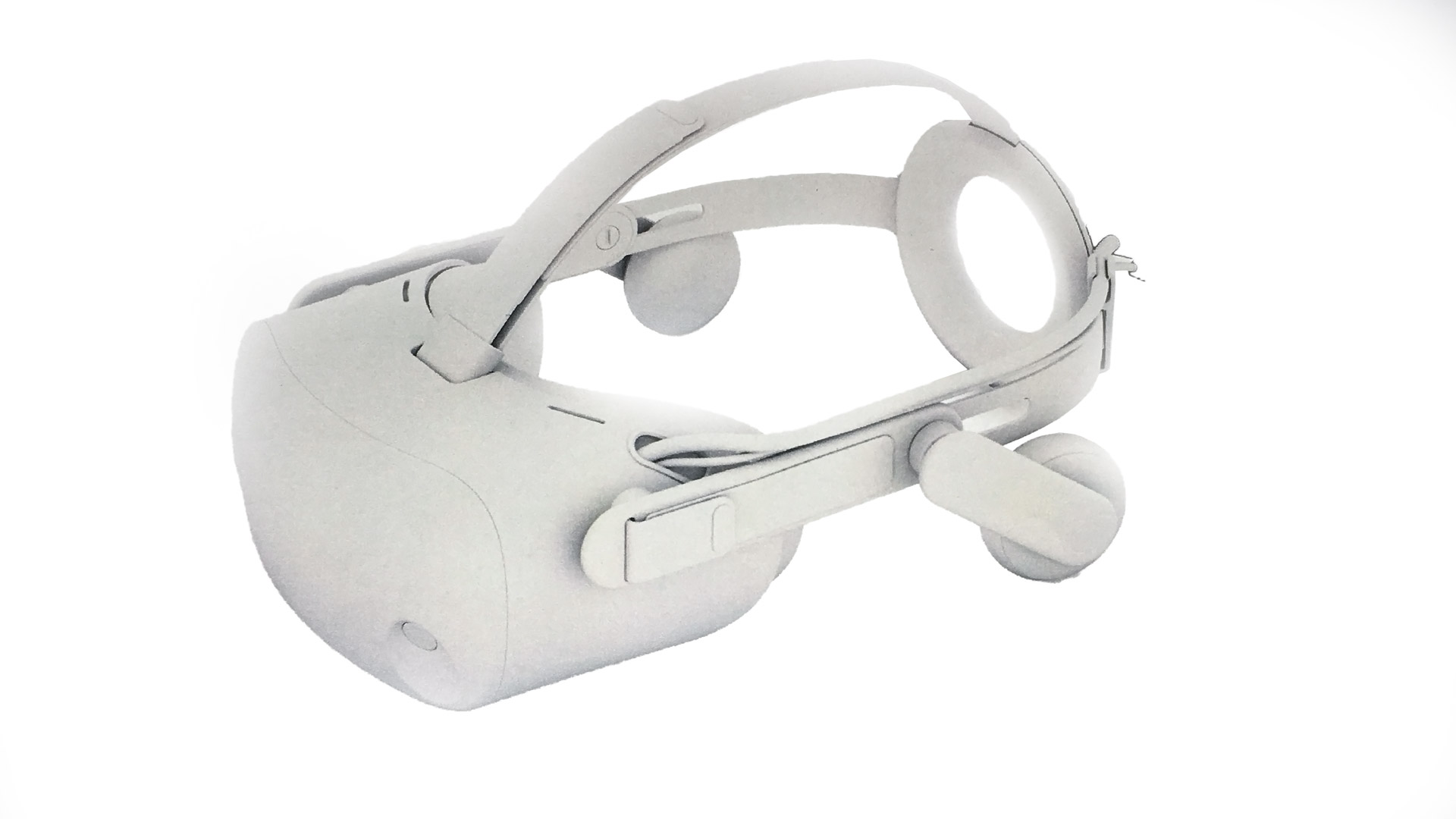
Virtual reality headsets aren’t really known for providing comfort and exceptional clarity, but HP’s next-generation headset may change that.
HP has a VR headset on the horizon with a design that reportedly emphasizes comfort, has a high resolution, and utilizes the Windows Mixed Reality platform.
According to a report by Road to VR, HP’s comfortable VR headset seems to be described as such because of its apparent lightness and ease of use, though the actual weight of the headset was not been released by HP.
As noted by Road to VR, the “headset’s ergonomics” had been “completely redesigned” and included changes such as the elimination of halo-style headbands in favor of using a top strap, as well as the use of “rigid spring-loaded struts” to help minimize the fuss of having to adjust the headset multiple times when wearing or removing it. Appearance-wise, Road to VR noted that the headset felt and looked very similar to an Oculus Rift.
Code-named “Copper”, HP’s VR headset also boasts an uncommonly high resolution with displays that feature 2,160 x 2,160 pixels per eye. While, as The Verge notes, this resolution is not the highest resolution available by current VR headsets, it still seems vastly better than the Oculus Rift, HTC Vive, and Samsung Odyssey Plus headsets.
Road to VR also mentioned they had the opportunity to experience and compare both the Odyssey Plus and the HP Copper headset during their exclusive look and admitted that the “Copper’s clarity blew it [the Odyssey Plus] away,” which is unsurprising considering the Odyssey Plus only has 1,440 x 1,600 pixels per eye.
In addition, the Copper headset is expected to run on the Windows Mixed Reality platform and includes the following features: RGB stripe displays, Fresnel lenses, and velcro side straps.
The HP Copper headset does not have an official name, price range or a release date; and it hasn’t been formally announced. But when it is launched, the headset is expected to be available for consumers and companies, though it may be presented as a professional-level product.
According to Road to VR, a 2019 launch still seems likely and said that the headset he previewed “looked and felt nearly market-ready.”