
  1. Home
  2. Computing
  3. News

Lenovo AeroBlade imagines a laptop as thin as a foldable phone, thanks to solid-state cooling

Add as a preferred source on Google
Lenovo Aeroblade laptop design concept.
Lenovo
Purple, Art, Graphics
This story is part of our coverage of IFA Berlin 2026

Lenovo is no stranger to wild concept laptops, but they usually focus on over-the-top ideas such as a rollable expanding screen, a secondary display on the lid, and more. At IFA 2026, Lenovo showcased its Aeroblade proof-of-concept laptop, with a side profile that is “under 10 mm thick.” For comparison, the ultra-sleek Samsung Galaxy Z Fold 8 offers a waistline of 9.7 mm, while the iPhone 17 Pro comes in at 8.75mm.

To go with the svelte profile, the laptop will also be pretty featherweight, tipping the scales at merely 830 grams. For comparison, Apple’s infamous 12-inch MacBook was just 13.1 millimeters across at its thickest point. The secret sauce to achieving this thin and light profile on a laptop? Solid-state active cooling, which replaces the bulk and space allowance reserved for cooling fans.

“Enabled by Lenovo’s breakthrough Active Flow thermal solution, developed in collaboration with Frore Systems, the Project AeroBlade concept replaces traditional fan-based cooling with a solid-state active cooling architecture powered by AirJet technology,” says the company.

Recommended Videos

Removing the active fan solves a whole bunch of problems. First, it frees up precious vertical space, which helps achieve a sleek enclosure. Second, it fixes the noise problem from the constant whirring of the built-in fan every time you push a laptop to extract more performance. And finally, it’s one less moving part that also spares you the nuisance of dust accumulation.
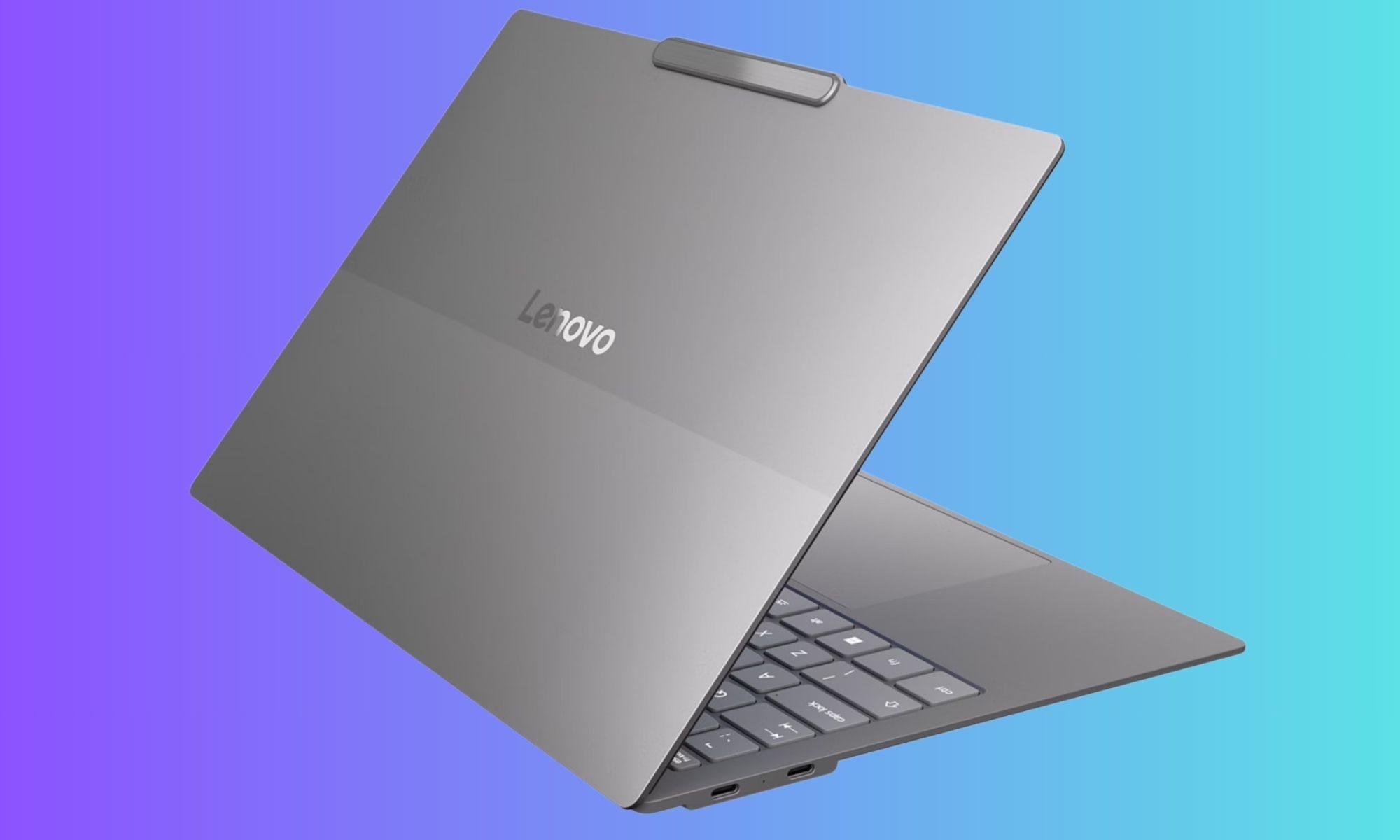
The laptops built atop the Project AeroBlade concept designs won’t skip practical conveniences, though. Lenovo says these machines will offer sharp OLED screens, a sleek and sturdy magnesium-aluminum chassis, Thunderbolt 4 ports, and fast Wi-Fi 7 wireless connectivity. As far as the firepower goes, Lenovo is starting with Intel’s Core Ultra 7 (Series 2) processors, but apart from a vague “coming soon” status on its media site, the company hasn’t given any timeline for the market arrival of laptops built atop the AeroBlade concept design.

Nadeem Sarwar
Nadeem is the Managing Editor at Digital Trends.
AI companies expect a catastrophic AI incident and are reportedly preparing for the aftermath
A major AI cyberattack could disrupt essential services, damage public trust, and spark a political fight over regulations.
openai-anthropic-logo-on-screen

Leaders at OpenAI, Anthropic, and other AI companies are reportedly preparing for a potential AI disaster that could turn the public against artificial intelligence. According to an Axios report, industry leaders are privately running through possible scenarios for what happens after a catastrophic AI incident.

What kind of AI disaster are companies preparing for?

Read more
Elon Musk’s SpaceX just made a big move to become a mobile carrier heavyweight in the US
SpaceX moves closer to becoming a major US mobile carrier with $8 billion deal
spacex

Elon Musk’s SpaceX is moving past satellite internet, and it’s making a big move into the US wireless market. The company has agreed to buy cellular spectrum licences from investment firm Grain Management in a deal reportedly worth about $8 billion, its biggest move yet to compete with established mobile carriers such as AT&T, Verizon and T-Mobile, according to a WSJ report.

The deal is for spectrum in the 800MHz band, which is for mobile services delivered via terrestrial infrastructure such as cell towers, not satellites. If the acquisition is approved, SpaceX could combine those airwaves with its growing Starlink satellite network to create a more comprehensive wireless service.

Read more
A clinical study with Google’s special chatbot shows a strong future for AI in healthcare
Google’s medical AI could give doctors a useful second set of eyes
Google Articulate Medical Intelligence Explorer chatbot

AI is a useful tool for handling many tasks in private as well as professional settings, but medical advice, especially diagnosis, is one area where I generally draw the line. General-purpose chatbots tend to sound confident and convincing while giving medical advice, even when they are wrong, as studies have previously found.

That being said, Google's new research points to a much more convincing use for AI in healthcare. Its Articulate Medical Intelligence Explorer chatbot, or AMIE for short, could help prepare both sides before the appointment even begins.

Read more