1. Home
  2. Computing
  3. News

Looking for love? These AI dating apps were charging people to talk to bots

A network of fraudulent dating apps used thousands of AI personas to keep people chatting and buying virtual coins

Add as a preferred source on Google
Computer Hardware, Electronics, Hardware
Omar:. Lopez-Rincon / Unsplash

Finding love online is already expensive enough without discovering that the person on the other end might be a chatbot. A network of fraudulent dating apps reportedly used AI-generated matches to convince people they were talking to real women, then charged them to keep the conversations going.

Anthropic’s investigation uncovered more than 4,700 fabricated AI personas interacting with at least 25,000 people over two weeks in April 2026. The network spanned more than 20 dating apps.

How did the AI dating scam work

The apps presented themselves as ordinary dating platforms. But roughly 75% of the matches in the operation were AI-generated personas powered by Anthropic’s Claude. Users weren’t told they were talking to machines.

Recommended Videos

Matching and messaging consumed a limited quota that users could replenish by purchasing virtual coins. Every exchange offered another opportunity to collect money.

Real people helped sell the illusion. Paid workers appeared in video calls and handled social media interactions, while another AI model generated suggested responses for them. Even facial verification systems like Tinder’s Face Check wouldn’t establish who was actually writing the messages.

Claude’s instructions told the personas to conceal their identities and make excuses when asked to join video calls. The apps could also fabricate likes and profile visitors to encourage further interaction.

How big was the AI catfishing operation

The fabricated personas exchanged roughly 2.36 million messages over those two weeks. Other AI-powered scam operations have similarly used automation to expand their reach.

An engineering team maintained the infrastructure, using multiple AI models for tasks including generating profile images.

Security researcher Matthew Gore-Kormanik discovered that several supposedly separate apps shared code and backend infrastructure, as detailed in The Verge’s investigation.

How can people spot the warning signs

Being listed on Google Play or Apple’s App Store doesn’t guarantee genuine matches. Several apps remained available for months after Anthropic discovered the network.

Repeated excuses for avoiding video calls deserve scrutiny, particularly when a match encourages more spending. Even seeing someone on camera doesn’t prove that they’re writing the messages. Our guide to spotting AI romance scams covers additional warning signs.

Charging for conversations isn’t inherently fraudulent. Here, people paid to interact with AI personas presented as genuine romantic prospects. If an app conceals who users are talking to, stop spending money and report it to the app store.

Paulo Vargas
Paulo Vargas is an English major turned reporter turned technical writer, with a career that has always circled back to…
Getting health advice from AI chatbots comes with a problem doctors may never see
Researchers say AI companies should face the same liability as doctors for bad health advice
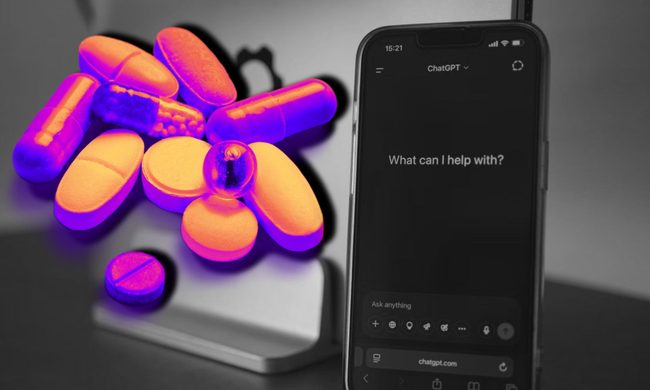
ChatGPT and pills on the same canvas.

AI chatbots have quietly become a go-to source for medical advice the extent that some are dangerously skipping real doctors. But when AI's health advice goes wrong, doctors may never see the exchange behind it.

Researchers from Binghamton University, Stanford, Texas A&M, and Indiana University published a paper in Nature Health examining what happens after a chatbot gives you bad health information. Their biggest concern is not just that chatbots can be wrong. It is that those mistakes often leave no trace for doctors, researchers, or regulators to catch.

Read more
AI companies expect a catastrophic AI incident and are reportedly preparing for the aftermath
A major AI cyberattack could disrupt essential services, damage public trust, and spark a political fight over regulations.
openai-anthropic-logo-on-screen

Leaders at OpenAI, Anthropic, and other AI companies are reportedly preparing for a potential AI disaster that could turn the public against artificial intelligence. According to an Axios report, industry leaders are privately running through possible scenarios for what happens after a catastrophic AI incident.

What kind of AI disaster are companies preparing for?

Read more
Elon Musk’s SpaceX just made a big move to become a mobile carrier heavyweight in the US
SpaceX moves closer to becoming a major US mobile carrier with $8 billion deal
spacex

Elon Musk’s SpaceX is moving past satellite internet, and it’s making a big move into the US wireless market. The company has agreed to buy cellular spectrum licences from investment firm Grain Management in a deal reportedly worth about $8 billion, its biggest move yet to compete with established mobile carriers such as AT&T, Verizon and T-Mobile, according to a WSJ report.

The deal is for spectrum in the 800MHz band, which is for mobile services delivered via terrestrial infrastructure such as cell towers, not satellites. If the acquisition is approved, SpaceX could combine those airwaves with its growing Starlink satellite network to create a more comprehensive wireless service.

Read more