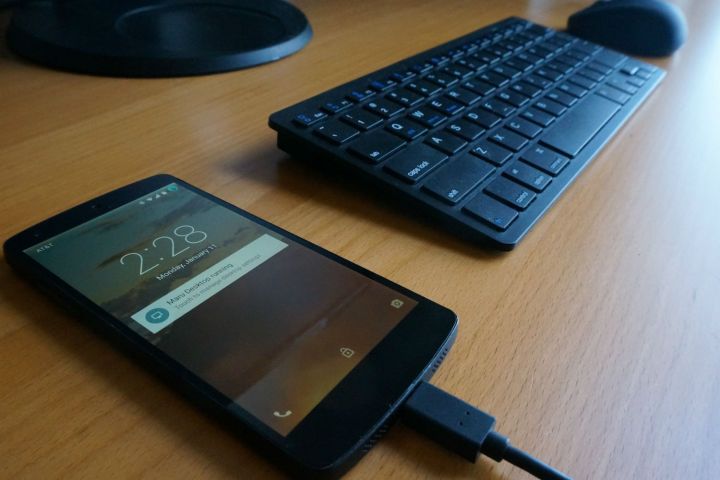
Maru OS doesn’t change much about the way your phone operates on its own, but once you connect a desktop monitor via a slimport cable, Maru really comes to life. When connected to a display, Maru OS allows you to run a desktop Linux environment straight from your phone.
Your phone is still a phone, it’ll take calls, send texts and do everything else it normally does, even while it’s connected to a desktop monitor running Linux on the side. It’s an interesting concept, but it’s still very much a work in progress. Today’s announcement could help move things along for Maru.
Right now, Maru has a very narrow spectrum of compatibility – currently only the Google Nexus 5. By going open source, independent developers will be able to riff on what Maru’s got going on under the hood, expanding the compatibility to other phones and tablets or building entirely new versions. Now that the project has been completely open sourced, developers are already getting together a list of phones to tackle next, reports Liliputing.
It’s an exciting concept, especially as phones become more and more powerful – and more capable of running desktop apps. In the future, Maru OS could allow you to replace a desktop computer entirely if your phone’s got the horsepower. Right now, it’s capable of running some Linux desktop apps, but the setup process is anything but easy. Installing Maru OS requires flashing the ROM on your phone, and navigating some serious technical obstacles.
It’s a long way from prime time, and it’s not likely you’ll be able to run desktop games from your phone anytime soon, but Maru OS has potential.
Editors' Recommendations
- Apple just released iOS 17.4. Here’s how it’s going to change your iPhone
- Your Android phone is getting lots of fun new features this month
- iOS 17 is official, and it’s going to totally change your iPhone
- Wear OS 4 is coming to your smartwatch this year — here’s what’s new
- iOS 16.3.1 fixes major bugs for your iPhone — and introduces a new one