1. Home
  2. Computing
  3. News

Digital Trends may earn a commission when you buy through links on our site. Why trust us?

Even Microsoft is running an unsupported Windows 11 PC

Add as a preferred source on Google

Windows 11 brings tons of great features to play with, but there is no hiding the fact that the operating system left a lot of PCs in the dust with its controversial minimum system requirements. That’s caused folks to find ways to run Windows on unsupported systems, and it looks as though one of Microsoft’s employees has done the same, too.

In a recent Windows Insider Webcast, Microsoft employee Claton Hendricks was sharing his screen to showcase some of the features that the company is working on for Windows 11 builds. In particular, Hendricks showcased new color options for the utilization area in Task Manager, but when toggling to the CPU information pane, an interesting Intel processor appeared listed in the right-hand pane of the redesigned app.
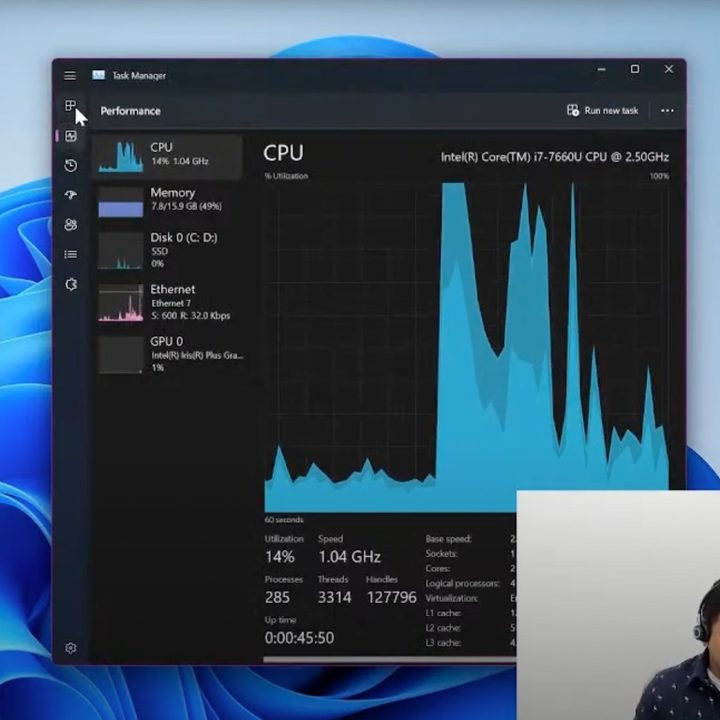
A unsupported CPU in Windows 11's Task Manager.
Microsoft/ YouTube

Per Neowin, the processor listed there is the Intel Core i7-7660U – which is not on Microsoft’s supported list. This is a 7th-generation processor that was released back in 2017. Microsoft only supports processors from Intel’s 8th-generation series onward, and also AMD’s Ryzen 3000 series.

Recommended Videos

It is unknown what specific device was being used in this case, but there’s a chance that it could have been a Surface, as the screen-sharing pane at the top of the session mentions “Surface IR.” If you’re interested in digging deeper to find out, Microsoft has a list of supported Surface devices on its website. There’s a chance that it might have been an original Surface Laptop, a Surface Pro 5, or any of the other Surface models that aren’t on Microsoft’s list.

As we detailed, it’s very much possible to run Windows 11 on unsupported systems with some tweaks that can be made during the initial install phase. Of course, doing so puts the PC at risk of not getting security updates, and Microsoft might put a visual warning on your system in the setting app and desktop about it if you’re using the Windows Insider version of the operating system.

Yet since this was a webcast and the webcam feed obscures part of the PC’s desktop, we couldn’t make out if Hendricks’ PC had either of those warnings. However, seeing as though Microsoft started testing said warnings in the Windows Insider Program, it is more than likely there, but just hidden.

Arif Bacchus
Arif Bacchus is a native New Yorker and a fan of all things technology. Arif works as a freelance writer at Digital Trends…
The Adobe clones are real, but so is the work left to finish them
Seven free alternatives are out now, but their own documentation shows how much work remains
Nature, Outdoors, Sea

Free versions of Photoshop, Premiere Pro, and Lightroom are an easy sell to anyone tired of paying Adobe. Add a developer who says he vibe-coded replacements for seven of the company’s apps, and the triumphant headline practically writes itself. Adobe can presumably start clearing its desk.

Brandon Thomas’s Crafting Apps give that excitement something to work with. People can download the tools, inspect the source code, and find their way around familiar interfaces.

Read more
Getting health advice from AI chatbots comes with a problem doctors may never see
Researchers say AI companies should face the same liability as doctors for bad health advice
ChatGPT and pills on the same canvas.

AI chatbots have quietly become a go-to source for medical advice the extent that some are dangerously skipping real doctors. But when AI's health advice goes wrong, doctors may never see the exchange behind it.

Researchers from Binghamton University, Stanford, Texas A&M, and Indiana University published a paper in Nature Health examining what happens after a chatbot gives you bad health information. Their biggest concern is not just that chatbots can be wrong. It is that those mistakes often leave no trace for doctors, researchers, or regulators to catch.

Read more
AI companies expect a catastrophic AI incident and are reportedly preparing for the aftermath
A major AI cyberattack could disrupt essential services, damage public trust, and spark a political fight over regulations.
openai-anthropic-logo-on-screen

Leaders at OpenAI, Anthropic, and other AI companies are reportedly preparing for a potential AI disaster that could turn the public against artificial intelligence. According to an Axios report, industry leaders are privately running through possible scenarios for what happens after a catastrophic AI incident.

What kind of AI disaster are companies preparing for?

Read more