  1. Home
  2. Computing
  3. News

Surface Laptop Studio to get this killer MacBook Pro feature

Add as a preferred source on Google

Apple has been leading the way with adaptive refresh rates in its devices in recent years but has only recently brought it to the MacBook Pro line-up. Now, Microsoft is following suit and delivering dynamic refresh rates to the Surface Laptop Studio in its latest Windows 11 update.

That’s great news for anyone who is concerned about the battery life on their Surface Laptop Studio and should result in a much smoother experience whether you’re watching videos or writing emails.
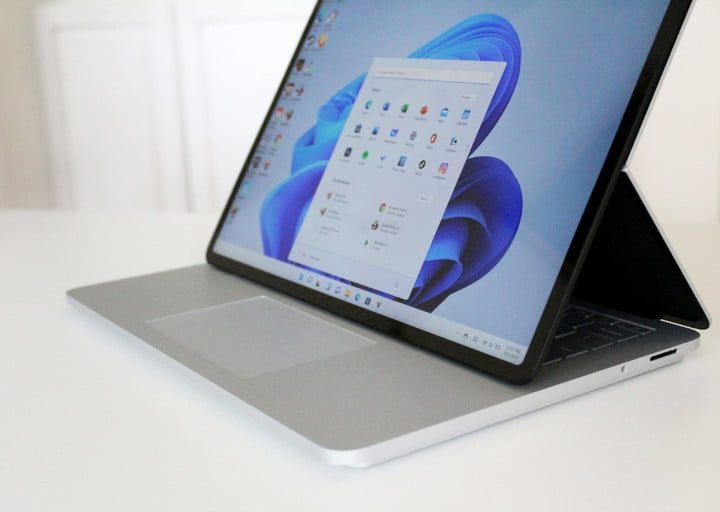
The Surface Laptop Studio in Stage Mode.
Image used with permission by copyright holder

The new feature is contained in two firmware updates for devices enrolled in the Windows Insider Dev or Beta channels. If you want to get this feature, you’ll need to look out for the following updates:

  • Surface – Firmware – 10.0.156.0
  • Intel Corporation – Display – 30.0.101.1340
Recommended Videos

Once installed, you will be able to tell your Surface Laptop Studio to switch between 60Hz and 120Hz. Just go to Settings > Display > Advanced Display, then select the dropdown menu under Choose a refresh rate and select Dynamic (60Hz or 120Hz).

Features like this are great news for laptops with high refresh rates. That’s because they dial down to a slower refresh rate when you’re doing less taxing tasks like viewing static images, then ramp up during more demanding workloads such as gaming or video editing, thereby prolonging your battery life. After all, running a display at the full 120Hz all day, even when it’s not needed, can gobble up your battery faster than you realize.

Once the option in Advanced Display settings is enabled, you won’t need to manually change between refresh rates, as Windows 11 will handle that for you. Just select that option and your refresh rate will adapt as required.

While it’s not quite the same as Apple’s ProMotion, Microsoft’s change is a welcome one. ProMotion is something of a secret weapon in the MacBook Pro, and it doesn’t immediately seem like a ground-breaking feature. But put it to use and you’ll see what the fuss is about.

Apple’s implementation is slightly different from what Microsoft is doing. Instead of switching between 60Hz and 120Hz, ProMotion can adopt whatever refresh rate is needed up to 120Hz. That could mean 24Hz or it could mean 100Hz. Still, it’s great to see Microsoft coming on board with this kind of technology. Hopefully it will be expanded to more devices in Microsoft’s Surface range in the future.

Alex Blake
Alex Blake has been working with Digital Trends since 2019, where he spends most of his time writing about Mac computers…
Apple is reportedly giving the MacBook Pro a touchscreen and the iPad Mini a higher price tag
Apple might finally admit that touching a screen is useful on a laptop
A Macbook Pro sitting on a chair, illuminated with neon lighting.

Apple is preparing for a major Mac and iPad launch towards the end of October, with redesigned MacBook Pro models expected to take centre stage. According to Bloomberg’s Mark Gurman in his latest Power On newsletter, Apple is planning an event on or around October 27, where it could introduce touchscreen MacBook Pro laptops, updated Macs and a new iPad mini.

The launch could mark a significant shift for the MacBook Pro, which is reportedly getting its most substantial redesign in years. Apple had initially targeted a late-2025 release for the touchscreen laptop, but development priorities and supply-chain delays pushed the launch back. The new models are now said to be ready for their debut.

Read more
ChatGPT’s yes-man era may finally be coming to an end
ChatGPT is learning that agreeing with everything you say isn’t always helpful
ChatGPT

OpenAI says it is making progress in reducing a troubling behaviour in ChatGPT: the tendency to agree with users too readily, even when their beliefs may be false or harmful. The improvements come as researchers and mental-health professionals raise concerns about prolonged chatbot conversations reinforcing delusions, encouraging unhealthy dependence and failing to direct vulnerable users towards human support.

According to a report by The Wall Street Journal published on October 10, OpenAI’s older GPT-4o model was associated with several reported cases of serious harm following lengthy interactions. The report cited at least seven suicides, one murder-suicide and one mass shooting linked to extended ChatGPT conversations last year, while noting that other AI models were implicated in some cases. These reported associations do not, by themselves, establish that chatbot use caused each incident.

Read more
The Adobe clones are real, but so is the work left to finish them
Seven free alternatives are out now, but their own documentation shows how much work remains
Nature, Outdoors, Sea

Free versions of Photoshop, Premiere Pro, and Lightroom are an easy sell to anyone tired of paying Adobe. Add a developer who says he vibe-coded replacements for seven of the company’s apps, and the triumphant headline practically writes itself. Adobe can presumably start clearing its desk.

Brandon Thomas’s Crafting Apps give that excitement something to work with. People can download the tools, inspect the source code, and find their way around familiar interfaces.

Read more