  1. Home
  2. Computing
  3. News

New Gemini TTS can now replicate voices and act out scripts with emotions, accents, and acting cues

Gemini’s latest speech models can power game characters, podcasts, audiobooks, and video narration.

Add as a preferred source on Google
Gemini 3.8 Flash TTS and Flash Lite-TTS launched
Google

Google has introduced Gemini 3.8 Flash TTS and Gemini 3.8 Flash-Lite TTS, two new text-to-speech models that are focused on improving how AI-generated speech sounds. They can create voices from descriptions, follow detailed speaking directions, handle two-speaker conversations, and keep those voices consistent across longer recordings.

For people using Gemini for narration, podcasts, audiobooks, or video voiceovers, the update gives much more control over the finished audio. Users can describe the kind of voice they want and tell Gemini how individual lines should be delivered.

You can tell Gemini how you want the voice to sound

Gemini 3.8 Flash TTS can create a voice from a natural-language description. Users can specify a character, accent, and other vocal qualities, or choose from more than 2,000 existing voices. The models support over 100 languages and dialects.
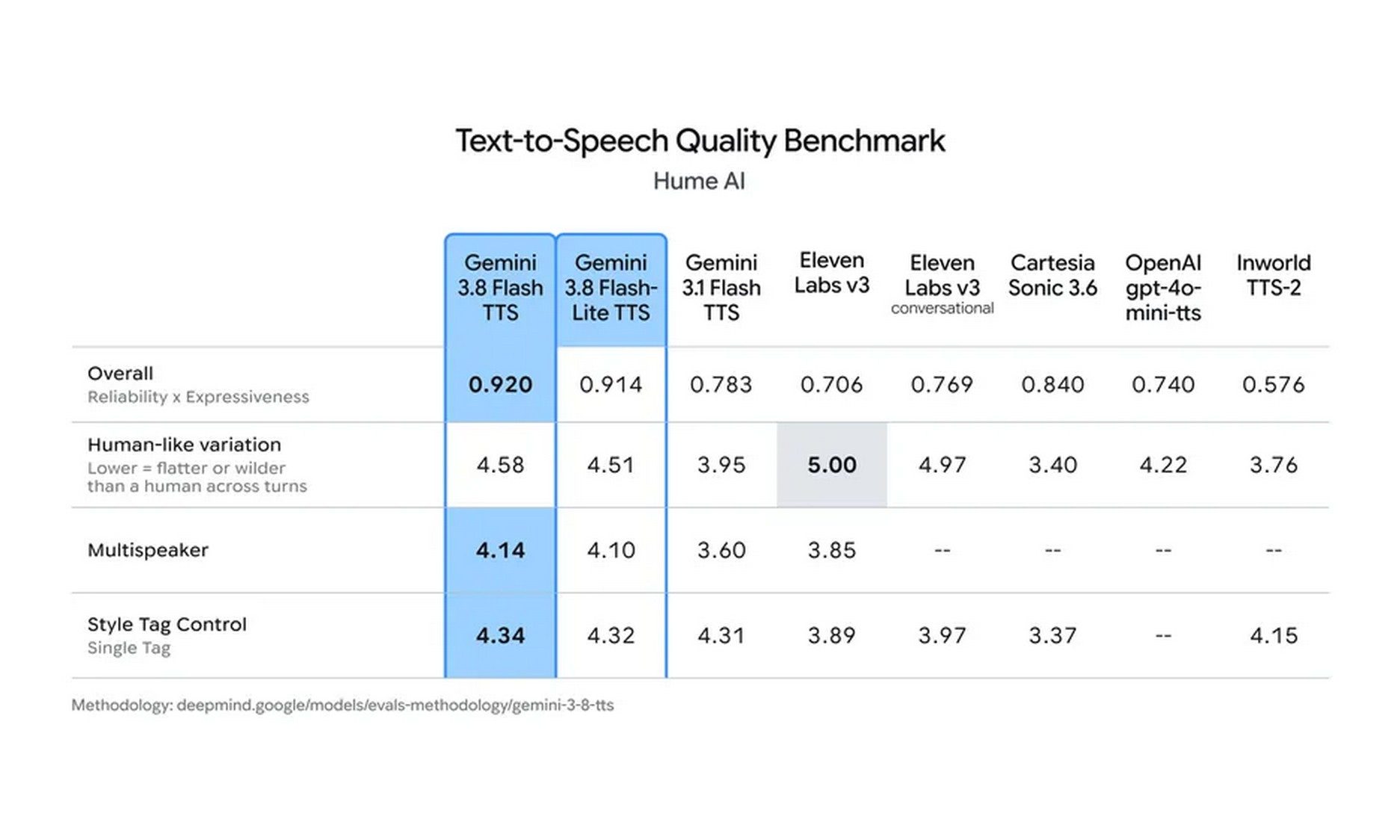
Instructions can also be added throughout a script. For example, a line can be whispered, spoken more slowly, delivered with a different emotion, or include laughter, sighs, gasps, and conversational reactions such as “mhm” or “yeah.” The update also allows for two-speaker conversations to be generated from a single script, while voices and pacing can remain consistent across longer recordings.

Recommended Videos

Custom voices can also be saved and reused across projects, which should help keep the same character or narrator from gradually sounding different. Google plans to add voice remixing later, allowing existing voices to be adjusted for pitch, pace, timbre, and accent.

Voice replication comes with some safeguards

Gemini can recreate a consistent vocal profile from a 30-second recording, but it cannot simply be given any voice sample. Google says the recording must belong to the user or be a voice they have the rights to use. The voice owner must also provide a separate verbal consent recording that matches the reference speaker before the replica can be created.

Generated Gemini Audio clips also carry an imperceptible SynthID watermark, while Google says voice replication includes C2PA credentials to help identify AI-generated material. Gemini 3.8 Flash TTS is rolling out through Gemini Notebook, the Gemini API, and Google AI Studio. The cheaper Flash-Lite model is coming to Google Vids and is designed for larger-scale jobs such as dubbing, narration, and voice agents.

Sudhanshu Kumar Mangalam
I’ve got about 4 years of experience, mostly covering gaming, PC hardware, and smartphones. In my free time, I like…
ChatGPT is coming for your Chrome tabs, and honestly, they need help
ChatGPT can now do your online chores while you pretend to be productive
Electronics, Mobile Phone, Phone

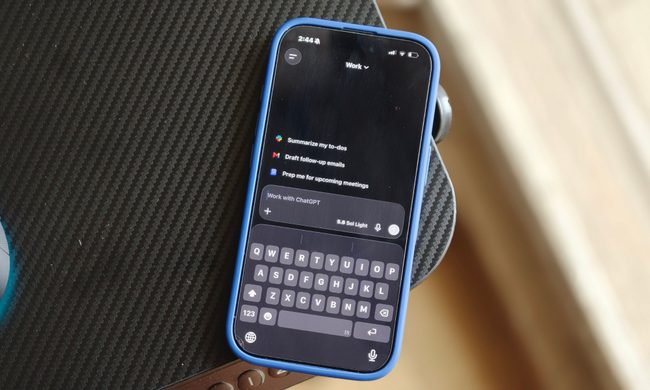
OpenAI wants to do more than answer questions with ChatGPT. The company is developing a browser that can look at open tabs and help users get things done online. The feature aims to simplify routine browsing, letting ChatGPT cross-reference information between websites, summarize content, and do repetitive tasks without users having to keep switching between tabs.

The update is a sign of a wider change in how people use AI assistants. ChatGPT can do more than tell you how to do something – it can increasingly help you do it. It could save people hours spent researching products, managing information or filling out online forms. But browser access also brings up important questions around privacy and how much control users should give up to an AI.

Read more
Meta wants you to run its powerful new AI model on your desktop, but there’s a catch
Muse Spark Open packs 816 billion parameters and a million-token context window, but running it on your desk won't come cheap.
Muse Spark Open feature

Running a top-tier AI model usually means renting expensive cloud servers or paying for yet another subscription. Meta wants to change that. The company has released the weights for Muse Spark Open, which it describes as the most capable open-weight model to come out of the US so far, and you can run it on your desktop.

There’s a catch, though. You’ll need two Mac Studios powered by Apple’s new M5 Ultra chip. Mark Zuckerberg shared the news on X, saying the model “runs great on new Mac Studios thanks to work with” John Ternus and Apple. Ternus seemed just as thrilled, writing, “Amazing to run a model of Muse Spark Open’s caliber and scale this efficiently, right from your desk.”

Read more
Microsoft’s October Windows 11 update fixes mouse stutter in some games
Microsoft has fixed a Windows 11 bug that could make mouse input stutter in games, alongside several other issues in the October update.
gaming on Dell 14S (DS14260)

Microsoft has fixed a Windows 11 bug that could make mouse input stutter in some games. The fix is buried inside the October 2026 Patch Tuesday update, KB5127648, and Microsoft does not offer much explanation beyond acknowledging that the problem existed.

If you have been dealing with strange mouse lag on Windows 11, this one may sound familiar. Reports started appearing shortly after Windows 11 24H2 rolled out, and some users spent months changing polling rates, reinstalling drivers, and even performing clean Windows installs without getting rid of the problem.

Read more