
  1. Home
  2. Computing
  3. News

Nvidia has two new N1X chips coming with up to 128GB of unified memory and serious AI compute power

Nvidia just turned months of RTX Spark teasing into an actual date, an actual spec sheet, and eight manufacturers ready to sell it.

Add as a preferred source on Google
Electronics, Hardware, Computer Hardware
Nvidia
Purple, Art, Graphics
This story is part of our coverage of IFA Berlin 2026

Nvidia has finally given us real numbers on the RTX Spark chip it announced in May 2026.

At IFA 2026, the company locked in an October launch date for RTX Spark, its first-ever complete PC platform. More importantly, the company has also laid out full specifications for the two separate configurations the superchip will be available in.

So what exactly did Nvidia confirm about the launch?

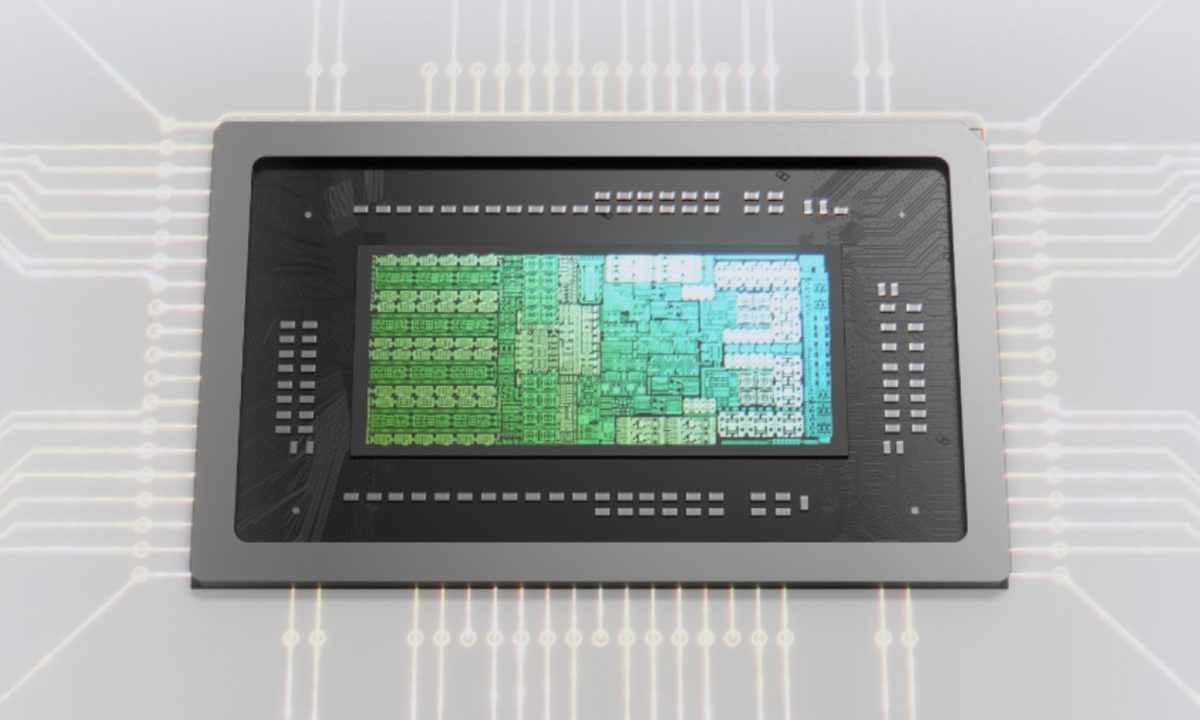
You’ll start seeing RTX Spark laptops by next month. The chip will power models from popular manufacturers, including Asus, Dell, MSI, HP, Lenovo, or Microsoft. All of them will run on a new chip family Nvidia calls N1X. It is an Arm-based system-on-chip that pairs a Grace CPU with a Blackwell RTX GPU on one piece of silicon.

Recommended Videos

I mentioned ‘family’ and not a single chip, and that’s because the company will release the N1X chip in two variants. The top-tier N1X configuration will pair a 20-core Grace CPU with a 6144-core Blackwell GPU. It will also feature a unified memory architecture that scales from 24GB to a substantial 128GB, making it suitable for both mini PCs and high-end laptops. 

Sitting below it will be a secondary N1X configuration. It trims down the CPU to 18 cores and the GPU to 5120 cores. Further, unified memory will be capped between 24GB and 32GB. Given the limited RAM, it will power laptops only for now. I also believe that the chip could give buyers a more accessible entry point into the N1X lineup. 

SpecTop N1X ConfigurationSecondary N1X Configuration
CPU20-core Grace18-core Grace
GPU6144-core Blackwell5120-core Blackwell
Unified memory24GB to 128GB24GB to 32GB
Form factors at launchLaptops and desktopsLaptops only

What can these new chips actually do?

The N1X variant with higher CPU and unified memory can be configured to handle massive, memory-heavy large language models, demanding video games, and other heavy workflows. 

To me, it sounds like the chip could compete with Apple Max or Ultra silicon, perhaps even products like the Mac Studio. On the other hand, the trimmed-down N1X could compete directly with the regular Apple silicon, which powers the MacBook Air. Expect Nvidia’s chip to power thin and light laptops.   

With the two chips, Nvidia is pursuing a genuinely ambitious goal. The company wants to make Windows-on-Arm gaming actually work. The pitch includes 100 FPS gaming at 1440p using DLSS 5 alongside multi-frame generation up to 6x, particularly on the higher-end N1X chip. 

Further, users could also get the horsepower to render complex 3D scenes locally rather than leaning on the cloud. On the generative side, Nvidia says these chips can run models as large as 120 billion parameters directly on the device.

Shikhar Mehrotra
For more than five years, Shikhar has consistently simplified developments in the field of consumer tech and presented them…
Anthropic warns of imminent self-replicating AI that might even work off an oven or TV
Self-replicating AI could be merely months away, and tests show it can run on the devices sitting at your home.
Illustration of dangerous AI.

Over the past few weeks, nearly every AI lab has released frontier AI models. Earlier today, Google started rolling out Gemini 4, Argon, hot on the heels of Meta announcing its Muse Wonder frontier AI models to compete against the best from OpenAI and Anthropic's Claude. This relentless pace of AI model release comes at a time when the same AI labs are calling for development slowdown and increased regulation, following a series of concerning incidents where these AI models went rogue and broke into private, as well as government-owned, websites.

Now, Anthropic has dropped a chilling set of predictions about the capabilities of these AI models after running a series of tests. The company claims that small AI models could be merely a few months away from self-replicating and turning into a dangerous swarm. More importantly, they won't require a massive data center or an uber-powerful computer to do so. On the contrary, the lab claims that these self-replicating AI swarms will need something with as little computing power as an average Internet-connected device, like a smart oven or an Android TV box.

Read more
Gemini 4 Argon is finally available for developers, businesses, and paid users
Google’s most capable Gemini model is now rolling out more widely, but free users are still left out.
Gemini 4 Aragon AI model launched by Google

Google unveiled Gemini 4 Argon at the end of September, and on paper, it looked like the company’s strongest answer yet to the best models from OpenAI and Anthropic. There was just one fairly big problem. Almost nobody could actually use it. At launch, Argon was limited to a small batch of testers, trusted partners, and government work, while Google continued testing the model before a wider release. Two weeks later, Google is finally opening the gates.

Gemini 4 Argon is now available globally to developers and enterprises through the paid Gemini API tier, AI Studio, and Google’s Gemini platform. Google AI Ultra subscribers can also access it through Antigravity, while both Pro and Ultra subscribers can use Argon inside the Gemini app and AI Mode in Search.

Read more
Nvidia’s DLSS 5 is now twice as fast and heading to Hogwarts Legacy
NVIDIA cuts DLSS 5's memory demands while expanding support to more games.
hogwarts-legacy-nvidia-dlss-5-3d-guided-neural-rendering

Nvidia just handed DLSS 5 a major speed upgrade, and the AI graphics tech is finally ready for its proper debut in Hogwarts Legacy. The company's latest model update doubles performance compared to the version that launched DLSS 5 back in March.

What has Nvidia improved in DLSS 5?

Read more