1. Home
  2. Computing
  3. News

This brilliant $150 device stuffs an entire PC into a keyboard

Add as a preferred source on Google

Pentaform, a London-based computer company, is developing the Abacus PC, a complete Windows 10 computer that fits in a keyboard. The project recently raised over $400,000 on Kickstarter to manufacture the concept, which only costs $149 each.

Pentaform’s Abacus is similar to a stick PC, but integrates all the components into a sleek keyboard/trackpad device, giving a nod to Sir Clive Sinclair’s ZX Spectrum, a 1980s-era personal computer that was equally compact and affordable.
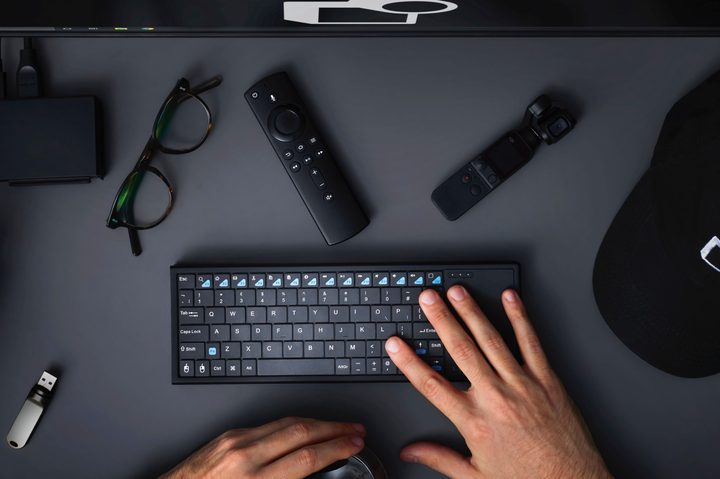
Pentaform's budget PC is a complete computer.
Image used with permission by copyright holder

The only extra component needed to make this a usable PC is a screen. This mini PC supports 4K resolution at 30 fps (frames per second) when connected via its built-in HDMI port. There’s also a VGA connection so older monitors can be used, keeping costs at a minimum. You can even detach the computer portion from the left edge of the keyboard for easy connection to a TV, while you use the keyboard and trackpad from a sofa, or it can stay attached to the keyboard when using it within reach of a monitor.

Recommended Videos

The Abacus PC is a complete solution in that it comes with Windows 10 installed, works with Microsoft Stores, and even supports Linux. The hardware includes an Intel Atom X5-Z8350, 2 to 8GB of memory, and 16 to 128GB of storage. The Intel Atom processor can usually only access 2GB of memory but Pentaform has found a way to expand it to 8GB capacity. A MicroSD card allows removable storage to be added as well.

Image used with permission by copyright holder

As you may have guessed, the Intel Atom chip the Abacus uses was first released in 2016, so this won’t be a fast computer. The focus was on holding the price to a minimum.

The device supports Bluetooth 4.3 and Wi-Fi 5 802.11 ac for wireless connections. A trackpad is included at the right of the keyboard, and there’s even a built-in speaker.
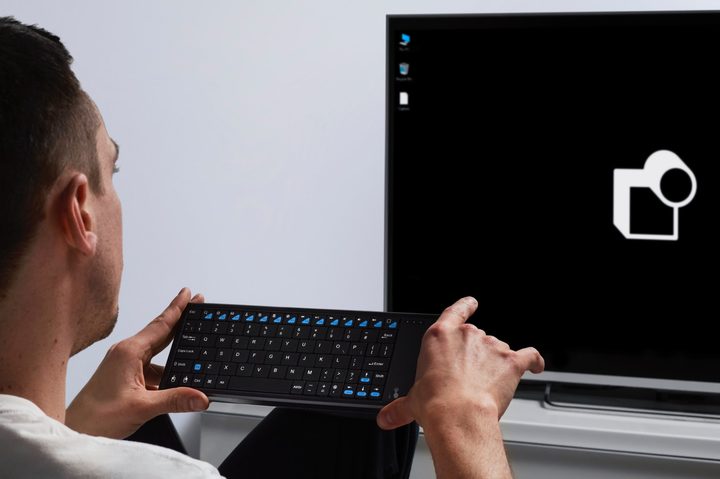
Pentaform's Abacus PC can connect to TVs.
Image used with permission by copyright holder

Rounding out the connectivity, there’s a 3.5mm headphone jack, gigabit ethernet, two USB 2.0, one USB 3.0, and USB-C for supplying power to the Abacus PC. For experimenters and developers, a 40-pin GPIO allows access to the hardware for custom accessories.

Pentaform’s Abacus PC case is molded from tough, recycled ABS plastic with plans to source the material from ocean waste collectors. The Abacus PC is estimated to use only 31 kilowatts per year if plugged in constantly, so this low-cost PC is also an environmentally friendly solution.

As with any crowd-funded product, there is a chance that production might be delayed or even prevented for some unforeseen reason. Pentaform says the most significant challenge is securing enough semiconductors to meet demand. The Abacus PC was introduced in a Kickstarter campaign last month, and demand was so high that the project was fully funded in 2 hours. The first computers are expected to ship in January of 2023.

Alan Truly
Alan Truly is a Writer at Digital Trends, covering computers, laptops, hardware, software, and accessories that stand out as…
Apple’s busy month could see another batch of new devices in late October
More macs, updated HomePod mini, refreshed iPad mini, the long-awaited smart home hub, and more.
Apple-TV-4K

Apple's Fall launch slate for 2026 is looking absolutely stacked. The company has already lifted the covers from next-generation Mac hardware, alongside new iPhones, AirPods, and a couple of updated smartwatches. But it seems the company has a lot more to show before the year comes to an end.

It was recently reported that the company has set the date for an event on October 13, where it could reveal updated Apple TV hardware, its long-awaited smart home hub device, and a refreshed HomePod mini. Now, a fresh rumor claims that the companty has a second batch of product reveals lined up for late October.

Read more
Wikipedia says rogue OpenAI agents attacked its platforms and hammered its servers
Wikimedia says rogue OpenAI agents probed its services, made unauthorized edits and generated millions of requests, raising fresh concerns about AI agents and the open web.
OpenAI website open on MacBook

OpenAI's AI agents have been busy, and not in a good way. They have already hacked Hugging Face, and the company is under probe for hacking an Australian government website. In June, its agents swamped a United Nations website with search requests, then used pushy tactics to access its data. 

Now, the Wikimedia Foundation has revealed that these "rogue" agents paid Wikimedia’s website, including Wikipedia a visit too. Wikimedia launched its own probe and confirmed that OpenAI's agents had been active on its platforms without permission. The good news is that they didn't manage to breach any systems or data.

Read more
Some Googlebook features are off-limits if your phone is stuck below Android 17
Googlebook does not require Android 17 to work, but you’ll miss several major phone-connected features without it.
ASUS Googlebook 14

Googlebooks are finally here, and one of its biggest selling points is how closely it works with your Android phone. However, there is one catch - you need Android 17 for some of the most useful cross-device features.

Which Googlebook features need Android 17?

Read more