  1. Home
  2. Computing
  3. Emerging Tech
  4. News

Digital Trends may earn a commission when you buy through links on our site. Why trust us?

Students who use AI every day may be falling behind, while moderate users pull ahead

New global testing data suggests more AI in the classroom isn't automatically better.

Add as a preferred source on Google
Logo, Text
Created by ChatGPT

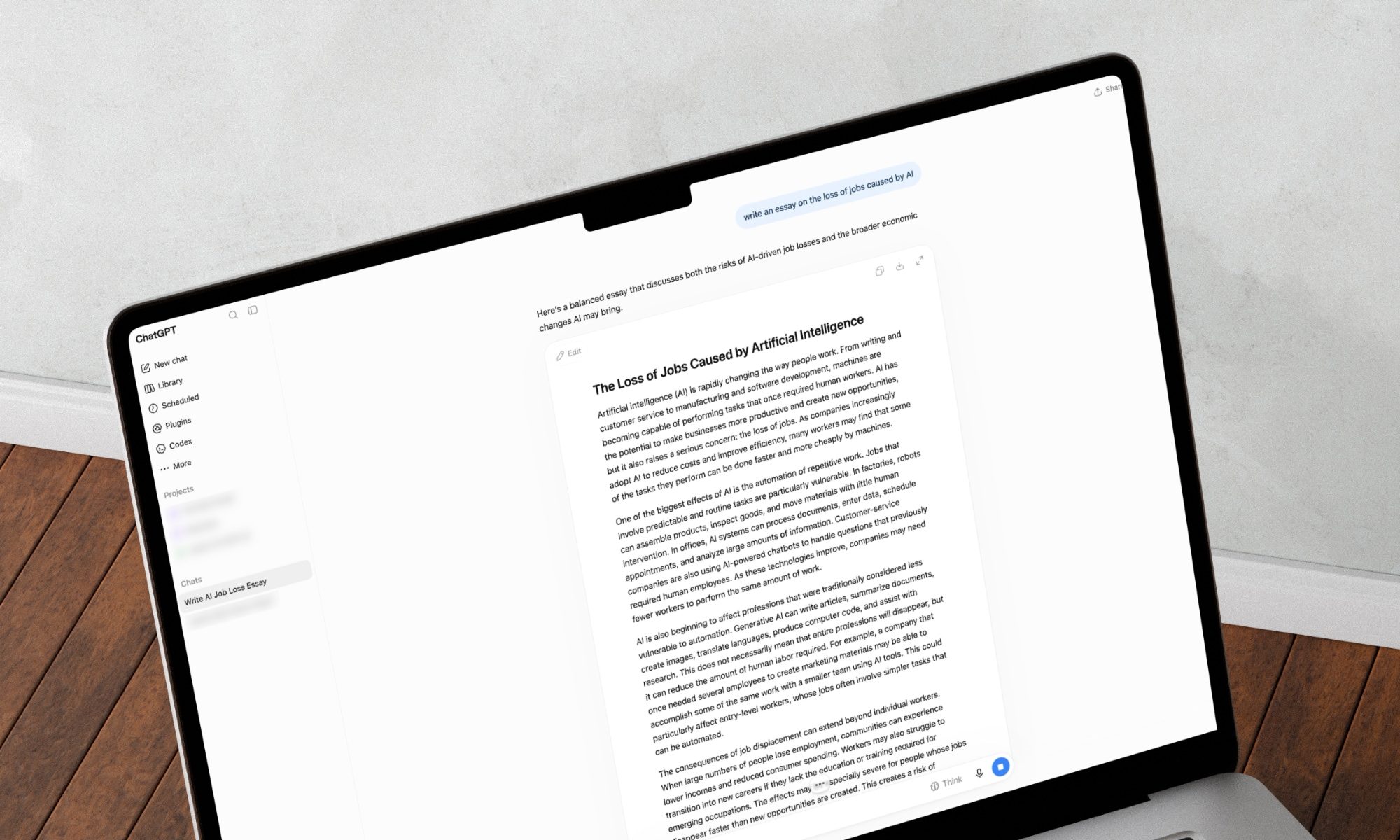
I assumed more AI access might help students learn faster. However, a new OECD study dispels that misconception for me and everyone else who gave their children a paid version of AI chatbots, thinking it would help them through their educational journey. 

According to PISA 2025 data from 760,000 students in 91 countries, students who use AI daily score meaningfully worse on standardized tests than their peers. The full picture is more complicated than a simple ban would fix.
So what exactly does the data show?

Daily AI users trail their peers by up to 28 points on science tests. The gap, per the research, is equivalent to roughly a year and a half of schooling. However, don’t rush into believing that less AI use is automatically better. 

Recommended Videos

Students who use AI once or twice a week outscore both daily users and those who don’t use it at all. Those who’re using it to learn something are apparently performing better than those who use it to finish tasks faster. 

Students regularly asked to critique AI-generated answers in class saw science scores climb 13 points, which is about half a year of additional progress.
Why does heavy use backfire?

OECD’s Andreas Schleicher (via Bloomberg) frames the difference in a simplified manner. AI is most beneficial when it supports some mental effort. That could be learning something new or how to do something, rather than getting it done. 

A staggering 86% of students use AI for schoolwork at least once a year. However, their usage varies wildly by region. For instance, nearly 40% of Japanese students say they rarely touch it versus just 4% in Vietnam. 

Related policy frameworks are catching up fast, too. New York City just banned AI tools for elementary and middle schoolers. MIT says it needs to redesign coursework, especially since AI can complete most undergraduate assignments. 

If you’re a student reading this, using AI-powered chatbots like ChatGPT, Claude, or Gemini to learn new concepts, ask follow-up questions, and use it as a superhuman professor is the right approach. 

Shikhar Mehrotra
For more than five years, Shikhar has consistently simplified developments in the field of consumer tech and presented them…
Ask YouTube expands to mobile, web, and TVs across the US
YouTube’s AI search is now available across all major screens.
Ask YouTube on TV and desktop

Searching for something online by simply describing what you want is becoming pretty normal now. Google Search can do it. ChatGPT can do it. And YouTube has been slowly turning its own search box into something that works in a similar fashion.

YouTube has now announced a wider rollout for Ask YouTube, its conversational AI search tool. The feature is available to users in the U.S. across the web, mobile devices, and TVs. Mobile is the newest addition here, after Ask YouTube previously expanded to the web and smart TVs. Instead of putting a few keywords into the search bar, you can ask YouTube a complete question, describe what you are looking for, and then refine the results using follow-up questions.

Read more
Meta goes toe-to-toe with the big boys as it launches Muse Wonder AI models
Illustration of Meta Muse Wonder AI model.

It's raining frontier AI models. Soon after Anthropic set alarm bells ringing with its Claude Fable model at the summit of AI peformance, OpenAI answered with GPT-6 Astra. Not one to be left behind, Google released Gemini 4 Argon. The race is now getting hotter as Meta enters the fray with two new AI models in the Muse series: Wonder and Wonder Full. Cheesy naming aside, these Meta AI models mean business, or at least that's what the benchmark figures suggest. More importantly, these AI models are already making their way to Muse users.

https://twitter.com/DigitalTrends/status/2109699549375988120

Read more
Look, the MacBook Neo is a fine machine for building apps. And yes, I am utterly surprised
I am talking about apps with a generous dose of AI wizardry happening in the background.
MacBook Neo in yellow.

In a span of just one week, I have built a full-fledged Android app for my Galaxy Z Fold 8 foldable phone, three Mac apps, and an iPhone app. And here's the fun part. The entire journey of creating these apps actually started on a phone, jumped to my MacBook Neo, compiled just fine, and ran flawlessly, without making me want to tear my hair off. The latest example? 

It built my calendar-clipboard hybrid app in Terminal within 20 seconds, and an on-device transcription app with a retro look in roughly 15 seconds. I used to think building desktop software would have me burning the midnight oil. The MacBook Neo did it in less time than I can pour myself a can of soda and take the first sip. 

Read more