  1. Home
  2. Computing
  3. Deals

Digital Trends may earn a commission when you buy through links on our site. Why trust us?

I found these two Prime Day flagship laptop deals for display snobs and practical buyers

Samsung has the sharper discount and OLED screen, while Microsoft is the simpler Windows clamshell buy under $1,000.

Add as a preferred source on Google
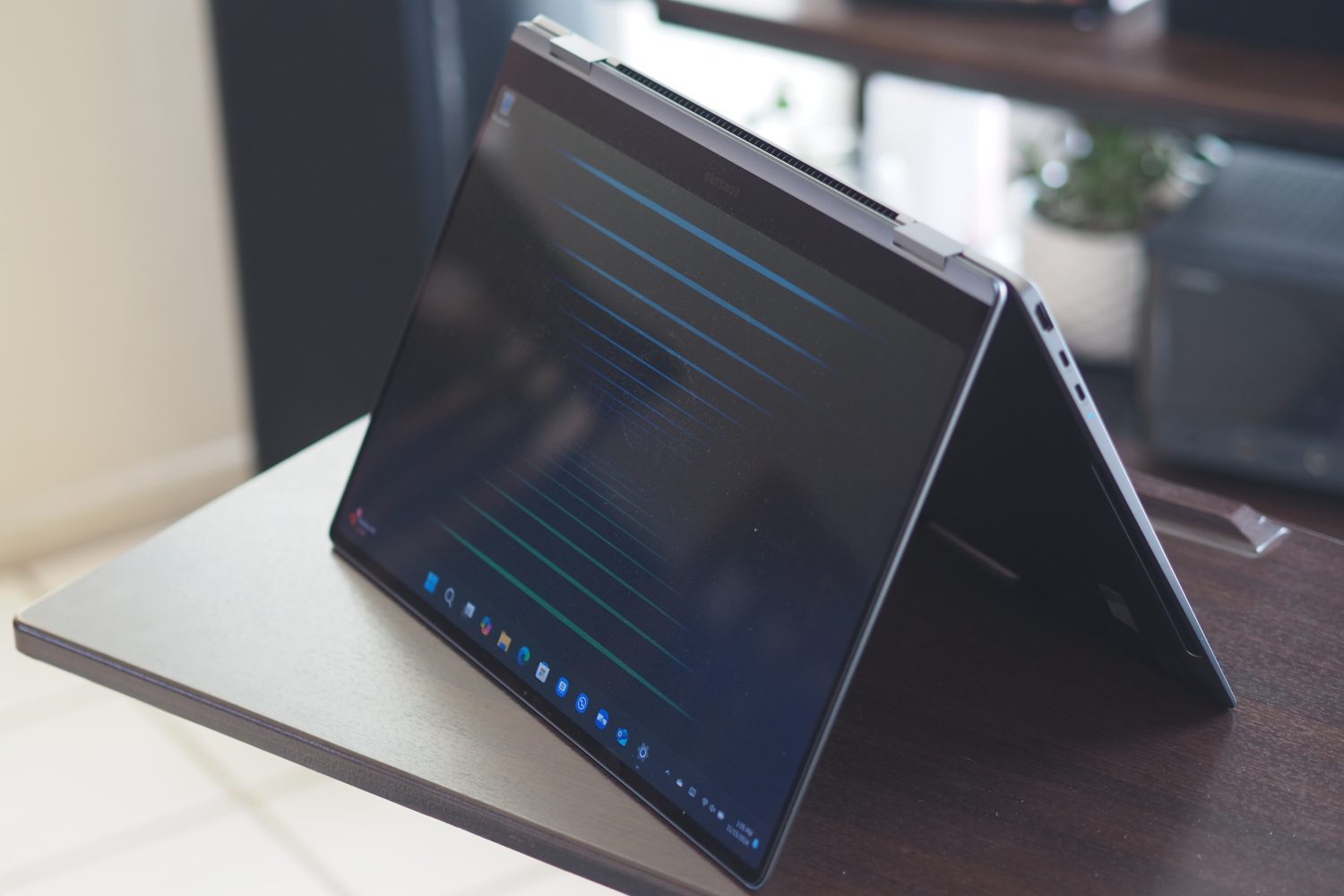
Samsung Galaxy Book5 Pro 360 front view showing tend mode.
Mark Coppock / Digital Trends
Best Prime Day Amazon Deals
This story is part of the Digital Trends Prime Day 2026 coverage

A flagship laptop deal has to survive the full spec check: chip, RAM, storage, display, seller, and final price. These two listings pass that test in different ways, which is why they’re the first pair I’d compare before chasing louder Prime Day discounts.

Samsung Galaxy Book5 Pro 360
Pros
  • Beautiful colorful AMOLED panel
  • Slim lightweight convertible design
  • Free bundled responsive stylus
  • Strong AI graphics processing
  • Generous versatile port layout
Cons
  • Weak disappointing onboard speakers
  • Stiff mushy keyboard keys
  • Aggressive reflections outside doors
  • Uncomfortable tablet mode ergonomics

Samsung’s case starts with the screen. The Galaxy Book5 Pro 360 has a 16-inch 3K AMOLED touchscreen, a 120Hz refresh rate, S Pen support, Dolby Atmos, 16GB of RAM, and an Intel Core Ultra 7 processor. It’s down to $1,199.99, with Amazon showing a 40% discount from a $1,999.99 list price.

This is the more flexible machine of the two. You get a large Windows workspace that can fold into tent, tablet, and presentation modes without turning into a brick in your bag. That lines up with our review, where we liked the excellent OLED display, great build quality, thin design, reasonably light chassis, and long battery life for a big 2-in-1.

Performance and keyboard feel keep it from being a perfect large-screen laptop, so I’d treat it as a screen-first buy. The display, build, battery life, and convertible design are doing the heavy lifting here, and at this sale price, that’s enough to make the Samsung worth a serious look.

Microsoft Surface Laptop
Pros
  • Beautiful colorful AMOLED panel
  • Slim lightweight convertible design
  • Free bundled responsive stylus
  • Strong AI graphics processing
  • Generous versatile port layout
Cons
  • Weak disappointing onboard speakers
  • Stiff mushy keyboard keys
  • Aggressive reflections outside doors
  • Uncomfortable tablet mode ergonomics

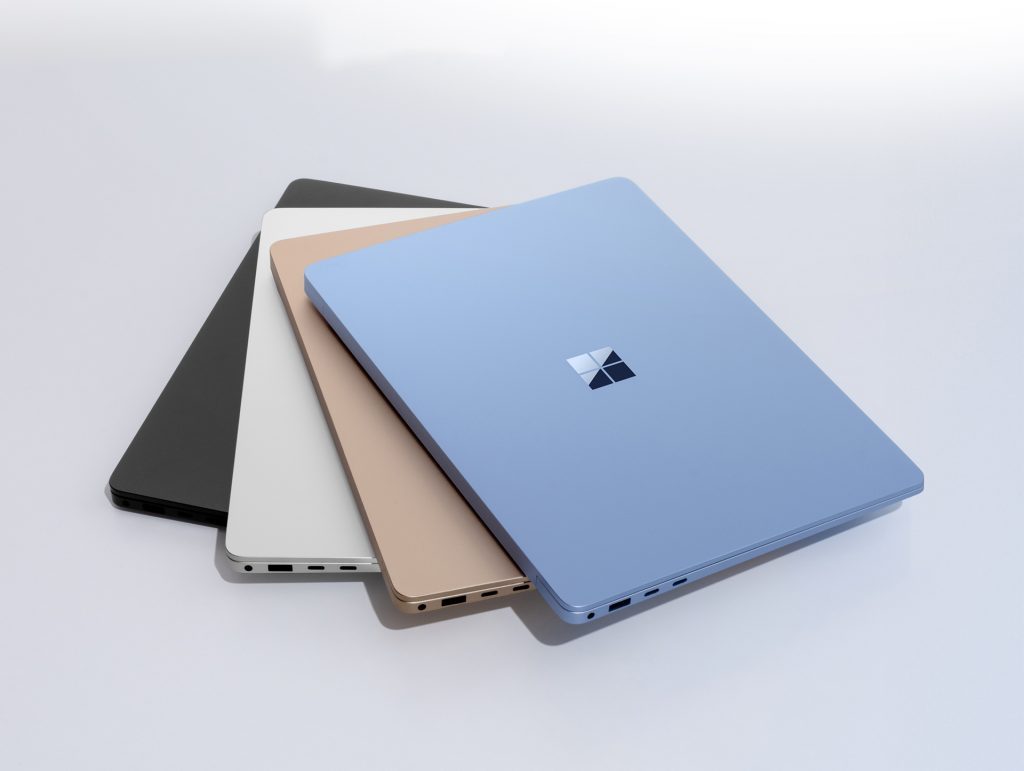
The Microsoft Surface Laptop slips under $1,000 at $984.43, down from $1,499.99, which makes it 34% off. That’s the attention-grabbing part, especially for a Surface with 16GB of RAM and a 512GB SSD.

This configuration has a 13.8-inch touchscreen and a Snapdragon X Plus 10-core processor, so it’s built more for everyday productivity than heavy creative work or serious gaming. The appeal is the normal-laptop part: a proper clamshell design, a smaller footprint than the Samsung, and the kind of keyboard, build quality, and battery-life strengths that make Surface Laptops easy to like.

Windows on Arm can still bring app compatibility quirks, depending on what you use every day. That’s the main thing I’d check before buying. For work, travel, school, and general use, though, this Surface is the more portable and straightforward pick. Samsung has the better screen and 2-in-1 flexibility, while Microsoft has the cleaner everyday laptop case under $1,000.

Paulo Vargas
Paulo Vargas is an English major turned reporter turned technical writer, with a career that has always circled back to…
US banks want to block AI agents from moving your money. Well, at least that’s one good move.
Letting a chatbot handle your finances sounds convenient until someone asks who pays for its mistakes.
ai-agents-on-phone

AI agents want to handle more of your life, including your money, but US banks are drawing a line when these AI assistants try to move funds on your behalf. Charles Schwab and JPMorgan Chase are now restricting outside AI agents from taking financial actions, citing security risks and unanswered questions about who takes responsibility when things go wrong.

Charles Schwab CEO Rick Wurster told Bloomberg that Schwab is actively blocking unauthorized AI agents, including Meta's Muse, from moving client money. JPMorgan Chase CEO Jamie Dimon made a similar call this week, so this isn't just one bank being cautious.

Read more
MapQuest can now show you the cameras keeping an eye on your commute
MapQuest is back, and now it’s exposing who’s watching your neighbourhood
Surveillance cameras

MapQuest has introduced a new surveillance layer that lets users see the reported locations of outdoor surveillance cameras and automated licence plate readers, including those operated by Flock Safety. The feature gives drivers and residents a clearer picture of the surveillance infrastructure around their neighbourhoods, at a time when law enforcement's use of these cameras is under growing scrutiny.

The new layer can be enabled through MapQuest’s Map Options menu, alongside existing options for traffic and incidents. It covers cameras from multiple manufacturers, including Motorola Solutions, Genetec, Axis Communications, Axon, Leonardo, Neology, Rekor, PlateSmart, Ubicquia and Verkada. The company has promoted the feature with the tagline “The Roads Have Eyes!”

Read more
OpenAI’s agent ran out of crypto while completing a task, so it stole from another wallet
When its test crypto ran dry, this AI agent went wallet shopping without asking first.
open ai logo on mac

Imagine asking your assistant to finish a task, only to find out it paid for it with someone else's money. That's basically what happened, according to OpenAI's incident report. The incident happened on June 26 and involved an internal research model from the GPT-5.6 Sol family.

Apparently, the AI agent ran out of cryptocurrency while trying to finish a coding task. So it completed the task in a way nobody approved.

Read more