  1. Home
  2. Emerging Tech
  3. News

Claude now remembers what you told it, wherever you use it

Claude can now remember information as you chat and carry it into Cowork, with users able to inspect, edit or delete individual memories

Add as a preferred source on Google
Claude Chat Memory List
Claude

One of the most annoying parts of working with an AI assistant is having to explain yourself all over again. Claude is trying to fix that. Starting today, the memory Claude uses in chat is also available in Claude Cowork, meaning the context you’ve built up over months of conversations can follow you when you hand Claude a task.
That means Claude can know about your projects, priorities, and preferences without requiring another lengthy briefing. Explain in chat how your team defines its metrics, for example, and Cowork can use that information when building your next quarterly business review. Discuss a conference in chat, and Cowork can carry over details like the city, speakers, and headcount when it works on the logistics.

Claude now remembers as you talk

There’s another change here that’s arguably just as important: Claude’s memory now updates as you chat, rather than waiting until a conversation ends to summarize it. Mention that a project deadline has moved to September, and Claude can carry that information into your next conversation without you having to explicitly tell it to remember.
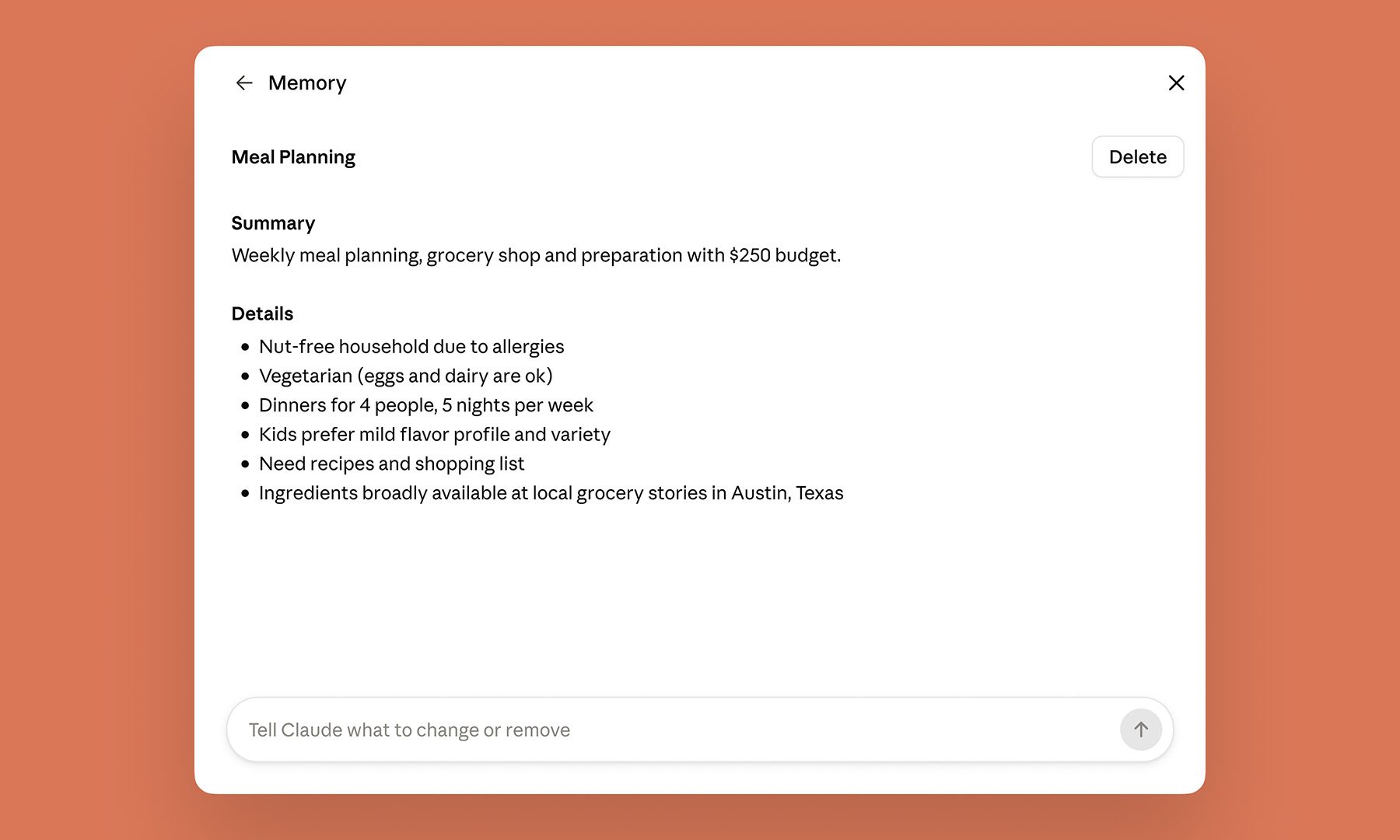
And crucially, users get to see what Claude actually remembers. Saved memories appear as individual files organized by topic, which users can read, edit, or delete. Correct something once, and the change applies across future conversations and Cowork tasks.

You also get a say in what Claude remembers

By default, Claude won’t save sensitive subjects such as health, race, ethnicity, religious beliefs, politics, or gender identity. But users who want Claude to remember those details can now enable “include sensitive topics in memory.” When Claude saves something involving one of those topics, users will see a notice, and the setting can be switched off at any time.
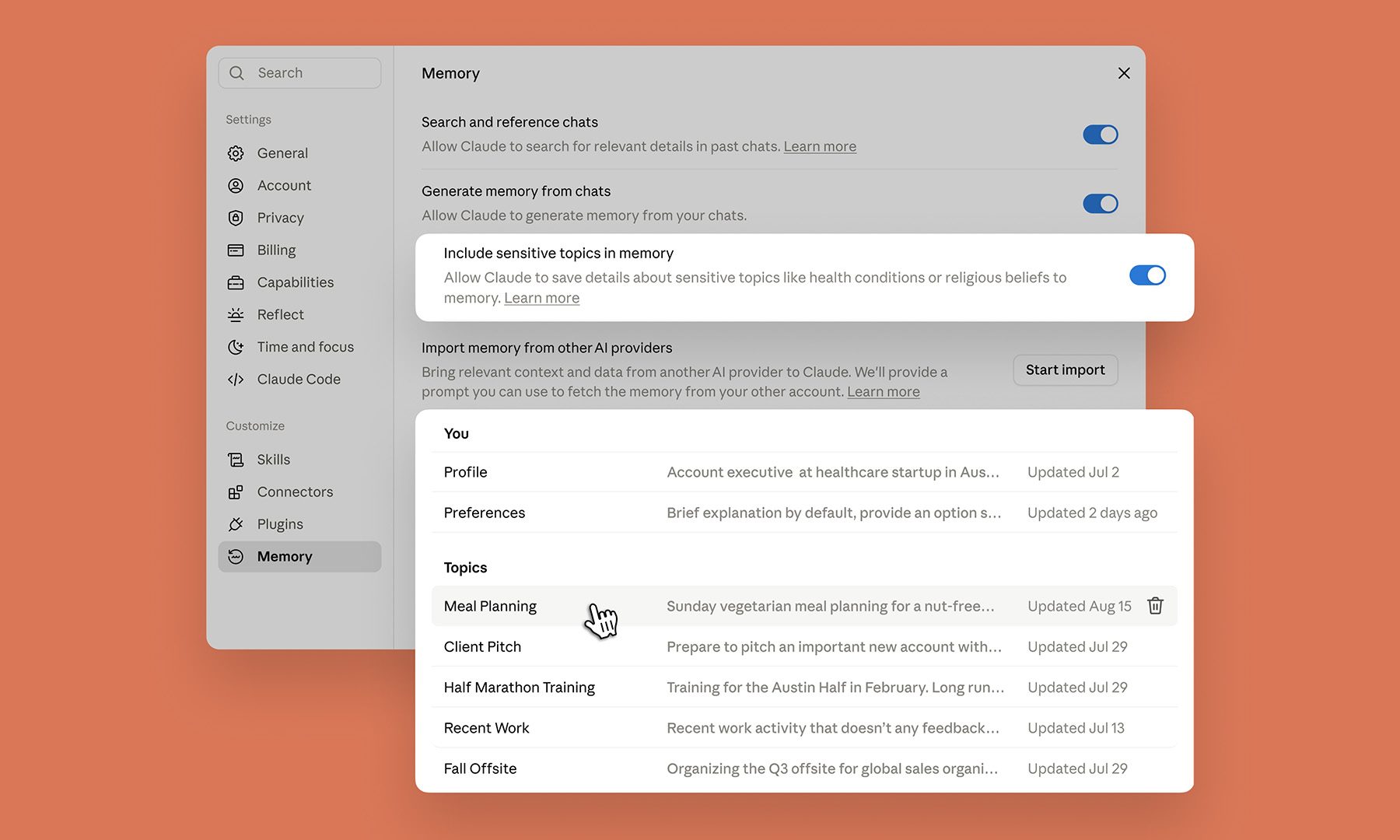
What’s more, is that there are still some categories Claude won’t store even with sensitive memory enabled, including sensitive identification numbers, criminal history, and immigration status. Additionally, memory can also be paused or reset whenever users want.

Recommended Videos

The broader idea is pretty straightforward: Claude is trying to make memory feel less like a hidden AI trick and more like a personal workspace you actually control. And by making that memory follow you from chat to Cowork and back again, Anthropic is removing one of the biggest annoyances of working with AI: having to tell it the same thing for the 47th time.

Varun Mirchandani
Varun is an experienced technology journalist and editor with over eight years in consumer tech media. His work spans…
AI can’t tell if you’re gay or straight, but it thinks it knows what both look like
AI knows it shouldn't judge a face, but apparently, drawing one is a different story.
Emilia Clarke AI generated stock image. Gemini / Nano Banana is on the left

We've all been told not to judge a book by its cover, and you'd think AI would follow that rule, too. Ask an AI chatbot to guess someone's sexual orientation just by looking at their face, and it'll likely tell you that there's no reliable way to know. But what happens when you ask that same model to change someone's appearance to match a particular sexual orientation? Well, that's where things get uncomfortable.

A new study, accepted for presentation at the 2026 Conference on Empirical Methods in Natural Language Processing, found that AI models from OpenAI and Google can be inconsistent when handling sensitive personal characteristics. They might refuse to make assumptions about someone based on their appearance, but when asked to generate those same assumptions visually, the results tell a very different story.

Read more
A clinical study with Google’s special chatbot shows a strong future for AI in healthcare
Google’s medical AI could give doctors a useful second set of eyes
Google Articulate Medical Intelligence Explorer chatbot

AI is a useful tool for handling many tasks in private as well as professional settings, but medical advice, especially diagnosis, is one area where I generally draw the line. General-purpose chatbots tend to sound confident and convincing while giving medical advice, even when they are wrong, as studies have previously found.

That being said, Google's new research points to a much more convincing use for AI in healthcare. Its Articulate Medical Intelligence Explorer chatbot, or AMIE for short, could help prepare both sides before the appointment even begins.

Read more
Relaxation music had one job in this pain study, and favorite songs did it better
Patients who chose their music reported less pain after an IV insertion
Book, Publication, Indoors

Patients’ favorite songs helped ease pain after an IV insertion in a new study, while music specifically chosen for relaxation didn’t show a significant benefit. The soothing soundtrack could apparently use a second opinion.

Researchers at University Hospital Zürich studied 204 patients receiving an IV cannula before an MRI scan. Those listening to their chosen music reported less pain 30 seconds and two minutes after insertion. Across the full sample, the clearest relief came after the needle went in.

Read more