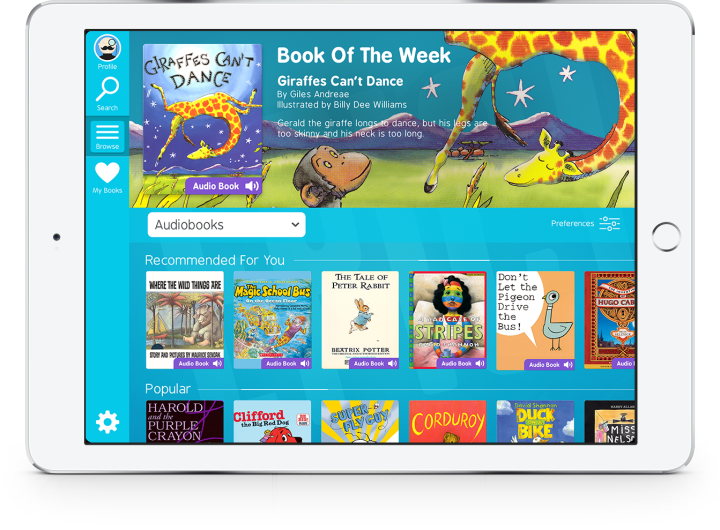
If the true power of digitization lies in expansion of access, then children’s eBook subscription service Epic! has struck gold. Today, less than two years after its initial launch, the company announced that more than 10 million books have been read on the Epic! platform, and with a library that is growing every day, this number and perhaps children’s interest in reading will continue to burgeon.
With instant access to over 10,000 books with a $4.99 monthly subscription, parents are being afforded brand new ways to bring an enormous and high-quality digital library into the comfort of their own homes. And today, Epic! also added 500 Spanish and bilingual Spanish/English books to its library, further broadening the young horizons of our posterity.
“Spanish is the most popular non-English language in the U.S., and one of the fastest-growing languages worldwide,” noted Epic! CEO Suren Markosian. “Epic!’s new library of high-quality Spanish and bilingual Spanish/English books will allow Spanish speakers and those with a desire to learn Spanish instant access to these books as part of Epic!’s unlimited library.”
Better still, the platform has also added 1,000 new audiobooks so that children can consume literature in all different forms — “We know from research how important it is for children to hear spoken language and have stories read to them,” Markosian added. “Audiobooks allow a child to listen and imagine as the story takes shape in their mind.”
With more than 2 million books read last month alone and more than 100,000 books being read every day, Epic! is certainly helping shape the stories of kids across the country. And perhaps more importantly, the platform is reinvigorating an interest in reading that seemed to be losing ground to games, television, and other forms of media.
But a number of parents have noted that Epic! has helped bring books back to the entertainment forefront. “My child is now choosing to read on the iPad instead of playing games because of Epic!,” one proud mama wrote. Another called Epic! a “godsend” for parents who don’t have time to run to the library, find new and interesting books, and potentially incur late fees.
And it isn’t just parents who are benefiting from the epic service at Epic! In a program called Epic! for Educators, the company offers an entire library’s worth of books to elementary school teachers and librarians across the U.S. and Canada, all for free. As the company points out, given the shrinking library and education budgets in many public schools across school districts, this service allows for unparalleled access both in and out of the classroom.
So get Epic! and get your child reading.
Editors' Recommendations
- Amazon’s new Your Books hub will nudge you to buy more books
- Barnes & Noble unveils budget e-book reader
- What is Kindle Unlimited? Amazon’s book-borrowing service explained
- The Lenovo ThinkBook Plus Gen 2’s awesome e-ink screen is even bigger this time
- Apple One subscription brings all of Apple’s services together starting at $15 per month