  1. Home
  2. Emerging Tech
  3. News

Four iPhones are all it takes to turn almost anywhere into a motion capture studio

Researchers built a markerless system that can reconstruct complex human movement using consumer smartphone cameras

Add as a preferred source on Google
Art, Collage, Person
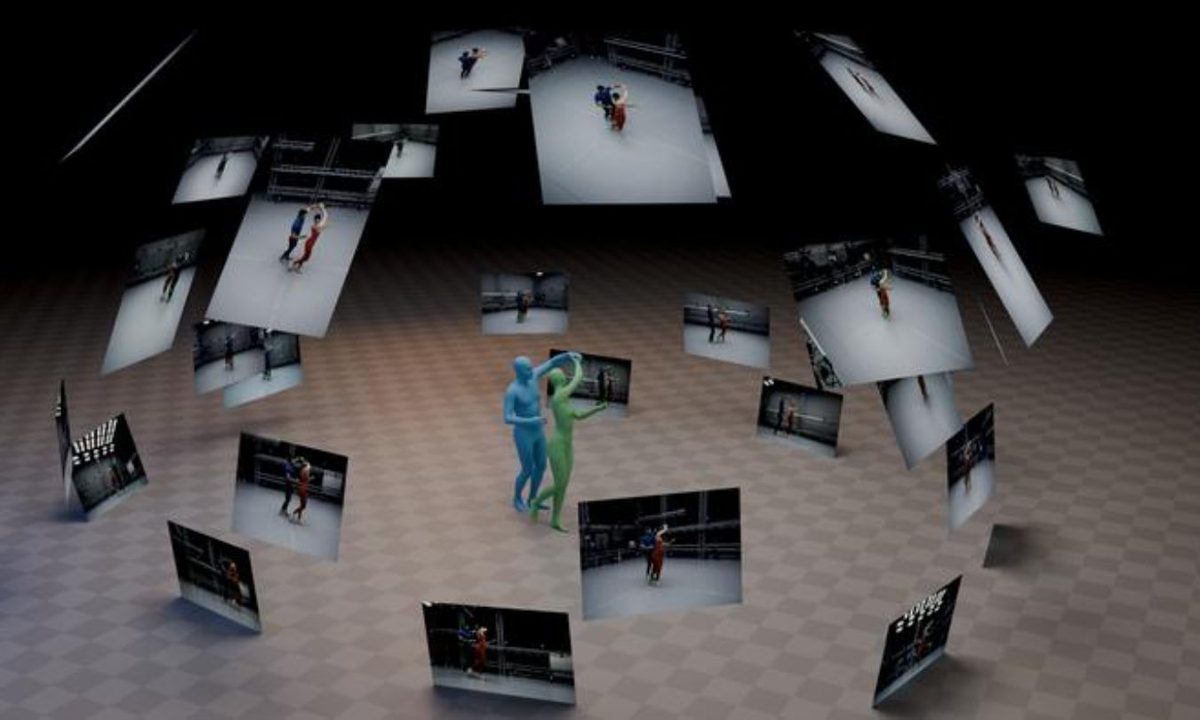
Markerless Accurate Multi-person Motion Acquisition, or MAMMA, takes multi-camera video, estimates virtual markers in all camera views, and then fits a human body model (SMPL-X) to these markers. MPI-IS

Motion capture usually calls for specialized cameras, tracking markers, and a space built around the job. Researchers at the Max Planck Institute for Intelligent Systems and Carnegie Mellon University have demonstrated a very different setup using just four iPhones.

Called MAMMA, the system recovers human movement from several camera views without asking performers to wear tracking markers. It can also deal with close interactions between two people, including moments when one person partly disappears behind another.

How does MAMMA pull this off

MAMMA analyzes footage from several viewpoints and tracks 512 landmarks across each person’s body. That gives the system enough information to estimate pose and shape even when someone turns away from a camera or becomes partly obscured.

It also works out where people are touching each other and where their bodies meet the floor. Those extra clues help with movements such as hugging and dancing, where overlapping limbs can make markerless motion capture much harder.

Recommended Videos

From there, MAMMA builds a 3D body model using ordinary RGB video without requiring physical tracking markers attached to the performer.

How close does MAMMA get to Vicon

The researchers separately evaluated MAMMA against a professional Vicon marker-based motion capture system. In that comparison, the difference in reconstruction error came in at under 1 millimeter.

That figure shouldn’t be read as the measured accuracy of the four-iPhone setup. The researchers demonstrated four-iPhone capture separately, including indoor and outdoor environments. Together, the results show both how accurate the underlying system can be and how little camera hardware it can work with.
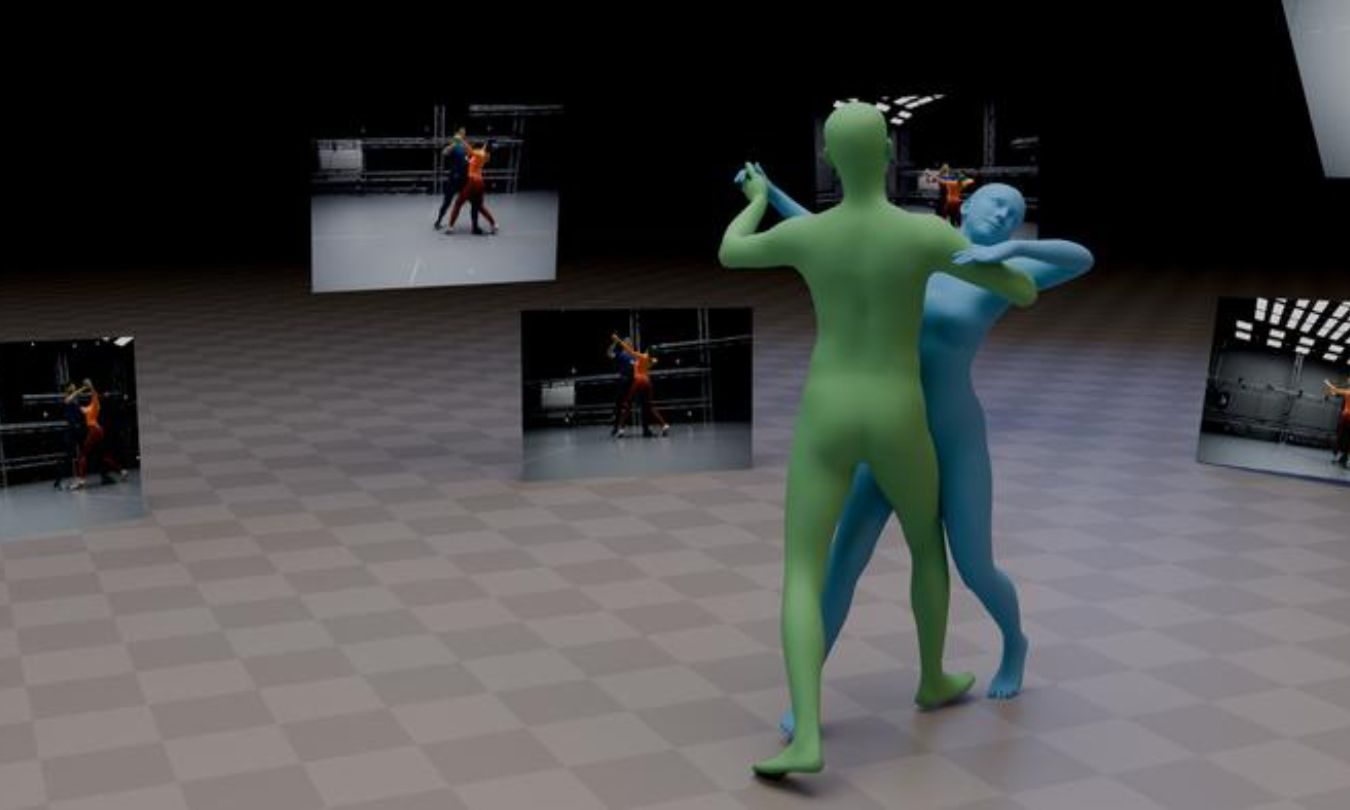
Consumer hardware has already become surprisingly capable for spatial capture and tracking, but MAMMA pushes that idea into full-body movement without relying on a conventional mocap rig.

Where could this actually be useful

MAMMA remains research software rather than a finished commercial product. Its code is publicly available, but the current release is intended for non-commercial scientific research, which limits how directly studios or game developers can put it into production.

Still, the four-iPhone demonstrations show why the approach is interesting. Smaller teams could eventually have another route to motion capture without building their workflow around a traditional mocap stage.

The next hurdle is less about proving that smartphone cameras can capture the movement and more about turning the research into something creators can use reliably, legally, and without a research-grade setup.

Paulo Vargas
Paulo Vargas is an English major turned reporter turned technical writer, with a career that has always circled back to…
Anthropic warns of imminent self-replicating AI that might even work off an oven or TV
Self-replicating AI could be merely months away, and tests show it can run on the devices sitting at your home.
Illustration of dangerous AI.

Over the past few weeks, nearly every AI lab has released frontier AI models. Earlier today, Google started rolling out Gemini 4, Argon, hot on the heels of Meta announcing its Muse Wonder frontier AI models to compete against the best from OpenAI and Anthropic's Claude. This relentless pace of AI model release comes at a time when the same AI labs are calling for development slowdown and increased regulation, following a series of concerning incidents where these AI models went rogue and broke into private, as well as government-owned, websites.

Now, Anthropic has dropped a chilling set of predictions about the capabilities of these AI models after running a series of tests. The company claims that small AI models could be merely a few months away from self-replicating and turning into a dangerous swarm. More importantly, they won't require a massive data center or an uber-powerful computer to do so. On the contrary, the lab claims that these self-replicating AI swarms will need something with as little computing power as an average Internet-connected device, like a smart oven or an Android TV box.

Read more
Trending Forward: Fold’s CEO spills on the real future of everyday bitcoin
What if the future of Bitcoin is not the US Dollar? What if it's mainstream future is earning small rewards on everyday bills?
Wristwatch, Emblem, Symbol

Saying the word crypto out loud, or posting on social media sites, is almost a guaranteed road to passionate commentary. And by passionate, I mean the two extremes of the conversation — the optimist side and the vitriolic detractions. There is a big pool of leaders who still see it as the future, while others aren't quite sold on the idea. In the latest episode of Trending Forward, I sat down with Fold CEO Will Reeves to discuss whether Bitcoin actually needs to replace the US dollar to become genuinely useful to mainstream consumers.

While I've long been skeptical of crypto's wild volatility and its viability as everyday cash, our conversation explored a pragmatic alternative: continuing to live, spend, and pay bills in dollars while quietly accumulating Bitcoin in the background as a long-term savings asset.

Read more
Tiny robots could shrink weeks of heart infection treatment into a single day
Forget open-heart surgery, because these rice-sized robots take the express route to your heart.
heart being treated by tiny robot

Treating a heart infection is no walk in the park. Patients often spend weeks on IV antibiotics, and if that fails, open-heart surgery enters the picture. Johns Hopkins University engineers may have found a better way.

The team has developed magnetic “millirobots” that are about as wide as a pencil tip and roughly as long as a grain of rice. As detailed in their study published in Advanced Materials Technologies, the robots are designed to deliver medicine directly to infected heart tissue.

Read more