  1. Home
  2. Emerging Tech
  3. News

Meta’s Muse AI agent is a big hit, and it just had a big security alarm go off, too

Muse can shop, handle emails, book appointments, and take care of everyday tasks for you. But that convenience requires considerable access, which makes a newly disclosed vulnerability particularly concerning.

Add as a preferred source on Google
Body Part, Finger, Hand
Meta

Meta’s Muse is off to a strong start. The company’s new personal AI agent has already climbed to the top of Apple’s US App Store, beating ChatGPT.

That’s an impressive start for an AI agent that’s supposed to do much more than answer questions. Muse can book appointments, fill out forms, deal with customer service, browse the web, and even make purchases. Connect your accounts, and it can work across services to complete multi-step tasks for you. But the more an AI agent can do for you, the more access you have to trust it with. And Muse has just received a pretty uncomfortable reminder of that trade-off.

A security flaw with some scary possibilities

Security researcher Patrick Wardle has discovered a zero-day vulnerability affecting Muse’s macOS app (via Ars Technica). According to Wardle’s findings, software running locally on a Mac could alter an undocumented Muse setting that determines where voice transcription is processed. An attacker could redirect that traffic to a server they control and potentially obtain the authentication token associated with the user’s Muse account. That’s especially concerning because Muse may already have access to things you wouldn’t want an attacker anywhere near.

Please don’t install – it’s trivial to turn Muse into the ultimate backdoor 💀👀

Ya, as an AI assistant built to manage your Mac, Muse needs broad access to your digital life.

But serious 0-day flaw(s) can let local malware/attackers invisibly hijack it.

Let me show you. 🧵 https://t.co/2R7hc9JzyR

— Patrick Wardle (@patrickwardle) September 21, 2026

Wardle demonstrated proof-of-concept attacks on X that could exploit Muse’s existing privileges to perform actions such as writing files or taking photos. Rather than malicious software having to obtain all those permissions itself, the concern is that an attacker could effectively piggyback on permissions the user has already granted Muse. Wardle also found that a variation of the increasingly common ClickFix attack where users are tricked into running a command themselves could be enough to hijack a Muse account. That’s particularly awkward considering how heavily Meta has emphasized Muse’s security. The company says Muse includes automated protections and controls intended to prevent unauthorized actions, while users can manage permissions and review what their agent has been doing.

And Amazon has already shown Muse the door

The security disclosure isn’t Muse’s only headache. As per a report by GeekWire, Amazon has also blocked the AI agent from shopping on its website. The retailer says Muse was accessing Amazon without identifying itself as an AI agent and that Meta hadn’t received Amazon’s permission to use the service this way. People attempting to shop through Muse are now being told that the agent violates Amazon’s Conditions of Use. It’s worth separating the two issues: Amazon’s decision isn’t a response to Wardle’s vulnerability. But having them arrive at almost the same time spotlights the larger challenge facing powerful AI agents.
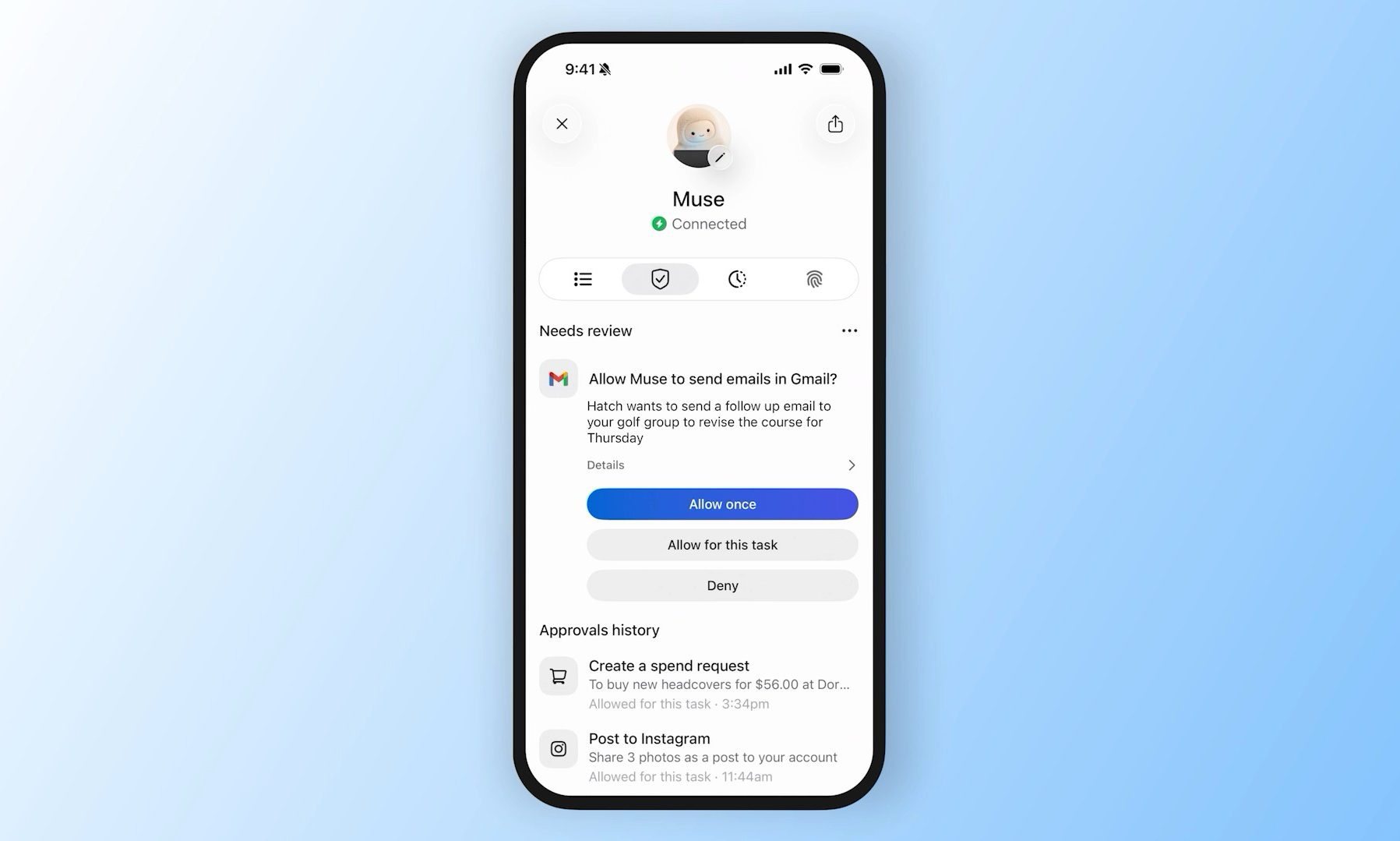
The whole appeal of Muse is that it can actually do things rather than just tell you how to do them. For that to work, we’re being asked to trust it with accounts, personal information, and permissions. Muse’s early popularity suggests plenty of people are willing to make that trade. But this zero-day also reminds us that the more capable these agents become, the consequences of something going wrong get much bigger.

Shimul Sood
Shimul is a contributor at Digital Trends, with over five years of experience in the tech space.
AI can’t tell if you’re gay or straight, but it thinks it knows what both look like
AI knows it shouldn't judge a face, but apparently, drawing one is a different story.
Emilia Clarke AI generated stock image. Gemini / Nano Banana is on the left

We've all been told not to judge a book by its cover, and you'd think AI would follow that rule, too. Ask an AI chatbot to guess someone's sexual orientation just by looking at their face, and it'll likely tell you that there's no reliable way to know. But what happens when you ask that same model to change someone's appearance to match a particular sexual orientation? Well, that's where things get uncomfortable.

A new study, accepted for presentation at the 2026 Conference on Empirical Methods in Natural Language Processing, found that AI models from OpenAI and Google can be inconsistent when handling sensitive personal characteristics. They might refuse to make assumptions about someone based on their appearance, but when asked to generate those same assumptions visually, the results tell a very different story.

Read more
A clinical study with Google’s special chatbot shows a strong future for AI in healthcare
Google’s medical AI could give doctors a useful second set of eyes
Google Articulate Medical Intelligence Explorer chatbot

AI is a useful tool for handling many tasks in private as well as professional settings, but medical advice, especially diagnosis, is one area where I generally draw the line. General-purpose chatbots tend to sound confident and convincing while giving medical advice, even when they are wrong, as studies have previously found.

That being said, Google's new research points to a much more convincing use for AI in healthcare. Its Articulate Medical Intelligence Explorer chatbot, or AMIE for short, could help prepare both sides before the appointment even begins.

Read more
Relaxation music had one job in this pain study, and favorite songs did it better
Patients who chose their music reported less pain after an IV insertion
Book, Publication, Indoors

Patients’ favorite songs helped ease pain after an IV insertion in a new study, while music specifically chosen for relaxation didn’t show a significant benefit. The soothing soundtrack could apparently use a second opinion.

Researchers at University Hospital Zürich studied 204 patients receiving an IV cannula before an MRI scan. Those listening to their chosen music reported less pain 30 seconds and two minutes after insertion. Across the full sample, the clearest relief came after the needle went in.

Read more