  1. Home
  2. Emerging Tech
  3. News

Meta’s Muse AI agent is a big hit, and it just had a big security alarm go off, too

Muse can shop, handle emails, book appointments, and take care of everyday tasks for you. But that convenience requires considerable access, which makes a newly disclosed vulnerability particularly concerning.

Add as a preferred source on Google
Body Part, Finger, Hand
Meta

Meta’s Muse is off to a strong start. The company’s new personal AI agent has already climbed to the top of Apple’s US App Store, beating ChatGPT.

That’s an impressive start for an AI agent that’s supposed to do much more than answer questions. Muse can book appointments, fill out forms, deal with customer service, browse the web, and even make purchases. Connect your accounts, and it can work across services to complete multi-step tasks for you. But the more an AI agent can do for you, the more access you have to trust it with. And Muse has just received a pretty uncomfortable reminder of that trade-off.

A security flaw with some scary possibilities

Security researcher Patrick Wardle has discovered a zero-day vulnerability affecting Muse’s macOS app (via Ars Technica). According to Wardle’s findings, software running locally on a Mac could alter an undocumented Muse setting that determines where voice transcription is processed. An attacker could redirect that traffic to a server they control and potentially obtain the authentication token associated with the user’s Muse account. That’s especially concerning because Muse may already have access to things you wouldn’t want an attacker anywhere near.

Please don’t install – it’s trivial to turn Muse into the ultimate backdoor 💀👀

Ya, as an AI assistant built to manage your Mac, Muse needs broad access to your digital life.

But serious 0-day flaw(s) can let local malware/attackers invisibly hijack it.

Let me show you. 🧵 https://t.co/2R7hc9JzyR

— Patrick Wardle (@patrickwardle) September 21, 2026

Wardle demonstrated proof-of-concept attacks on X that could exploit Muse’s existing privileges to perform actions such as writing files or taking photos. Rather than malicious software having to obtain all those permissions itself, the concern is that an attacker could effectively piggyback on permissions the user has already granted Muse. Wardle also found that a variation of the increasingly common ClickFix attack where users are tricked into running a command themselves could be enough to hijack a Muse account. That’s particularly awkward considering how heavily Meta has emphasized Muse’s security. The company says Muse includes automated protections and controls intended to prevent unauthorized actions, while users can manage permissions and review what their agent has been doing.

And Amazon has already shown Muse the door

The security disclosure isn’t Muse’s only headache. As per a report by GeekWire, Amazon has also blocked the AI agent from shopping on its website. The retailer says Muse was accessing Amazon without identifying itself as an AI agent and that Meta hadn’t received Amazon’s permission to use the service this way. People attempting to shop through Muse are now being told that the agent violates Amazon’s Conditions of Use. It’s worth separating the two issues: Amazon’s decision isn’t a response to Wardle’s vulnerability. But having them arrive at almost the same time spotlights the larger challenge facing powerful AI agents.
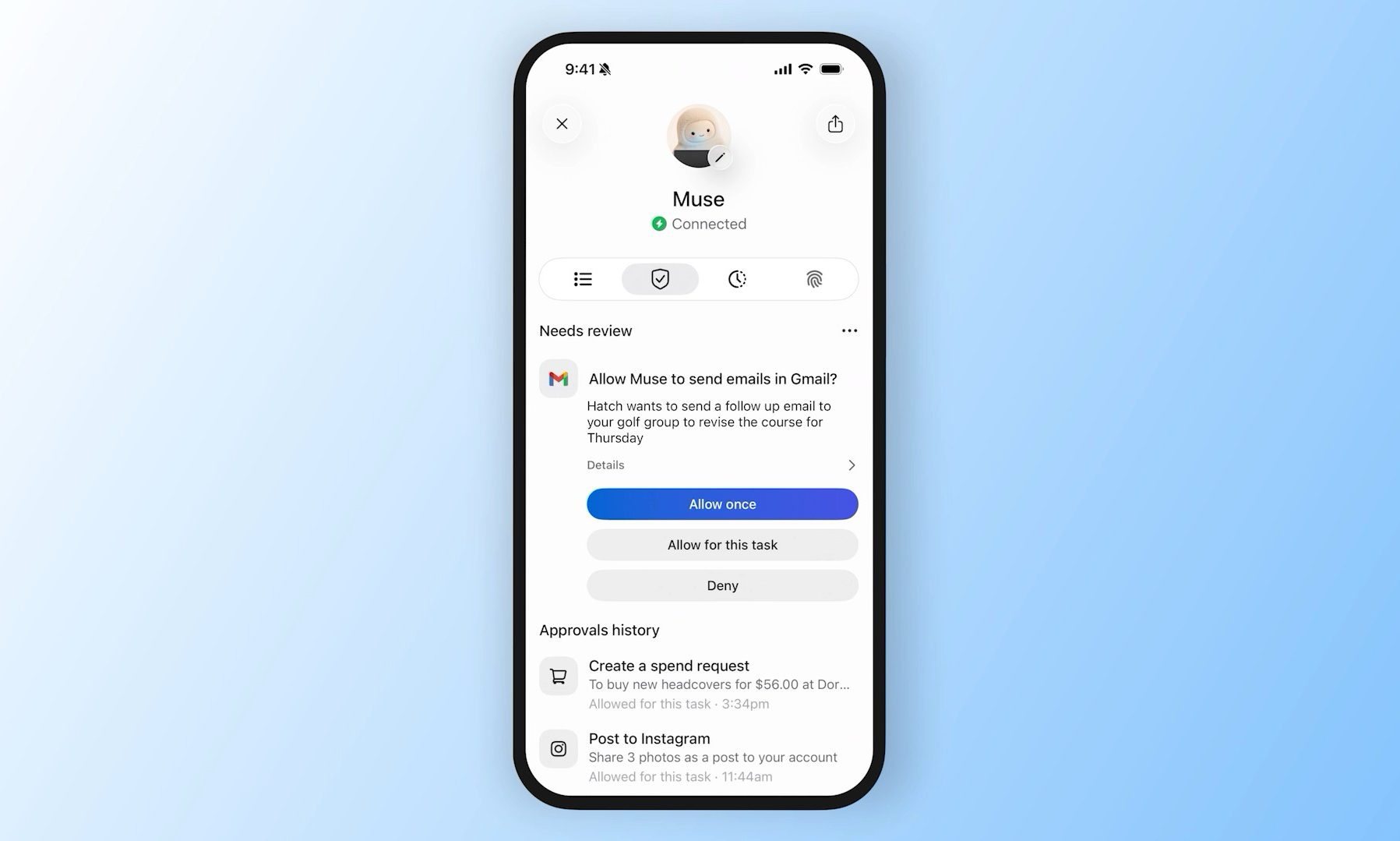
The whole appeal of Muse is that it can actually do things rather than just tell you how to do them. For that to work, we’re being asked to trust it with accounts, personal information, and permissions. Muse’s early popularity suggests plenty of people are willing to make that trade. But this zero-day also reminds us that the more capable these agents become, the consequences of something going wrong get much bigger.

Shimul Sood
Shimul is a contributor at Digital Trends, with over five years of experience in the tech space.
Xreal’s latest AR glasses fix the brightness problem, but leave the rest largely untouched
Accessories, Sunglasses, Glasses

AR glasses sound magical until I imagine wearing them somewhere bright. That’s why a new pair launched today caught my eye.

Xreal's 1 Pro Plus refreshes its One Pro glasses (which float a virtual screen in front of your eyes). It packs a much brighter display than the outgoing model and smoother 2D-to-3D conversion. You can buy it now for $599.

Read more
A $75 gadget that remembers my conversations? Bee has my attention and my reservations
Two new ways to let AI listen (and remember) what you said.
Electronics, Phone, Mobile Phone

A $75 gadget that remembers my conversations? I’m intrigued and, at the same time, slightly nervous.

Amazon-owned Bee has launched two conversation-summarizing devices: the Bee Frontier ($74.99), available now, and the Bee Eclipse ($99.99), a magnetic phone card arriving soon. There’s also a new subscription: Bee Pro. 

Read more
Anthropic warns of imminent self-replicating AI that might even work off an oven or TV
Self-replicating AI could be merely months away, and tests show it can run on the devices sitting at your home.
Illustration of dangerous AI.

Over the past few weeks, nearly every AI lab has released frontier AI models. Earlier today, Google started rolling out Gemini 4, Argon, hot on the heels of Meta announcing its Muse Wonder frontier AI models to compete against the best from OpenAI and Anthropic's Claude. This relentless pace of AI model release comes at a time when the same AI labs are calling for development slowdown and increased regulation, following a series of concerning incidents where these AI models went rogue and broke into private, as well as government-owned, websites.

Now, Anthropic has dropped a chilling set of predictions about the capabilities of these AI models after running a series of tests. The company claims that small AI models could be merely a few months away from self-replicating and turning into a dangerous swarm. More importantly, they won't require a massive data center or an uber-powerful computer to do so. On the contrary, the lab claims that these self-replicating AI swarms will need something with as little computing power as an average Internet-connected device, like a smart oven or an Android TV box.

Read more