  1. Home
  2. Emerging Tech
  3. News

Scientists turned a regular camera into a much cheaper solar-panel testing tool

Instead of relying only on expensive lab equipment, researchers showed that modified consumer camera hardware can do part of the job

Add as a preferred source on Google
Electrical Device, Solar Panels, Outdoors
Watt A Lot / Unsplash

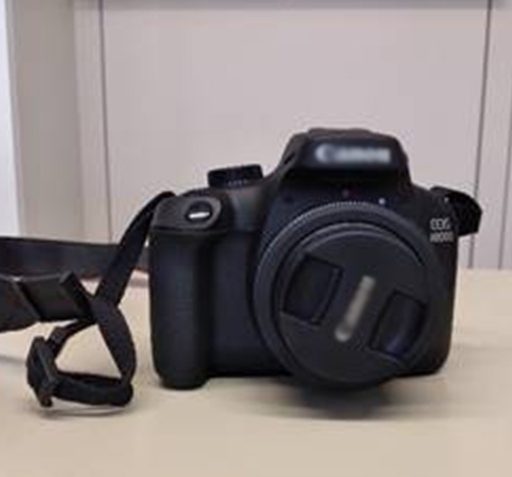
A regular digital camera isn’t the first thing you’d expect to use for this kind of solar-cell measurement. Researchers have now shown that much cheaper consumer camera hardware can handle part of a job normally done with carefully calibrated scientific imaging gear, provided it’s modified and calibrated first.

Their setup photographs the faint infrared glow produced when electricity is pushed through solar cells. Once the camera’s response is properly mapped, those images can reveal useful performance data, including a cell’s open-circuit voltage.

How does the cheaper camera method work

Solar cells give off a faint infrared signal when they’re powered. Differences in that signal can reveal how well individual parts of the cell are performing.

Recommended Videos

Instead of relying on a purpose-built scientific camera, the researchers built a calibration model around an inexpensive digital camera. That lets the system translate image brightness into measurements rather than merely showing which areas look brighter or darker.

They tested the method on solar modules spanning more than 45 years, from hardware dating back to 1978 to modern industrial modules. That gave the researchers a broad range of solar technology to test the approach against.
What’s the catch with calling it a normal camera

The hardware was consumer-grade, but this wasn’t a camera pulled straight from a store shelf and pointed at a rooftop panel.

The model used in the experiment lacked the infrared-blocking filter found in most consumer cameras. The researchers also added a long-pass filter so the sensor could isolate the light they needed.

Calibration does much of the heavy lifting. The system has to know exactly how the camera responds to the incoming signal before image brightness can be translated into useful performance data.

So the appeal isn’t that an ordinary camera suddenly replaces lab equipment. It’s that affordable imaging hardware can become far more capable when the filtering and calibration around it are precise enough.

Where could this go next

The approach could eventually be adapted for other types of solar-cell imaging, including photoluminescence measurements. Daylight measurements are another possible next step.

If daylight measurements work as hoped, the technique could become useful in a wider range of conditions. For now, the research shows that a relatively ordinary consumer camera can do work that would normally call for much more specialized imaging hardware.

Paulo Vargas
Paulo Vargas is an English major turned reporter turned technical writer, with a career that has always circled back to…
Anthropic warns of imminent self-replicating AI that might even work off an oven or TV
Self-replicating AI could be merely months away, and tests show it can run on the devices sitting at your home.
Illustration of dangerous AI.

Over the past few weeks, nearly every AI lab has released frontier AI models. Earlier today, Google started rolling out Gemini 4, Argon, hot on the heels of Meta announcing its Muse Wonder frontier AI models to compete against the best from OpenAI and Anthropic's Claude. This relentless pace of AI model release comes at a time when the same AI labs are calling for development slowdown and increased regulation, following a series of concerning incidents where these AI models went rogue and broke into private, as well as government-owned, websites.

Now, Anthropic has dropped a chilling set of predictions about the capabilities of these AI models after running a series of tests. The company claims that small AI models could be merely a few months away from self-replicating and turning into a dangerous swarm. More importantly, they won't require a massive data center or an uber-powerful computer to do so. On the contrary, the lab claims that these self-replicating AI swarms will need something with as little computing power as an average Internet-connected device, like a smart oven or an Android TV box.

Read more
Trending Forward: Fold’s CEO spills on the real future of everyday bitcoin
What if the future of Bitcoin is not the US Dollar? What if it's mainstream future is earning small rewards on everyday bills?
Wristwatch, Emblem, Symbol

Saying the word crypto out loud, or posting on social media sites, is almost a guaranteed road to passionate commentary. And by passionate, I mean the two extremes of the conversation — the optimist side and the vitriolic detractions. There is a big pool of leaders who still see it as the future, while others aren't quite sold on the idea. In the latest episode of Trending Forward, I sat down with Fold CEO Will Reeves to discuss whether Bitcoin actually needs to replace the US dollar to become genuinely useful to mainstream consumers.

While I've long been skeptical of crypto's wild volatility and its viability as everyday cash, our conversation explored a pragmatic alternative: continuing to live, spend, and pay bills in dollars while quietly accumulating Bitcoin in the background as a long-term savings asset.

Read more
Tiny robots could shrink weeks of heart infection treatment into a single day
Forget open-heart surgery, because these rice-sized robots take the express route to your heart.
heart being treated by tiny robot

Treating a heart infection is no walk in the park. Patients often spend weeks on IV antibiotics, and if that fails, open-heart surgery enters the picture. Johns Hopkins University engineers may have found a better way.

The team has developed magnetic “millirobots” that are about as wide as a pencil tip and roughly as long as a grain of rice. As detailed in their study published in Advanced Materials Technologies, the robots are designed to deliver medicine directly to infected heart tissue.

Read more