  1. Home
  2. Emerging Tech
  3. News

Scientists found a way to turn plastic bottles into cookies you can actually eat

Add as a preferred source on Google
hand holding a cookie
American Chemical Society
Promotional image for Tech For Change. Person standing on solar panel looking at sunset.
This story is part of Tech for Change: an ongoing series in which we shine a spotlight on positive uses of technology, and showcase how they're helping to make the world a better place.

Plastic bottles and cookies rarely show up in the same sentence, but a team of researchers just gave us a reason to talk about both together. According to Science Daily, scientists at Southern Illinois University Carbondale have engineered yeast that can turn waste from plastic bottles and old crop leftovers into real food ingredients and create cookies.

The work began as part of a NASA program exploring how astronauts might produce their own food during deep space missions, since resupply runs from Earth aren’t exactly realistic that far out. The researchers’ big insight was simple: plastic bottles are packed with carbon, and so, as it turns out, is food. That single connection became the foundation for everything that followed.

What if your next meal started as a plastic bottle?

Instead of relying on chemical reactions to break the plastic apart, the team handed that job over to microbes. PET bottles and leftover corn stalks are first cooked down under water, heat, oxygen, and pressure until they shrink into simple molecules that yeast can actually feed on. From there, specially engineered yeast strains take over, converting those molecules into usable food components like proteins and fats.

How do you turn a plastic bottle into something edible?

Once ready, that yeast-made mixture gets combined with starch, fiber, and a sweetener, and the whole thing is fed into a 3D printer that shapes it into small cookies called µBites. So far, people have only smelled the cookies, since actual taste tests still need approval to move forward, but most said they’d happily eat one if food ever ran short.
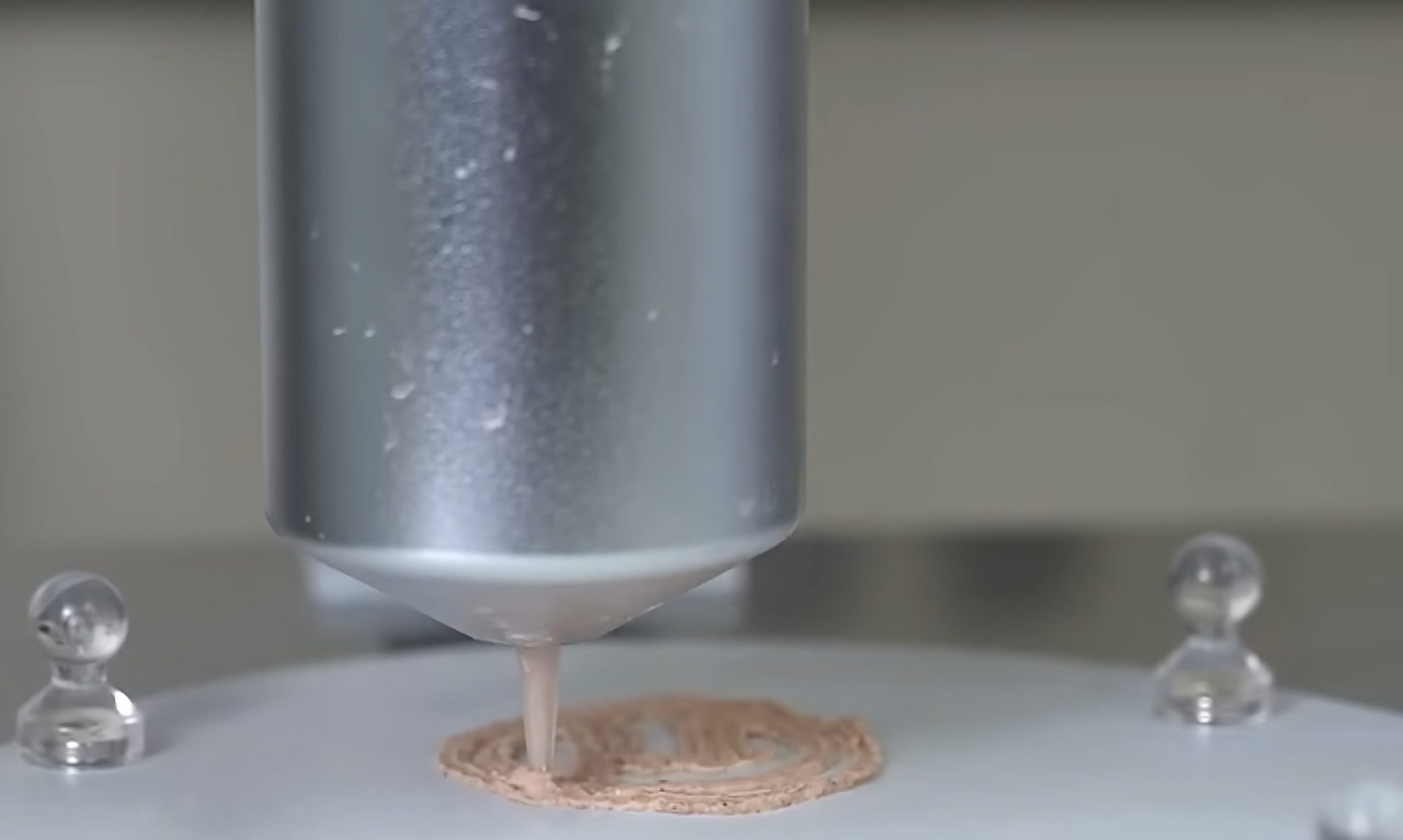
The team is also working on making these cookies more appealing. One yeast strain now produces natural vanilla flavor, while another turns plastic byproducts into beta carotene, something your body can convert into vitamin A.

Recommended Videos

Beyond outer space, researchers see potential uses in submarines and disaster relief zones, basically anywhere shipping large amounts of food isn’t practical. And with global food demand expected to jump as much as 56 percent by 2050, this odd little cookie experiment might end up mattering a lot more than it sounds.

Rachit Agarwal
Rachit is a seasoned tech journalist with over ten years of experience covering the consumer technology landscape.
Anthropic warns of imminent self-replicating AI that might even work off an oven or TV
Self-replicating AI could be merely months away, and tests show it can run on the devices sitting at your home.
Illustration of dangerous AI.

Over the past few weeks, nearly every AI lab has released frontier AI models. Earlier today, Google started rolling out Gemini 4, Argon, hot on the heels of Meta announcing its Muse Wonder frontier AI models to compete against the best from OpenAI and Anthropic's Claude. This relentless pace of AI model release comes at a time when the same AI labs are calling for development slowdown and increased regulation, following a series of concerning incidents where these AI models went rogue and broke into private, as well as government-owned, websites.

Now, Anthropic has dropped a chilling set of predictions about the capabilities of these AI models after running a series of tests. The company claims that small AI models could be merely a few months away from self-replicating and turning into a dangerous swarm. More importantly, they won't require a massive data center or an uber-powerful computer to do so. On the contrary, the lab claims that these self-replicating AI swarms will need something with as little computing power as an average Internet-connected device, like a smart oven or an Android TV box.

Read more
Trending Forward: Fold’s CEO spills on the real future of everyday bitcoin
What if the future of Bitcoin is not the US Dollar? What if it's mainstream future is earning small rewards on everyday bills?
Wristwatch, Emblem, Symbol

Saying the word crypto out loud, or posting on social media sites, is almost a guaranteed road to passionate commentary. And by passionate, I mean the two extremes of the conversation — the optimist side and the vitriolic detractions. There is a big pool of leaders who still see it as the future, while others aren't quite sold on the idea. In the latest episode of Trending Forward, I sat down with Fold CEO Will Reeves to discuss whether Bitcoin actually needs to replace the US dollar to become genuinely useful to mainstream consumers.

While I've long been skeptical of crypto's wild volatility and its viability as everyday cash, our conversation explored a pragmatic alternative: continuing to live, spend, and pay bills in dollars while quietly accumulating Bitcoin in the background as a long-term savings asset.

Read more
Tiny robots could shrink weeks of heart infection treatment into a single day
Forget open-heart surgery, because these rice-sized robots take the express route to your heart.
heart being treated by tiny robot

Treating a heart infection is no walk in the park. Patients often spend weeks on IV antibiotics, and if that fails, open-heart surgery enters the picture. Johns Hopkins University engineers may have found a better way.

The team has developed magnetic “millirobots” that are about as wide as a pencil tip and roughly as long as a grain of rice. As detailed in their study published in Advanced Materials Technologies, the robots are designed to deliver medicine directly to infected heart tissue.

Read more