  1. Home
  2. Emerging Tech
  3. News

Seattle man gets jail time for drone accident that knocked a woman unconscious

Add as a preferred source on Google

Sending a clear signal that it has no time for anyone who flies their drone irresponsibly, the Seattle Municipal Court last week landed a local man with a 30-day jail sentence.

Paul Skinner was found guilty of reckless endangerment after an incident at a parade in 2015 where his drone fell from the sky before hitting a woman on the head and knocking her unconscious.

Recommended Videos

The 38-year-old drone pilot was also fined $500, the Seattle Times reported. Judge Willie Gregory said that while he understood it was an accident, Skinner had nevertheless “engaged in conduct that put people in danger of being injured, which is what happened,” and therefore deserved to be punished.

City Attorney Pete Holmes had pressed for a three-month sentence, describing rogue drone flights as “a serious public-safety issue that will only get worse” as more people buy the remote-controlled flying machines.

Jeffrey Kradel, Skinner’s attorney, told the Times that the sentence was “too severe” for an incident that wasn’t deliberate. He added that in his view the court was using his client to set an example, calling such behavior an improper use of prosecutorial authority.

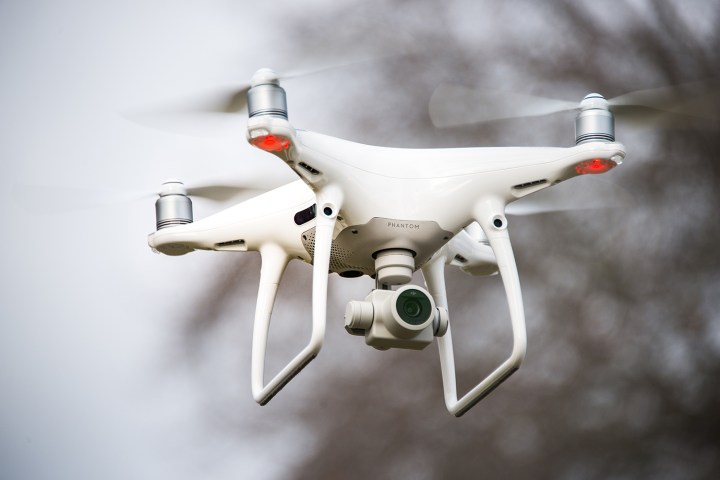
The incident occurred in downtown Seattle during the city’s annual Pride Parade two years ago. Skinner, who runs an aerial photography business, was capturing imagery using a two-pound, 18 x 18-inch drone. The machine reportedly struck a building, sending it tumbling to the ground, where it hit the 27-year-old woman on the head.

Skinner is appealing the verdict and can avoid prison until the matter is re-examined, while a separate hearing will take place in May to determine how much the Skinner should pay for the woman’s medical treatment.

Rules introduced by the Federal Aviation Administration stipulate that drone pilots “may not operate over any persons not directly participating in the operation.”

Skinner’s prison sentence is believed to the first one imposed by a U.S. court in relation to a reckless drone flight.


Trevor Mogg
Contributing Editor
Not so many moons ago, Trevor moved from one tea-loving island nation that drives on the left (Britain) to another (Japan)…
Home robots can already walk. The hard part is stopping them from crushing your glassware
1X’s NEO uses tactile sensing and force control to handle fragile objects, aiming at the kind of household work humanoids still struggle to do.
Baby, Person, Electronics

A robot can look convincing while walking across a stage and still be useless in a kitchen. Picking up a wet glass demands precision, quick corrections, and enough restraint to avoid squeezing too hard. 1X is tackling that problem with new tendon-driven hands for NEO, its humanoid home robot.

1X says each hand has 25 degrees of freedom, with 22 across the fingers and palm and another three in the wrist. Its joints can yield when pushed instead of staying rigid, giving NEO a better chance of handling household objects without treating every collision like a wrestling match.

Read more
This tiny gadget called Moodi could save your thumb during long reading sessions
This tiny remote thinks your finger deserves a vacation
DuRoBo Moodi

Digital reading has become more comfortable thanks to larger displays and e-paper screens, but one small annoyance remains: constantly reaching over to tap or swipe every page. DuRoBo believes it has a solution. The company has unveiled Moodi, its first Bluetooth page-turning remote, designed to make reading, browsing, and media control more comfortable across e-readers, tablets, and smartphones.

Unlike conventional page-turners that focus solely on e-books, Moodi doubles as a compact Bluetooth remote for scrolling through articles, controlling multimedia playback, and navigating long-form content. The device looks towards ergonomic accessories that aim to reduce repetitive hand movements during extended screen time.

Read more
Camera sensor breakthrough promises sharper images without hulking up your phone’s thickness
Camera sensors just got thinner. Your excuses for blurry photos didn't.
Representative Image

Researchers at Nagoya University have developed a new type of transparent optical sensor that could significantly reduce the size of camera sensors while improving image quality. Published in the journal ACS Nano, the study demonstrates how gallium-doped zinc oxide (GZO) nanosheets can detect red, green, and blue (RGB) light within a single pixel, potentially replacing the decades-old Bayer filter design used in nearly every digital camera today.

If commercialized, the technology could enable thinner smartphone cameras, higher-resolution medical imaging devices, and more compact sensors for automotive and aerospace applications, all while simplifying manufacturing.

Read more