  1. Home
  2. Emerging Tech
  3. News

Italian teens’ vending machine turns plastic bottles into cell phone cases

Add as a preferred source on Google

A group of teenagers in Italy want to change how young people recycle their used plastic bottles and are doing something about it, reports Upworthy. Instead of throwing the waste bottles in the trash, the teens want their peers to dispose of their plastic bottles in a vending machine called the MyProGeneration, which converts the bottles into cell phone cases. The team of five from the Sicilian town of Bagheria developed the idea as part of Junior Achievement’s Biz Factory competition last year, and made it all the way to the finals in Milan.

The teens wanted to encourage their peers to think creatively about their trash and chose to use a vending machine, a piece of technology that is already familiar to the age group and easy to use. They also selected the name MyProGeneration because they wanted to promote the idea of proactiveness and encourage other teens to be “in favor of something, in favor of the environment,” said the team in a statement.

Recommended Videos

During the last stage of the Biz Factory contest, their project caught the eye of AXA Italia, which awarded them with the AXA Italia Social Impact Award. This award provided the teens with the opportunity to work with AXA Strategic Ventures and AXA’s Research Fund, two initiatives designed to help innovative projects move from concept to deliverable product.

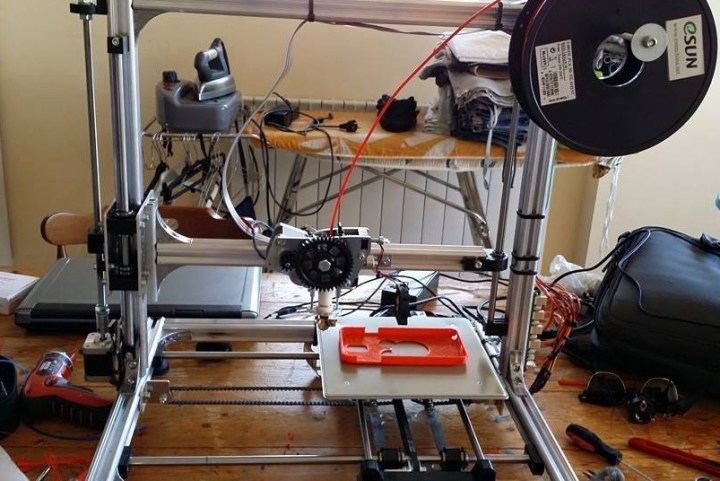
The proposed MyProGeneration is brilliant in its simplicity and appeal to the teen population. The recycling machine accepts plastic bottles and chips them into pellets that are then melted into a plastic filament. When the filament is ready, the vending machine allows the user to 3D print a cell phone case using the plastic material they just recycled. This process is completed within the vending machine, enabling users to experience firsthand the conversion of a waste bottle into something useful. The team built four prototypes last year and delivered them to customers. The team is currently looking for business partners to help fund the mass production of the vending machine hardware.

Kelly Hodgkins
Kelly's been writing online for ten years, working at Gizmodo, TUAW, and BGR among others. Living near the White Mountains of…
Researchers hid a prompt injection inside a PNG, and AI fell for it
Hacker

AI coding assistants like Claude are becoming every developer's favorite coworker. They can review code, explain confusing functions, and even write entire features with a single prompt. But new research suggests that this growing trust could also become their biggest weakness.

A team of security researchers (professor Sudipta Chattopadhyay and researcher Murali Ediga) has demonstrated an unusual attack that doesn't target the AI model directly. Instead, it targets what the AI doesn't pay enough attention to during code reviews. Rather than hiding malicious instructions in lines of code, the researchers tucked them inside an image file. Since many AI review tools treat images as decorative assets rather than as something worth inspecting, the pull request can appear perfectly harmless and sail through the review.

Read more
AI has already fallen into the wrong hands and they’re using it to make bombs
Logo, Text

Artificial intelligence has quickly become the go-to tool for everything from writing emails and summarizing meetings to helping students study or developers debug code. But the same technology that saves people time can also be misused, and a new report suggests that terrorist organizations are finding ways to do exactly that.

According to a research paper shared with The New York Times ahead of its publication, researchers found evidence that members of Boko Haram have been using popular AI chatbots to support both day-to-day activities and combat-related tasks. Interviews with 27 former members conducted in Nigeria over the past two years suggest that tools such as ChatGPT, Gemini, Claude, Grok, Meta AI, and DeepSeek were used to gather technical information, troubleshoot weapons, and even assist with planning attacks.

Read more
Claude Code can now browse the web without opening Chrome
The desktop app now includes an in-app browser that can read websites, click links, and interact with web apps.
Claude Code Featured

Developers spend a surprising amount of time bouncing between their code editor, browser tabs, API documentation, GitHub issues, and design files. Anthropic thinks Claude Code should simply do all of that without constantly asking users to switch windows. The company has announced a new in-app browser for Claude Code on desktop, allowing its AI coding assistant to open websites, read documentation, inspect designs, and interact with web pages directly from within the application.

A browser built into Claude Code

Read more