

Electric cars have become a pretty normal sight on the road, but replacing jet fuel with batteries gets considerably more complicated when you’re trying to lift thousands of pounds into the sky. Heart Aerospace has just shown that it can be done at a surprisingly large scale.
The company’s X1 demonstrator has completed its maiden flight, becoming what Heart says is the largest battery-electric aircraft ever flown. The X1 has a 106-foot wingspan, stretches 76 feet from nose to tail, and weighs more than 25,000 pounds at takeoff. The piloted flight took place on August 12 at Plattsburgh International Airport in New York and lasted 27 minutes. During that time, the X1 climbed to 1,100 feet above ground level, while its battery-powered propulsion system delivered more than one megawatt of power.
The most surprising number might be $5
There’s another figure from the flight that immediately caught my attention: electricity. Heart says the X1 used roughly $5 worth of it during the entire 27-minute test. Of course, that doesn’t suddenly mean airlines will be selling $10 plane tickets. Plenty of other costs are involved in operating an aircraft, and the X1 is still a technology demonstrator rather than something you’ll be boarding for your next vacation.

But it does show why electric aircraft are so interesting, especially for shorter regional flights. Jet fuel prices can swing dramatically, while electric propulsion could eventually give airlines another way to reduce their energy and maintenance costs. The first flight wasn’t about getting the X1 off the ground, either. Conducted under an experimental certificate from the FAA, the test covered the basics you’d expect an aircraft to handle, including taxiing, takeoff, climbing, maneuvering, and landing. More importantly, Heart built the X1 at full scale to test technology destined for something it actually intends to sell.
This is all leading to a 30-seat electric airliner
That aircraft is the ES-30, a 30-seat regional plane that the company hopes to put into commercial service in 2031. Unlike the fully electric X1 demonstrator, the ES-30 is being developed with a hybrid-electric propulsion system, giving it more flexibility for real-world airline operations. Heart believes the ES-30 could cut operating costs by more than 40% compared with older regional aircraft, thanks partly to cheaper energy and simpler electric systems that could require less maintenance.
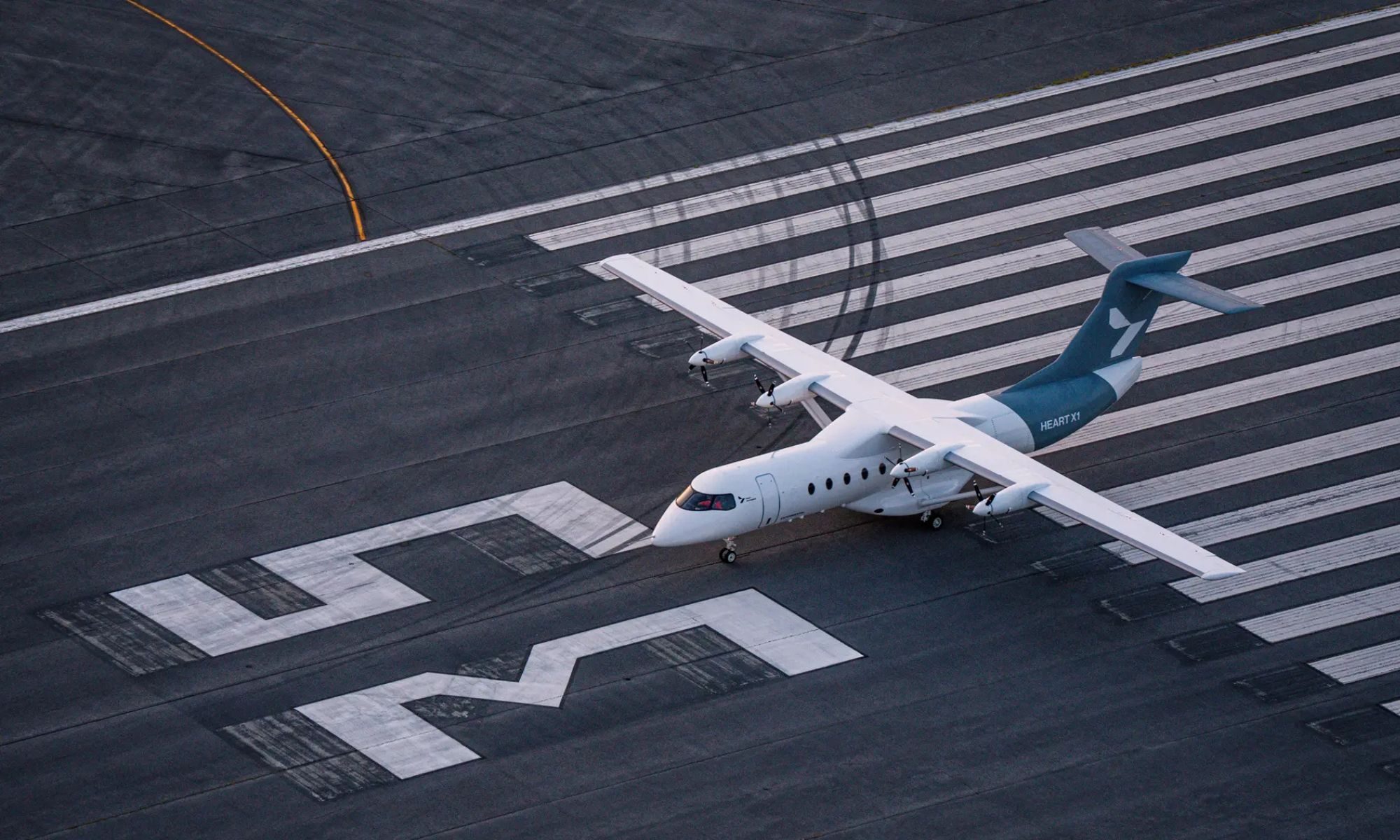
There’s already some serious interest behind the project. United Airlines, Air Canada, and JSX are among the carriers that have committed to the ES-30. However, there’s still a long road between Wednesday’s test flight and passengers actually stepping aboard one. Heart is currently building its first pre-production ES-30 at its Los Angeles facility, with flight testing expected to begin in 2028. For now, the X1’s first flight is about proving that electric aviation can work on a much bigger scale. Flying a 25,000-pound aircraft entirely on batteries for 27 minutes is a pretty compelling place to start.


