  1. Home
  2. Emerging Tech
  3. News

Las Vegas streetlight harness the power of solar energy and your footsteps

Add as a preferred source on Google

Sin City may actually be transforming into the City of Sensibility. Well, in part, at least. A new clean-energy project in downtown Las Vegas looks to harness the energy of pedestrian foot traffic to power a series of streetlights.

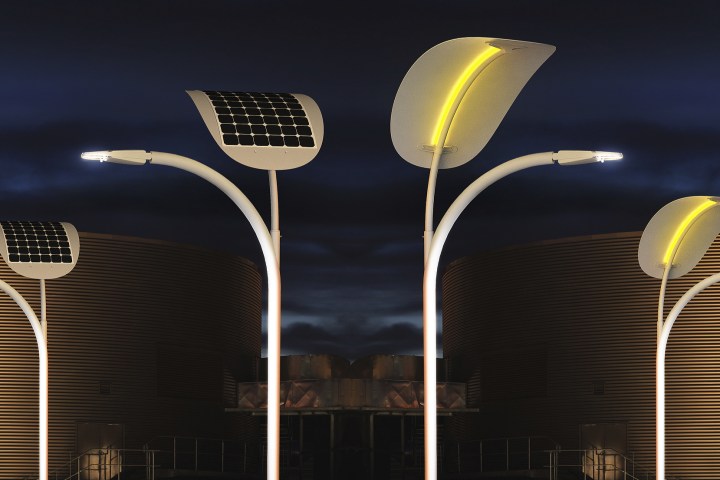
Las Vegas has partnered with the startup EnGoPlanet on the project. EnGoPlanet aims to address the problem of poor access to electricity worldwide. It recently began crowdfunding a campaign to install lights in portions of Africa. As part of the Las Vegas trial, the company installed four cutting-edge streetlights in the downtown Boulder Plaza. These lights work entirely off the grid, utilizing only kinetic as well as solar energy.

vegas-street lights-1
EnGoPLANET

Whenever a person steps onto one of the eight pads built into the sidewalk, three micro generators below the surface convert this energy into electricity. The level of pressure and consequently the amount of kinetic energy produced varies, however, EnGoPlanet estimates each footstep can create between four and eight watts of energy. The solar panels are mounted on top of the light.

Recommended Videos

The streetlights also double as individual charging stations. Several universal USB ports and wireless charging pads are built into the poles. Each unit also provides Wi-Fi for added functionality. People love a good Wi-Fi hot spot and this feature will surely only attract more pedestrians and therefore more traffic. Brilliant.

EnGoPlanet provided the streetlights to Las Vegas for free. The startup hopes to expand the upon the project in Las Vegas as well as other cities in the near future.
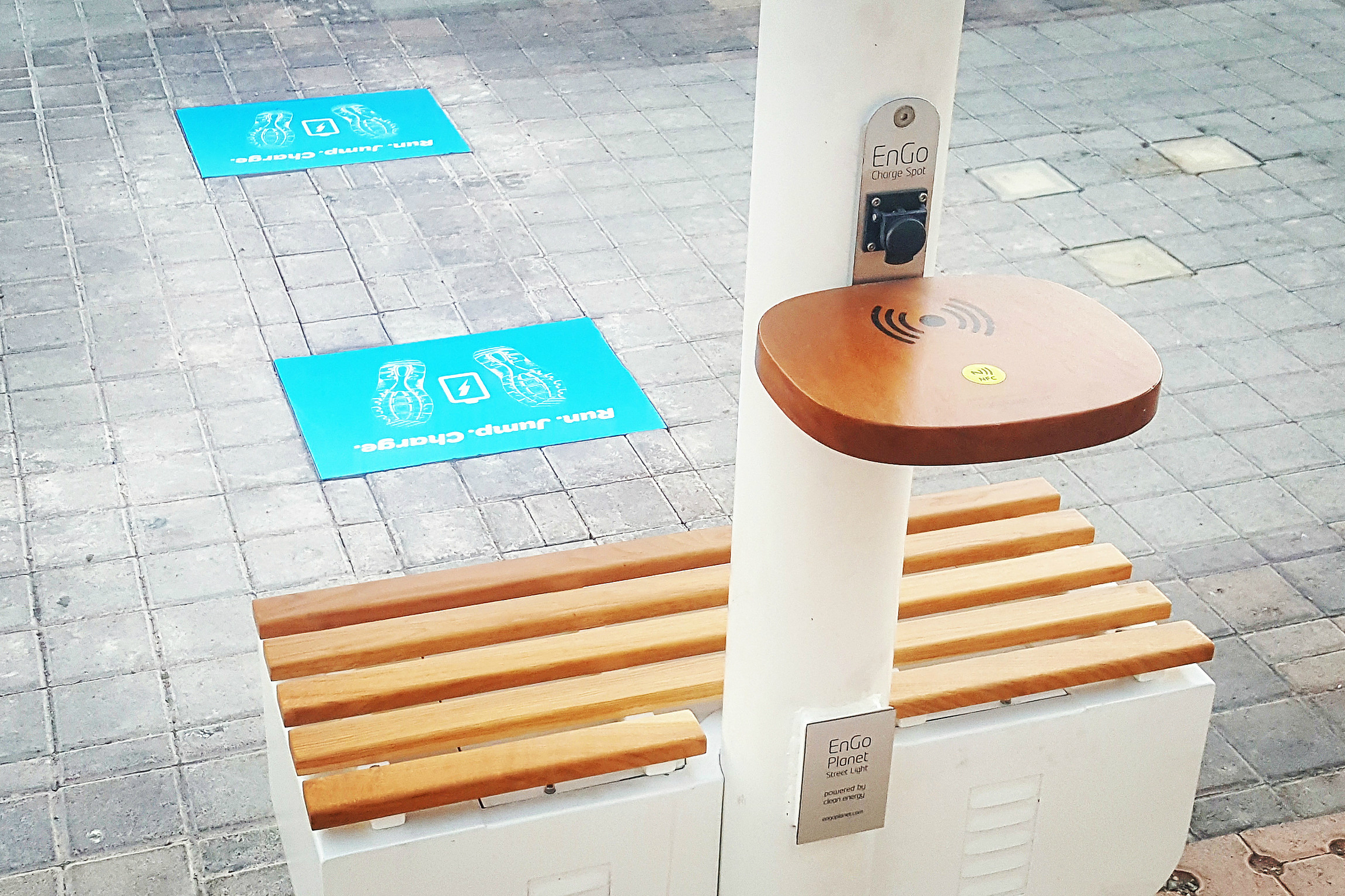
vegas-lights-2
EnGoPLANET
Dallon Adams
Former Editorial Assistant
Dallon Adams is a graduate of the University of Louisville and currently lives in Portland, OR. In his free time, Dallon…
Home robots can already walk. The hard part is stopping them from crushing your glassware
1X’s NEO uses tactile sensing and force control to handle fragile objects, aiming at the kind of household work humanoids still struggle to do.
Baby, Person, Electronics

A robot can look convincing while walking across a stage and still be useless in a kitchen. Picking up a wet glass demands precision, quick corrections, and enough restraint to avoid squeezing too hard. 1X is tackling that problem with new tendon-driven hands for NEO, its humanoid home robot.

1X says each hand has 25 degrees of freedom, with 22 across the fingers and palm and another three in the wrist. Its joints can yield when pushed instead of staying rigid, giving NEO a better chance of handling household objects without treating every collision like a wrestling match.

Read more
This tiny gadget called Moodi could save your thumb during long reading sessions
This tiny remote thinks your finger deserves a vacation
DuRoBo Moodi

Digital reading has become more comfortable thanks to larger displays and e-paper screens, but one small annoyance remains: constantly reaching over to tap or swipe every page. DuRoBo believes it has a solution. The company has unveiled Moodi, its first Bluetooth page-turning remote, designed to make reading, browsing, and media control more comfortable across e-readers, tablets, and smartphones.

Unlike conventional page-turners that focus solely on e-books, Moodi doubles as a compact Bluetooth remote for scrolling through articles, controlling multimedia playback, and navigating long-form content. The device looks towards ergonomic accessories that aim to reduce repetitive hand movements during extended screen time.

Read more
Camera sensor breakthrough promises sharper images without hulking up your phone’s thickness
Camera sensors just got thinner. Your excuses for blurry photos didn't.
Representative Image

Researchers at Nagoya University have developed a new type of transparent optical sensor that could significantly reduce the size of camera sensors while improving image quality. Published in the journal ACS Nano, the study demonstrates how gallium-doped zinc oxide (GZO) nanosheets can detect red, green, and blue (RGB) light within a single pixel, potentially replacing the decades-old Bayer filter design used in nearly every digital camera today.

If commercialized, the technology could enable thinner smartphone cameras, higher-resolution medical imaging devices, and more compact sensors for automotive and aerospace applications, all while simplifying manufacturing.

Read more