  1. Home
  2. Emerging Tech
  3. News

XPENG just put its humanoid robot on the production line, and it walked itself out

IRON clocks in for its first shift

Add as a preferred source on Google
XPENG Iron
XPENG

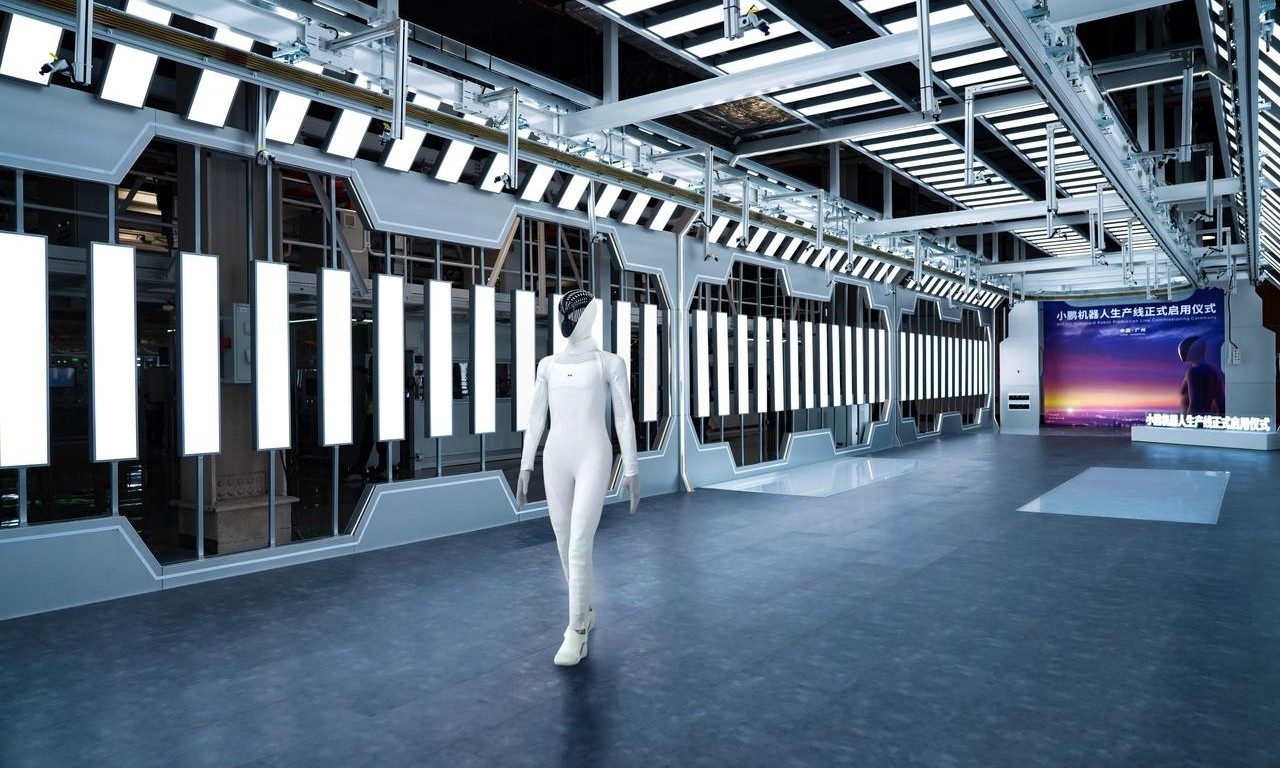
XPENG’s humanoid robot has officially joined the workforce, and it even got an employee badge. The Chinese automaker announced on September 8 that its next-generation IRON had completed assembly and autonomously walked off its newly commissioned humanoid robot production line in Guangzhou.

CEO He Xiaopeng then pinned a staff badge onto the robot, symbolically welcoming it to the XPENG team. It is a charming little ceremony for a machine that the company hopes will eventually become a regular part of everyday life. XPENG is moving IRON beyond R&D prototypes toward production-line manufacturing, applying the quality-control systems and manufacturing experience it has developed through its electric vehicle business.

From uncanny valley to the factory floor
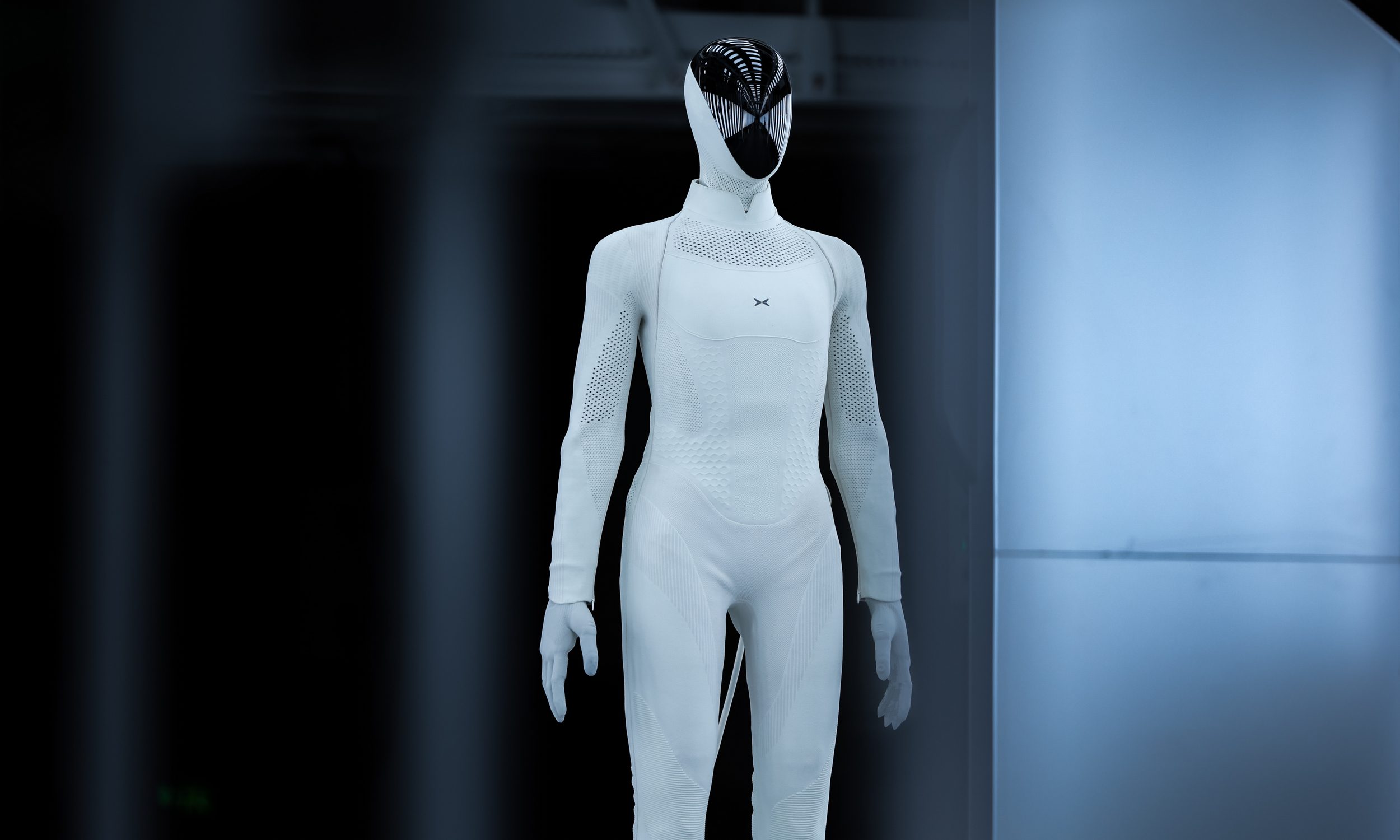
IRON first attracted widespread attention last November when its remarkably humanlike walk led some viewers to suspect there was a person inside the robot. XPENG responded by cutting open part of its leg during a demonstration to reveal the engineering under the hood. We covered that rather unusual proof-of-robot moment at the time, and the latest announcement is the next chapter in the same story.

Recommended Videos

XPENG states that more than 80% of its new production line’s core processes are automated. The facility is designed around automotive-grade quality standards, precision manufacturing, and the ability to expand capacity as production ramps up. The company describes it as a world-first automated line for advanced humanoid robots, although that claim has not been independently established.

The robot itself has 76 degrees of freedom across its body and 21 in each hand, giving it the flexibility needed for humanlike movement and more delicate manipulation. Three in-house Turing AI chips provide up to 2,250 TOPS of effective computing power, allowing XPENG to run its Physical AI foundation model directly on the robot.
IRON’s first workplace will be XPENG’s own

The company is targeting mass production by the end of 2026, with initial commercial deployments planned for its own stores and campuses. An official market launch and deliveries in China and overseas markets are scheduled for 2027. XPENG has not announced pricing or disclosed the production line’s capacity, so it remains too early to say how many robots it expects to build or what customers will pay.

For now, IRON’s staff badge is more symbolic than practical. Walking off a production line is a meaningful manufacturing milestone, but the next test will be whether XPENG can build these robots consistently and put them to useful work. Its own stores and campuses should give us the first proper indication of how near that future really is.

Vikhyaat Vivek
Vikhyaat Vivek is a tech journalist and reviewer with seven years of experience covering consumer hardware, with a focus on…
AI can’t tell if you’re gay or straight, but it thinks it knows what both look like
AI knows it shouldn't judge a face, but apparently, drawing one is a different story.
Emilia Clarke AI generated stock image. Gemini / Nano Banana is on the left

We've all been told not to judge a book by its cover, and you'd think AI would follow that rule, too. Ask an AI chatbot to guess someone's sexual orientation just by looking at their face, and it'll likely tell you that there's no reliable way to know. But what happens when you ask that same model to change someone's appearance to match a particular sexual orientation? Well, that's where things get uncomfortable.

A new study, accepted for presentation at the 2026 Conference on Empirical Methods in Natural Language Processing, found that AI models from OpenAI and Google can be inconsistent when handling sensitive personal characteristics. They might refuse to make assumptions about someone based on their appearance, but when asked to generate those same assumptions visually, the results tell a very different story.

Read more
A clinical study with Google’s special chatbot shows a strong future for AI in healthcare
Google’s medical AI could give doctors a useful second set of eyes
Google Articulate Medical Intelligence Explorer chatbot

AI is a useful tool for handling many tasks in private as well as professional settings, but medical advice, especially diagnosis, is one area where I generally draw the line. General-purpose chatbots tend to sound confident and convincing while giving medical advice, even when they are wrong, as studies have previously found.

That being said, Google's new research points to a much more convincing use for AI in healthcare. Its Articulate Medical Intelligence Explorer chatbot, or AMIE for short, could help prepare both sides before the appointment even begins.

Read more
Relaxation music had one job in this pain study, and favorite songs did it better
Patients who chose their music reported less pain after an IV insertion
Book, Publication, Indoors

Patients’ favorite songs helped ease pain after an IV insertion in a new study, while music specifically chosen for relaxation didn’t show a significant benefit. The soothing soundtrack could apparently use a second opinion.

Researchers at University Hospital Zürich studied 204 patients receiving an IV cannula before an MRI scan. Those listening to their chosen music reported less pain 30 seconds and two minutes after insertion. Across the full sample, the clearest relief came after the needle went in.

Read more