
PC gaming has spent the past few years leaning heavily on AI to squeeze better graphics and higher frame rates out of hardware. Now, Arm wants to bring a similar idea to the phones in our pockets.
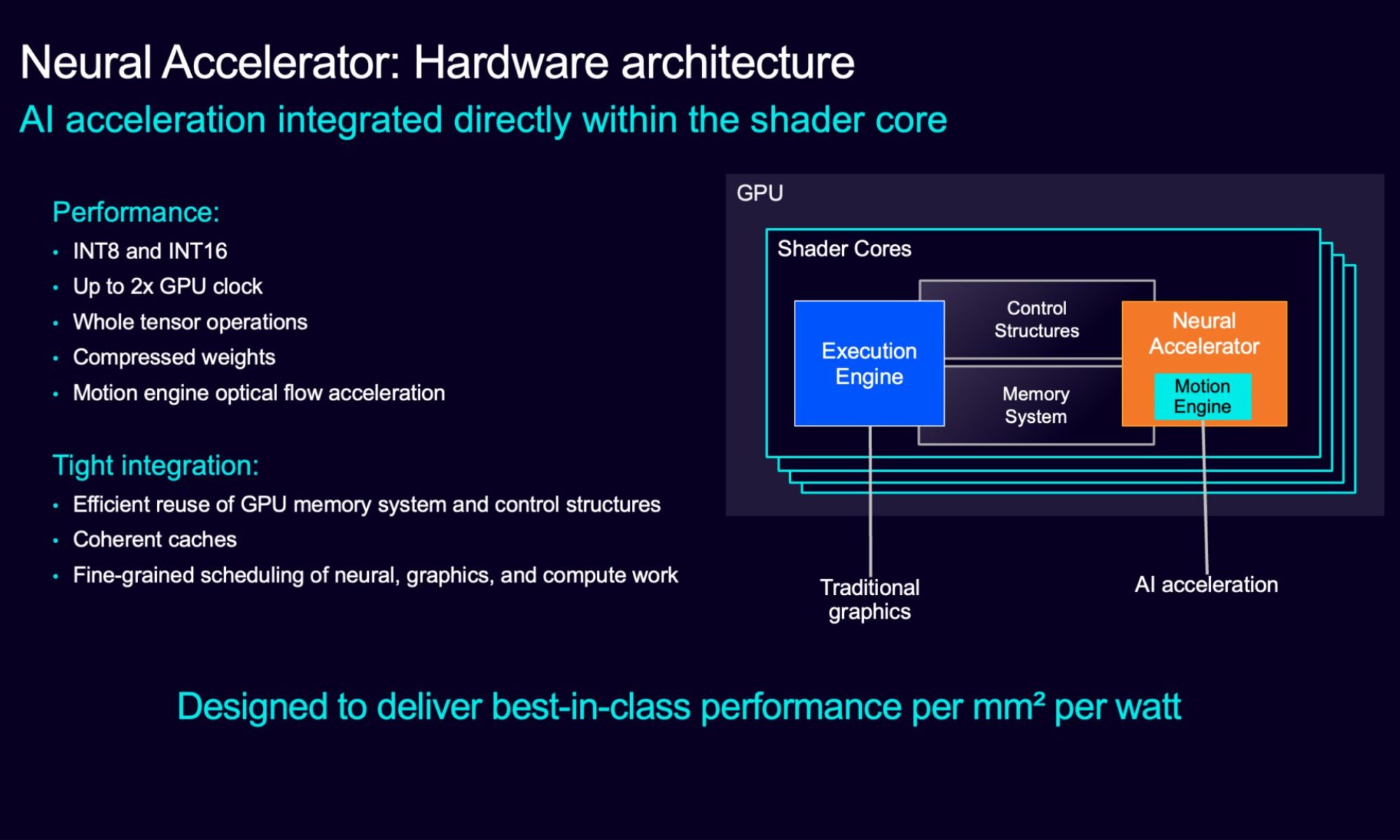
Arm has unveiled the Mali G2-Ultra NX, its first mobile GPU designed with dedicated neural acceleration built directly into the graphics hardware. That sounds like a mouthful, but the idea behind it is surprisingly simple: instead of asking the GPU to brute-force every pixel and every frame, AI can help fill in some of the gaps. For mobile gaming, where battery life and heat matter as much as raw performance, that could be a pretty big deal.
Your phone may not need to render everything the hard way
One of the more interesting additions is Neural Super Sampling, or NSS. A game can render at a lower resolution, which is easier on the GPU, and then use AI to reconstruct the image at a higher resolution. It’s broadly the same philosophy that has made upscaling such an important part of modern PC gaming. Arm is also introducing Neural Frame Rate Upscaling (NFRU), which can create additional frames between the ones traditionally rendered by the GPU. The result could be smoother gameplay without requiring the hardware to do all of that rendering itself.

There’s also Neural Super Sampling and Denoising (NSSD), aimed at cleaning up and upscaling demanding scenes, particularly when ray tracing is involved. Arm demonstrated some of these technologies in Neural Dawn, a project developed with Sumo Digital. According to the company, its neural rendering techniques delivered up to four times better performance efficiency while cutting external memory traffic by up to 70%. Arm even sees NFRU helping phones sustain gaming at up to 120 frames per second, which could make high-refresh-rate phone displays considerably more useful in demanding games.
Ray tracing on phones is getting another upgrade, too
AI isn’t the only thing changing. The G2-Ultra NX also gets Arm’s third-generation hardware ray-tracing unit, designed to tackle more complicated lighting, reflections, shadows, and geometry without hammering memory quite as hard. Arm claims up to 24% higher benchmark performance over its previous generation, alongside a 14% improvement in non-AI gaming performance. In other words, games that don’t use any of the fancy neural tricks should still benefit.
The company is also adding hardware support for Opacity Micromaps, which can make ray tracing complex objects such as foliage, fabrics, and other partially transparent surfaces considerably more efficient. In one Arm demonstration, the technique improved frame rates by 30% while reducing the ray-tracing workload by as much as 70%. Of course, hardware alone won’t suddenly make every Android game look like a high-end PC title. Developers still have to support these technologies. Arm says Where Winds Meet will be among the first games to integrate its Neural Technology, giving us an early glimpse at what the new GPU can actually do outside a tech demo. If developers get on board, though, the next big leap in mobile graphics might not come from simply making GPUs faster. It could come from making them do a lot less work.


